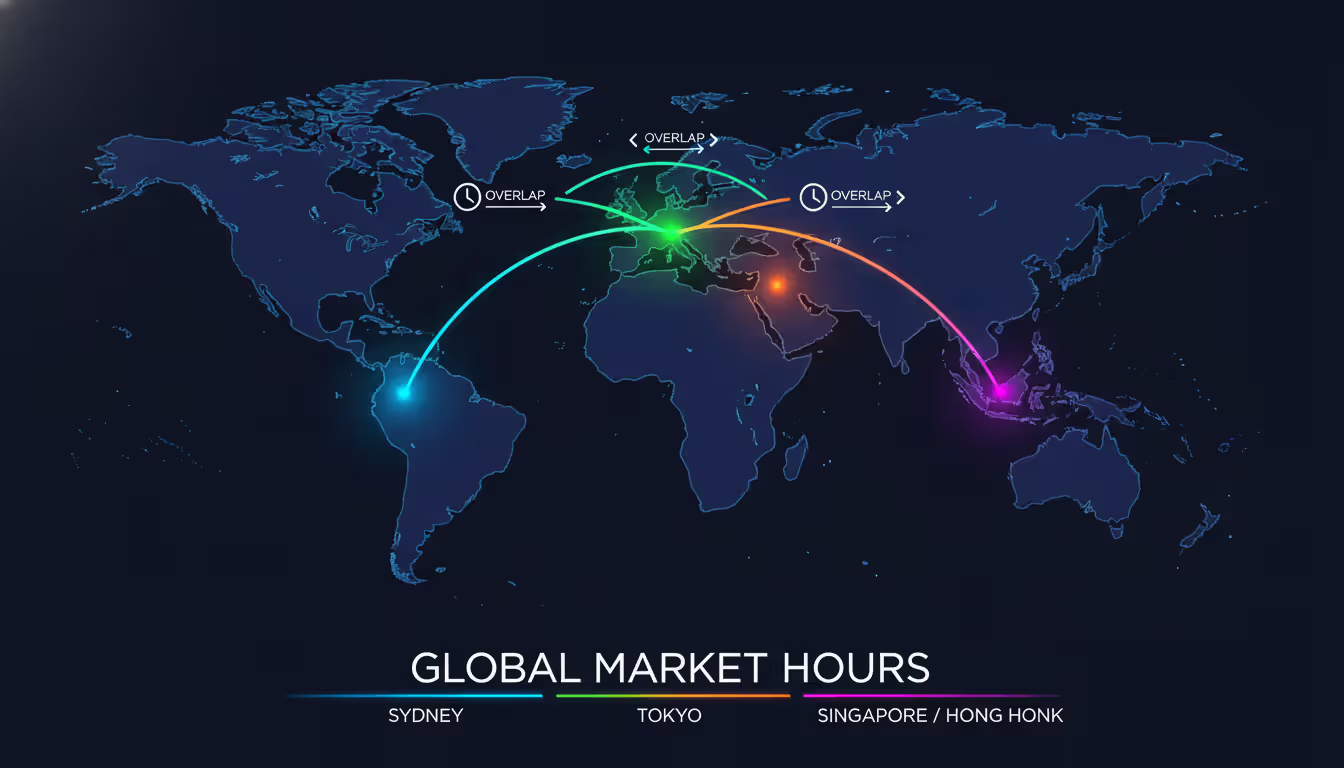
Currency markets never sleep during the workweek, cycling through three distinct trading periods as financial centers across the globe open and close their doors. When New York traders call it a day, Sydney and Tokyo are just getting started—and that's where things get interesting for a specific type of trader.
The Asian trading period kicks off the 24-hour forex cycle. It behaves completely differently from London or New York hours. You'll find tighter ranges, fewer dramatic price swings, and occasional explosions of volatility that catch unprepared traders off guard. Whether you treat these hours as prime trading time or a period to avoid depends entirely on matching your strategy to what actually happens when Tokyo dominates the market.
What Time Is the Asian Forex Session in EST?
Sydney kicks things off at 5:00 PM EST, though most traders don't consider the session truly active until Tokyo opens at 7:00 PM EST. That's when volume picks up and yen pairs start showing real movement. The session wraps up at 3:00 AM EST when Tokyo closes for the day.
You get maximum activity between 7:00 PM and midnight EST. Both Sydney and Tokyo run simultaneously during this window, creating the deepest liquidity you'll see until European banks come online. After Sydney closes at midnight, Tokyo soldiers on alone for another three hours, but price action typically slows to a crawl during this tail end.
Here's where it gets messy: daylight saving time. The U.S. springs forward in March, shifting everything an hour earlier from a clock perspective (5:00 PM becomes 4:00 PM EDT for Sydney's open). But Japan doesn't do daylight saving at all. Tokyo opens at the same local time year-round, which means its relationship to U.S. clocks shifts twice annually.
Australia throws in another wrinkle. They run daylight saving opposite the Northern Hemisphere—October through April—which means for part of the year, you're juggling three different daylight saving schedules. I've watched traders miss entries simply because they assumed the session started at the same time it did last month.
Singapore and Hong Kong markets contribute additional depth, opening at 7:00 PM and 8:00 PM EST respectively. While neither matches Tokyo's forex influence, they matter for certain pairs and during major regional announcements.
Author: Marcus Ellington;
Source: martinskikulis.com
Want to avoid confusion? Set alerts for actual market opens rather than relying on clock times. During March, April, October, and November, double-check when Tokyo actually starts trading relative to your local time.
Key Characteristics of the Asian Trading Session
Around 20% of daily forex turnover happens during Asian hours—substantially less than the 30% European session or even the 25% U.S. session handles. That difference in participation creates an entirely different trading environment.
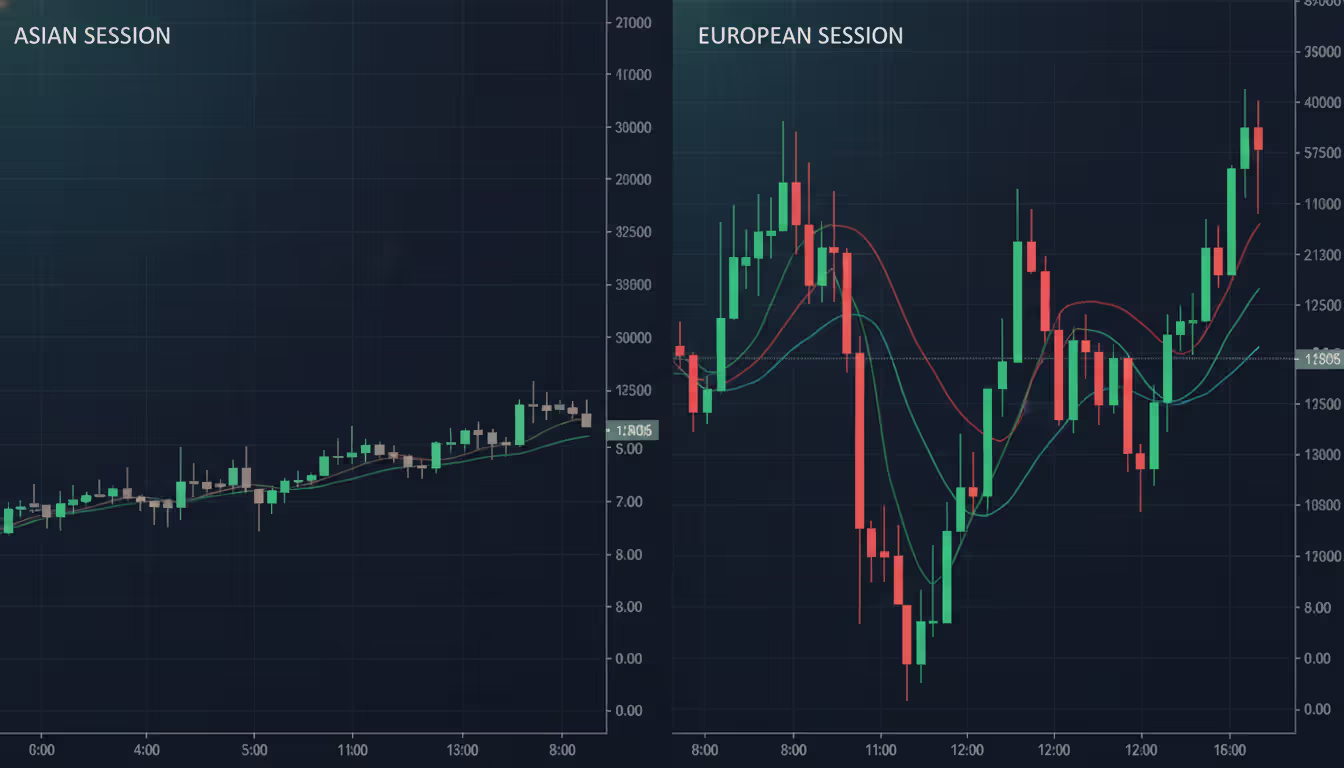
Prices consolidate more than they trend. You'll often see major pairs establish a 30-40 pip range and just bounce between those boundaries for hours. The strong directional moves that define London trading rarely materialize during Tokyo hours unless something unexpected hits the wires.
Who's actually trading? Japanese banks managing massive institutional flows. Australian corporations hedging commodity exports. Pension funds in Tokyo adjusting positions. Retail traders across Asia-Pacific. Chinese state banks occasionally intervening in yuan-related pairs. This crowd tends toward more conservative trading compared to the aggressive hedge funds that dominate later sessions.
Japanese institutional investors—particularly pension and insurance funds—move enormous size in yen pairs. When they shift allocations, you'll see it. Australian mining companies and agricultural exporters drive AUD movements, especially when overnight commodity prices make significant moves.
Why the Asian Session Has Lower Volatility
Pull up EUR/USD during Tokyo hours. You might see 35 pips of total movement. Wait for London to open and watch that same pair swing 80-100 pips. That's not an anomaly—it's standard operating procedure.
Volume drives volatility. Fewer active participants means less competition to push prices around. A large order that would explode through support during London hours might take 90 minutes to fully execute during Asian trading without causing much disruption at all.
Economic data from Asian economies generally packs less punch than U.S. employment reports or ECB rate decisions. Japanese GDP or Tankan surveys matter, sure, but they rarely trigger the sustained directional moves you get from Fed announcements. Markets react, then settle back into ranges.
Author: Marcus Ellington;
Source: martinskikulis.com
European and American institutional desks simply aren't operating during these hours. Those traders often wait for their local sessions to implement major strategies. You're left with regional players who, culturally and operationally, tend to trade less aggressively than their Western counterparts.
Asian Session Liquidity Compared to Other Sessions
Lower liquidity shows up immediately in your trading costs. EUR/USD spreads might sit at 0.8 pips during London hours, then balloon to 1.5 or even 2.0 pips during quiet Asian periods. Less traded pairs like EUR/GBP can see spreads triple.
Slippage becomes a real factor. Place a market order for USD/JPY at 148.50 during Asian hours and you might fill at 148.52. The same order during New York trading typically executes within 0.1 pips of your requested price, if not exactly on it.
Here's the exception: pairs with Asian currencies maintain decent liquidity during this session for obvious reasons. USD/JPY spreads stay reasonable because Japanese banks are actually trading. AUD/USD benefits from Australian participation. You're working with the home team's currency, so conditions improve compared to trying to trade EUR/USD when both European and American traders are asleep.
Best Currency Pairs to Trade During Asian Hours
Your pair selection during this session makes or breaks your results. Fight the urge to trade your favorite European pairs just because you're sitting at your computer.
USD/JPY dominates Asian session trading. You'll see 15-25 pips of hourly movement on average—enough to work with, not so much that every tick threatens your stops. Japanese data releases, Bank of Japan communications, and shifts in risk sentiment all move this pair during Tokyo hours. Most brokers keep spreads between 0.8-1.2 pips.
AUD/USD comes alive when Australian economic reports drop and commodity prices shift overnight. Iron ore rallies 3%? Watch AUD/USD climb. Gold dumps during Asian hours? The Aussie typically follows it down. Expect 20-30 pips of movement during active periods and spreads around 1.0-1.5 pips.
NZD/USD tracks similar patterns but trades thinner. The kicker with this pair: New Zealand dairy auctions release results during Asian hours, sometimes triggering 30-50 pip moves when prices surprise the market. You'll pay 1.5-2.0 pip spreads, but if you're watching dairy prices and RBNZ policy, that cost can be worthwhile.
Author: Marcus Ellington;
Source: martinskikulis.com
AUD/JPY puts two regional currencies together, creating naturally higher activity during these hours. This pair loves establishing clean ranges during Tokyo trading, making it perfect for the range-bound strategies that actually work during this session. Volatility runs 25-35 pips, and risk appetite shifts show up clearly in its movement.
Stay away from EUR/USD, GBP/USD, and EUR/GBP unless you enjoy watching paint dry. These pairs frequently chop sideways for hours, producing maybe 10-15 pips of total movement while spreads remain elevated. The exceptions? Unexpected European news during Asian hours or positioning ahead of known major events. Otherwise, you're wasting your time.
Asian Session vs European and US Sessions
Treating all trading hours the same guarantees mediocre results. Each session requires different strategies because each session behaves fundamentally differently.
Metric
Asian Session
European Session
US Session
EST Trading Hours
6:00 PM – 3:00 AM
3:00 AM – 12:00 PM
8:00 AM – 5:00 PM
EUR/USD Movement (Average)
30-40 pips
80-100 pips
70-90 pips
Primary Pairs
USD/JPY, AUD/USD, NZD/USD
EUR/USD, GBP/USD, EUR/GBP
EUR/USD, USD/JPY, GBP/USD
EUR/USD Spread (Typical)
1.5-2.0 pips
0.8-1.0 pips
0.8-1.2 pips
Volume Percentage
~20%
~30%
~25%
European hours generate maximum chaos—in a good way if you're prepared for it. Major economic releases, central bank decisions, massive institutional order flow. The 8:00 AM to noon EST window when London and New York overlap produces the highest volatility and volume of the entire 24-hour cycle. Trends develop with conviction. Breakouts actually follow through instead of failing immediately.
The U.S. session falls somewhere in the middle. Strong volatility continues, particularly during the first four hours when European traders remain active. After European markets close at noon EST, things calm down but still maintain more energy than Asian hours.
Risk management gets tricky during Asian hours specifically because of the volatility differential. Lower typical movement creates complacency. Traders size up positions, thinking "it's just the Asian session, nothing major happens." Then China drops unexpected GDP figures or Japan intervenes in currency markets, and that oversized position turns catastrophic.
European and U.S. sessions present higher baseline risk through bigger standard moves, but you enter expecting volatility. Everyone knows London open can get wild. That predictability makes risk management more straightforward than during Asian hours when sudden spikes ambush traders positioned for calm conditions.
Trading Strategies for the Asian Range
Range-bound approaches align perfectly with how prices actually behave during these hours. Stop trying to catch trends that don't exist and start profiting from the oscillation that does.
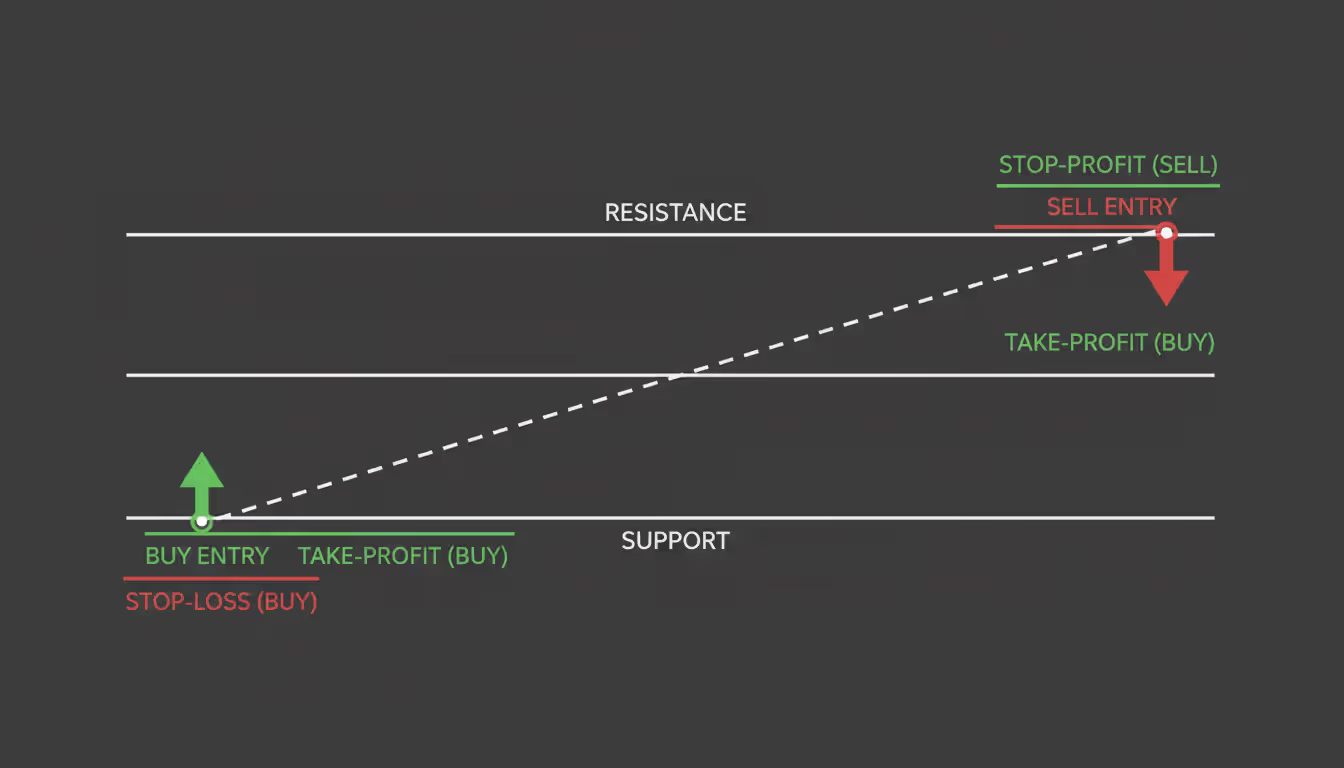
Start by marking wherever the New York session closed. Note the high and low from that final hour of U.S. trading. Asian sessions frequently respect these boundaries, especially during quiet news periods. USD/JPY closed between 148.20 and 148.80? Expect Tokyo trading to bounce between those levels until something changes the narrative.
Go long near support with stops placed 10-15 pips below the range low. Target either the midpoint or full resistance, depending on how price approaches support. A sharp spike down into support suggests real buying interest—you can aim for resistance. A slow grind into support indicates weaker conviction—take profits at the midpoint.
Shorting near resistance follows identical logic in reverse. The critical discipline: wait for price to actually reach range extremes. Trading from the middle of ranges hoping for a turn leads to stopped out positions when price continues to the actual boundary.
Author: Marcus Ellington;
Source: martinskikulis.com
Breakouts during Asian hours fail constantly. Lower volume allows price to poke through levels without real conviction behind the move. If you're going to trade breakouts, watch the final hour (2:00-3:00 AM EST) when European traders start positioning ahead of their session open. Breakouts during this transition carry much higher continuation probability.
Never inflate position size just because volatility looks tame. That's how accounts blow up during unexpected announcements. Maintain consistent position sizing based on your account risk parameters, not on session characteristics.
And please—don't overtrade during dead periods. If your main pair has moved 12 pips in three hours, that's the market telling you to step away. Asian session profits come from selective, high-probability setups, not constant activity. Traders executing 10 trades in a single Asian session typically underperform those who wait patiently for two or three optimal opportunities.
Common Mistakes When Trading the Pacific Session
Traders import strategies from European hours, apply them during Tokyo trading, and wonder why results tank. These errors repeat constantly.
Expecting trending moves destroys more accounts than almost anything else during these hours. You caught beautiful London breakouts all week, so you try the same approach during Asian trading. Breakouts fail. You try again. They fail again. The session rewards patience and range discipline, not aggressive trend-following.
Ignoring what's happening in Asia creates unnecessary risk. Chinese PMI drops tomorrow at 9:00 PM EST? You should know that. Bank of Japan officials speaking at midnight? Better be aware. Traders focused exclusively on U.S. economic calendars hold positions through surprise announcements and interventions that proper preparation would have flagged.
Trading EUR/USD because you're bored wastes time and money. Your usual Asian pairs look dead, so you switch to EUR/USD. That pair looks even deader during Tokyo hours. Step away from the computer. Prepare for upcoming sessions. Review your trading journal. Forcing trades in unsuitable pairs during unsuitable hours generates losses, not profits.
Assuming your broker's conditions stay constant costs you money. Some brokers apply completely different spread structures during Asian hours. That broker offering 1.0 pip EUR/USD spreads during London? Check what they charge during Tokyo trading. Sometimes it balloons to 2.5 pips, fundamentally changing whether your strategy remains viable.
Missing session transitions means bypassing some of the best setups. That hour before Tokyo closes (2:00-3:00 AM EST) often sees positioning for European open, creating directional moves that break Asian ranges. Similarly, the first hour of Asian trading sometimes continues late New York momentum. Rigidly compartmentalizing sessions causes you to miss these transition opportunities.
Using the wrong timeframes for current conditions generates false signals. Your 5-minute chart strategy crushes during European hours but produces nothing but whipsaws during Asian trading. The lower volatility demands longer timeframes—15-minute or 30-minute charts—to filter noise and identify genuine setups.
The Asian session rewards discipline and patience more than any other trading period. Traders who accept the session's range-bound nature and adjust their strategies accordingly often find it provides the most consistent profits with the lowest stress. Those who fight against its characteristics by forcing trend-following approaches typically struggle
— James Chen
FAQ About Asian Forex Session Trading Hours
What time does the Asian forex session start in EST?
Sydney opens at 5:00 PM EST, but most traders mark the real start at 7:00 PM EST when Tokyo comes online and volume increases substantially. The session ends at 3:00 AM EST with Tokyo's close. During U.S. Daylight Saving Time (March through November), these hours shift earlier by one hour to 4:00 PM-2:00 AM EDT from a U.S. clock perspective. Japan doesn't observe daylight saving, and Australia runs its own opposite-hemisphere schedule, so verify exact times during transition months.
Is the Asian session good for day trading?
It depends entirely on your strategy. Range traders and mean-reversion specialists often love Asian hours—lower volatility, predictable boundaries, less stress. Trend-followers and aggressive breakout traders typically struggle during this session and achieve far better results during European or U.S. hours. Part-time traders in U.S. time zones appreciate that Asian trading happens after normal work hours, making it accessible without career conflicts.
Which brokers offer the best spreads during Asian hours?
Brokers with strong Asia-Pacific infrastructure typically provide superior conditions during Tokyo hours. IC Markets, Pepperstone, and OANDA maintain tight spreads during this session through regional liquidity partnerships. You'll find USD/JPY spreads around 0.8-1.0 pips and AUD/USD near 1.0-1.3 pips with these brokers. Always verify current spreads directly since broker conditions change. Some U.S.-based brokers widen spreads dramatically during Asian hours despite excellent conditions during New York trading.
Can you trade EUR/USD profitably during the Asian session?
Technically yes, practically it's difficult. EUR/USD often moves just 30-40 pips during the entire Asian session while spreads remain elevated. That spread eats a much larger percentage of potential profit compared to trading this pair during European hours. Profitable EUR/USD trading during Asian hours demands exceptional patience, waiting for rare setups offering favorable risk-reward. Most traders achieve significantly better results focusing on yen, Aussie, and Kiwi pairs during these hours and saving EUR/USD trades for when London opens.
How does daylight saving time affect Asian session hours?
Daylight saving creates scheduling headaches because the U.S., Japan, and Australia follow different policies. When the U.S. enters Daylight Saving Time each March, Asian session hours appear to shift earlier (5:00 PM-2:00 AM EDT from a U.S. trader's perspective). Japan never observes daylight saving, so Tokyo opens at the same local time year-round but at different relative times compared to U.S. clocks. Australia observes daylight saving October through April—opposite Northern Hemisphere schedules—adding another complication. Check exact session times weekly during March-April and October-November transition periods.
What news events impact the Asian trading session most?
Japanese economic releases—GDP, Tankan business surveys, Consumer Price Index—significantly impact Asian hours, particularly yen pairs. Chinese manufacturing PMI, retail sales, and GDP figures move regional currencies and commodity pairs like AUD/USD. Australian employment reports and Reserve Bank of Australia policy announcements create substantial volatility in Aussie and Kiwi dollars. Bank of Japan policy decisions and currency market interventions represent high-impact events that completely override typical Asian session range-bound behavior. Unexpected geopolitical developments in the Asia-Pacific region can also trigger sharp movements during these hours.
Tokyo trading runs from 6:00 PM to 3:00 AM EST, delivering a completely different environment compared to European and U.S. sessions. Lower volatility, range-bound price behavior, and reduced liquidity define these hours. Success requires abandoning trend-following approaches that work beautifully during London hours and embracing range-trading strategies suited to what actually happens when Tokyo dominates.
Yen, Aussie, and Kiwi pairs provide optimal conditions during these hours—reasonable spreads, sufficient movement, and actual regional participation. EUR/USD and other European pairs typically offer poor conditions during Asian trading. Avoid them unless specific circumstances warrant their consideration.
Recognizing how Asian, European, and U.S. sessions differ allows you to select appropriate trading times based on your strategy, risk tolerance, and schedule. Asian hours particularly suit traders seeking lower-stress environments, those in compatible time zones, and anyone developing range-trading skills applicable across all market conditions.
Proper preparation includes verifying your broker's spread and execution conditions during these hours, marking relevant economic releases, and maintaining appropriate position sizing that accounts for potential volatility spikes during typically calm periods. Traders who respect the session's normal characteristics while remaining alert to exceptions position themselves for consistent profitability during hours when many others struggle.
The spread is the difference between bid and ask prices in forex trading—your cost to enter every position. Understanding how spreads work, when they widen, and how to minimize these costs can dramatically improve your trading profitability over time
A pip represents the smallest standardized price movement in forex trading. Understanding pip calculations is essential for position sizing, risk management, and profit calculation. This guide explains pip definitions, calculation methods for different currency pairs, and how to avoid common mistakes
Spread betting allows you to speculate on price movements without owning assets. This leveraged derivative offers access to thousands of markets but carries substantial risks. Learn how spread betting works, profit/loss mechanics, tax implications, and critical mistakes to avoid
The forex market moves $7.5 trillion daily, yet most retail traders lose money. Regulatory data shows only 15-25% maintain profitable accounts. This guide examines real statistics, common failure causes, and what actually makes traders profitable based on 2026 data
The content on this website is provided for general informational and educational purposes only. It is intended to explain concepts related to Forex (FX) trading, currency markets, leverage, hedging, and risk management.
All information on this website, including articles, guides, and examples, is presented for general educational purposes. Forex trading carries significant risk, and outcomes may vary depending on market conditions, leverage, and individual decisions.
This website does not provide financial, investment, or trading advice, and the information presented should not be used as a substitute for consultation with qualified financial professionals.
The website and its authors are not responsible for any errors or omissions, or for any outcomes resulting from decisions made based on the information provided on this website.