The forex market never sleeps, but that doesn't mean every hour offers the same opportunities. Understanding when major financial centers are active shapes how you approach currency trading, from choosing pairs to timing entries and exits.
Unlike stock exchanges that close at 4 p.m., forex operates continuously from Sunday evening through Friday afternoon in US time zones. This happens because trading shifts between financial hubs as the Earth rotates. When Tokyo winds down, London wakes up. When New York traders leave their desks, Sydney is already hours into its Monday.
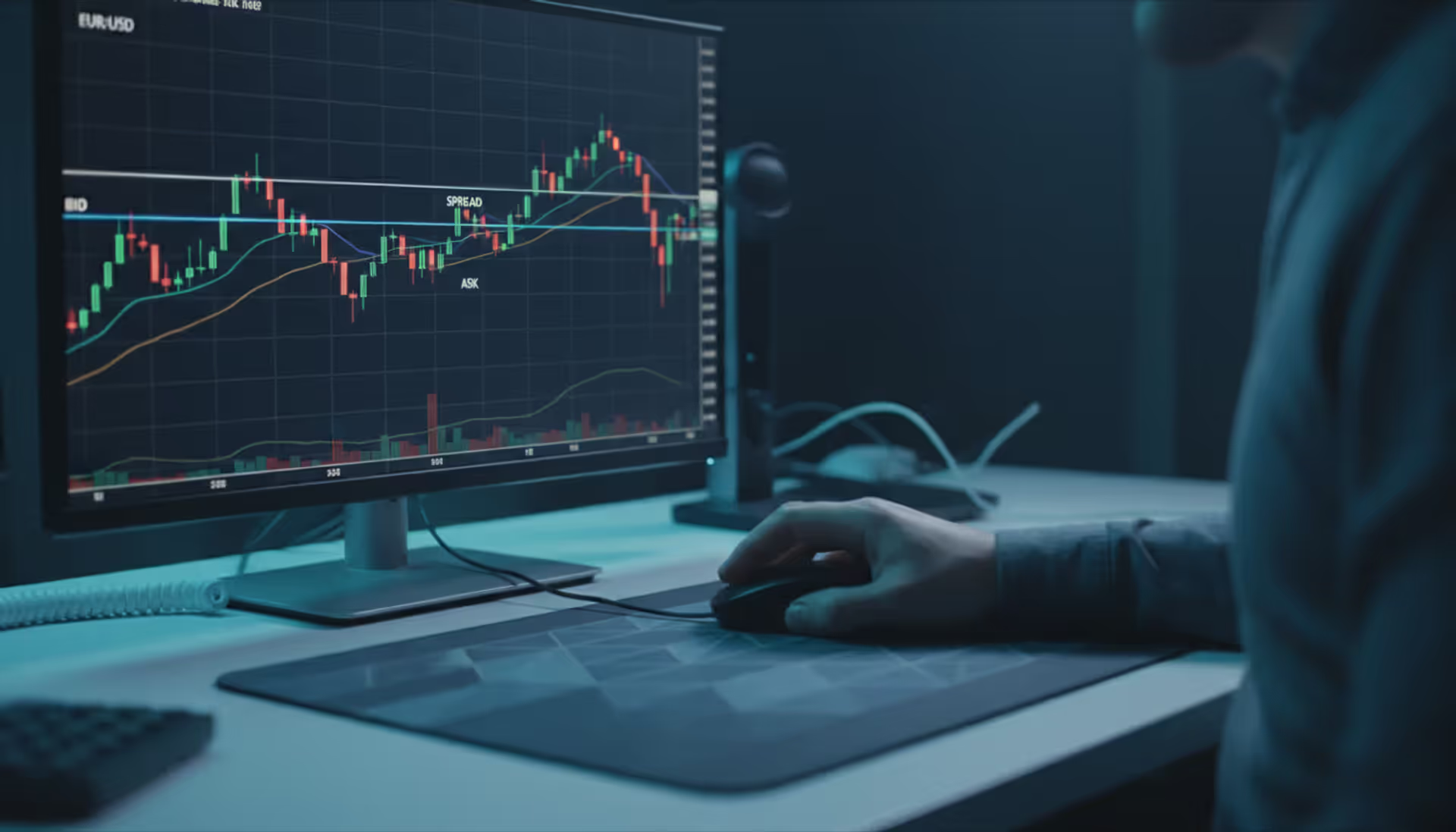
For US-based traders, knowing these rhythms matters more than most realize. The difference between trading EUR/USD at 3 a.m. EST versus 9 a.m. can mean tighter spreads, faster fills, and price movements that actually respect technical levels instead of drifting aimlessly.
What Are Forex Trading Sessions
Forex trading sessions represent periods when specific geographic financial centers conduct the bulk of their currency transactions. Rather than a single centralized exchange, the forex market consists of an interconnected network of banks, brokers, and financial institutions operating across different time zones.
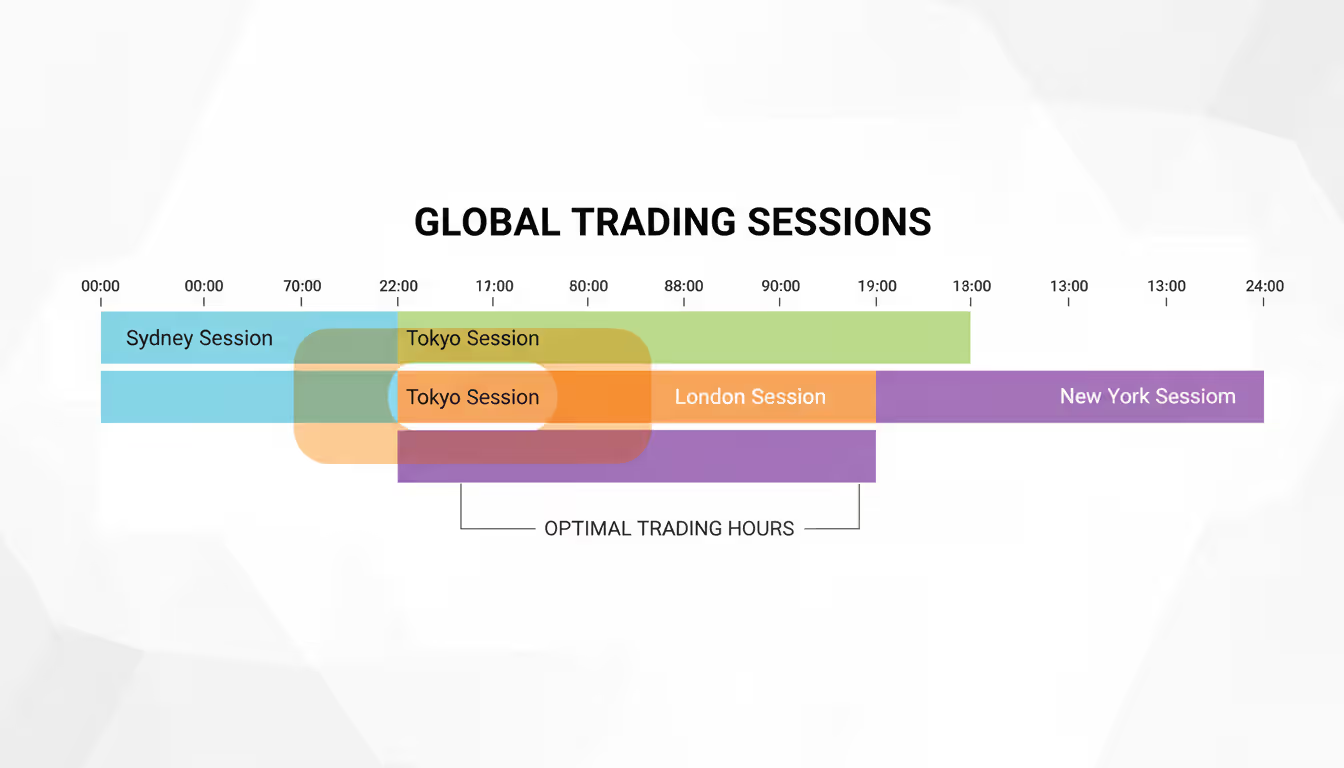
The market opens Sunday at 5 p.m. EST when Sydney comes online and runs until Friday at 5 p.m. EST when New York closes. Between those bookends, four major sessions dominate: Sydney, Tokyo, London, and New York. Each brings different currency pairs, trading volumes, and participant behaviors to the table.
How forex sessions work depends on where major banks and corporations conduct business. When London opens, European banks start converting currencies for trade settlements, corporate transactions, and speculative positions. This activity concentrates liquidity in EUR, GBP, and CHF pairs. The same pattern repeats across other regions with their dominant currencies.
The 24-hour structure exists because international commerce never stops. A Japanese manufacturer needs to pay a German supplier in euros. An Australian mining company converts USD revenue. These real-world transactions, combined with speculative trading, create the flow that moves exchange rates.
Author: Ethan Blackwell;
Source: martinskikulis.com
The Four Major Forex Trading Sessions
Each session has distinct characteristics shaped by the economic activity in its region. Traders who ignore these differences often wonder why a strategy that worked during London hours fails miserably during Tokyo.
Sydney Session
Opening at 5 p.m. EST and closing at 2 a.m. EST, the Sydney session marks the forex week's beginning. It's the quietest of the four major sessions, with lower trading volumes and wider spreads on most pairs.
AUD and NZD pairs see their most significant activity here. If you're trading AUD/USD or NZD/USD, this session matters. For other major pairs, price action tends to consolidate or drift within narrow ranges.
Many traders skip Sydney entirely unless they specifically trade Oceanic currencies or want to position ahead of Tokyo. The low volatility can suit range-bound strategies, but breakouts often lack follow-through because there aren't enough participants to sustain momentum.
Tokyo (Asian) Session
Running from 7 p.m. to 4 a.m. EST, Tokyo represents Asia's financial powerhouse. JPY pairs dominate, particularly USD/JPY, which accounts for a substantial portion of global forex volume.
This session sees moderate volatility and liquidity. Chinese economic data releases during these hours can spike activity in AUD and NZD since Australia and New Zealand maintain strong trade ties with China. The session's middle hours—roughly 11 p.m. to 2 a.m. EST—typically see the most movement.
Traders focused on Asian currencies or those using automated systems that benefit from steady, predictable ranges often prefer Tokyo hours. The session tends to respect technical levels better than more volatile periods, making support and resistance more reliable.
London (European) Session
London opens at 3 a.m. EST and closes at 12 p.m. EST, commanding roughly 35% of total daily forex volume. This session sets the tone for the trading day. EUR, GBP, and CHF pairs explode with activity, and even USD pairs see dramatic increases in liquidity.
The first two hours after London's open frequently produce sharp directional moves as European traders react to overnight developments and position for the day ahead. Stop hunts are common—price briefly spikes through obvious technical levels before reversing, catching breakout traders on the wrong side.
Major economic announcements from the Eurozone and UK typically release at 4:30 a.m. or 5 a.m. EST, injecting additional volatility. London's dominance stems from its geographic position between Asian and American markets and its historical role as a global financial center.
New York (US) Session
The New York session runs from 8 a.m. to 5 p.m. EST, representing the second-largest forex market by volume. USD pairs naturally dominate, and US economic data releases—particularly employment reports, GDP, and Federal Reserve announcements—create market-moving events.
For US traders, this session offers the convenience of trading during normal waking hours with tight spreads and deep liquidity. The first hour after the open sees heightened activity as traders react to overnight moves and position for the day.
Activity typically peaks during the overlap with London (8 a.m. to 12 p.m. EST), then gradually declines through the afternoon. By 3 p.m. EST, many institutional traders have closed their books, and liquidity starts thinning.
How Forex Session Overlap Affects Trading
Session overlap in forex occurs when two major financial centers operate simultaneously. These periods concentrate liquidity and volatility, creating the market's most dynamic trading conditions.
The London/New York overlap from 8 a.m. to 12 p.m. EST represents the single most active period in the forex market. During these four hours, roughly 70% of daily volume concentrates, spreads tighten to their narrowest points, and major trends either establish themselves or reverse.
Why does overlap matter so much? When both European and American banks, hedge funds, and corporations trade simultaneously, order flow intensifies. A German exporter selling USD to buy EUR competes with a US importer doing the opposite, creating the friction that generates price discovery.
The Tokyo/London overlap (3 a.m. to 4 a.m. EST) shows less dramatic effects but still increases activity in EUR/JPY, GBP/JPY, and other cross pairs. The Sydney/Tokyo overlap offers minimal benefits except for traders specifically focused on AUD/JPY or NZD/JPY.
Practical implications: Breakout strategies work better during overlaps because there's enough volume to sustain directional moves. Range-bound strategies struggle as price is more likely to break through support or resistance. News events during overlaps produce exaggerated moves—both the initial spike and subsequent reversal happen faster and more violently.
Author: Ethan Blackwell;
Source: martinskikulis.com
Trading Volume and Liquidity by Session
When forex markets are most active directly correlates with where institutional money flows. Trading volume by session varies dramatically, affecting everything from execution quality to strategy viability.
London commands the highest volume, followed by New York, then Tokyo, with Sydney trailing significantly. But raw volume tells only part of the story. Forex session liquidity also depends on which currency pairs you trade.
During London hours, EUR/USD might see bid-ask spreads of 0.1 pips with instant fills on substantial positions. The same pair during Sydney hours might show 0.8-pip spreads with noticeable slippage on orders above 10 standard lots.
Session Name
Opening Time (EST)
Closing Time (EST)
Peak Activity Hours
Most Active Currency Pairs
Average Pip Range
Liquidity Level
Sydney
5:00 PM
2:00 AM
7:00 PM - 11:00 PM
AUD/USD, NZD/USD
30-50
Low
Tokyo
7:00 PM
4:00 AM
11:00 PM - 2:00 AM
USD/JPY, EUR/JPY
40-70
Moderate
London
3:00 AM
12:00 PM
3:00 AM - 5:00 AM, 8:00 AM - 11:00 AM
EUR/USD, GBP/USD, EUR/GBP
80-120
High
New York
8:00 AM
5:00 PM
8:00 AM - 12:00 PM
EUR/USD, USD/CAD, GBP/USD
70-100
High
This table shows typical conditions, but individual days vary based on economic releases, geopolitical events, and seasonal factors. Summer months (June through August) generally see reduced volume as European traders take extended vacations.
Liquidity differences impact your bottom line. Wider spreads during thin sessions mean you start each trade at a larger disadvantage. Slippage on stop-loss orders can turn a planned 20-pip loss into a 25-pip loss. For scalpers taking dozens of trades daily, these costs compound quickly.
Volatility Patterns Across Forex Sessions
Volatility across forex sessions follows predictable patterns, though individual days always bring surprises. Understanding typical price behavior helps set realistic profit targets and appropriate stop-loss distances.
London's open frequently produces the day's largest single-hour range. Traders call this the "London spike"—a sharp move in one direction, often reversing partially within 30 minutes. This pattern happens because overnight orders accumulate, then release simultaneously when liquidity returns.
The London/New York overlap maintains elevated volatility but in a different character. Rather than spikes and reversals, you see sustained directional pressure as institutional traders build positions. Trends established during this window often persist into the New York afternoon.
Tokyo shows moderate, consistent volatility with fewer dramatic spikes. Price tends to grind rather than burst, making it suitable for strategies that profit from steady accumulation. The exception occurs when Japanese economic data surprises—then USD/JPY can move 50+ pips in seconds.
Sydney's low volatility creates challenges and opportunities. Ranges are tight, but that predictability suits algorithmic strategies and traders who profit from mean reversion. The risk is getting trapped in a position when Tokyo opens and price breaks the established range.
Currency pair behavior during different sessions matters more than traders expect. GBP/USD is notoriously volatile during London hours, often whipsawing before establishing direction. The same pair during Tokyo hours might barely move 20 pips, making it unsuitable for day trading strategies that need movement to profit.
Understanding session dynamics separates traders who survive from those who thrive. The market offers different opportunities at different times, and forcing a single strategy across all sessions is like using a hammer when you need a scalpel. Adapt your approach to what the current session offers, or step aside and wait for better conditions
— Michael Chen
Session-Based Forex Trading Strategies
Session-based forex strategies acknowledge that the same approach won't work equally well at all times. Matching your tactics to current market conditions improves win rates and reduces frustrating losses.
Breakout strategies during overlaps: The London/New York overlap offers ideal conditions for trading breakouts. High volume means genuine breaks tend to follow through rather than reverse immediately. Identify key support or resistance from the overnight session, then trade the break once both markets are active. Set stops just beyond the broken level and target at least twice your risk.
Common mistake: Trading breakouts during Sydney or late New York hours. Without sufficient volume, price often returns inside the range, stopping you out before any real move develops.
Range trading in quiet sessions: Tokyo and Sydney suit range-bound approaches. Identify support and resistance from recent price action, sell near resistance, buy near support, and take profits in the middle third of the range. Keep position sizes smaller than during volatile sessions because a sudden break can cause larger percentage losses.
The trade-off: You'll take more trades for smaller gains, which means transaction costs (spreads) eat a larger portion of profits. This strategy works better for traders with access to ECN pricing rather than wider retail spreads.
News trading aligned with session opens: Major economic announcements cluster around session opens—Eurozone data at London's start, US data shortly after New York opens. Trading these releases requires preparation: know the consensus forecast, set entry orders for significant deviations, and accept that slippage is inevitable.
Rule of thumb: If the actual number deviates by more than 0.3% from expectations on major indicators (GDP, employment, inflation), expect at least a 40-pip move in the relevant currency pair within 15 minutes.
Scalping versus swing trading by session: Scalping demands tight spreads and instant execution, making it viable only during London and New York hours, preferably during their overlap. Swing trading, which holds positions for days or weeks, cares less about intraday session timing but should still consider opening positions during liquid hours to avoid poor fills.
For US traders working full-time jobs, focusing on the 8 a.m. to 12 p.m. EST window makes sense. You get maximum liquidity, can trade before or during lunch breaks, and avoid the discipline challenges of staying up through Tokyo hours.
Author: Ethan Blackwell;
Source: martinskikulis.com
When Is the Best Time to Trade Forex
The best time to trade forex depends on your goals, available hours, and preferred currency pairs. There's no universal answer, but clear guidelines exist.
For maximum liquidity and tightest spreads: Trade during the London/New York overlap (8 a.m. to 12 p.m. EST). This window offers the best execution quality and most institutional participation.
For highest volatility and largest potential moves: Focus on London's open (3 a.m. to 5 a.m. EST) or the first two hours of the overlap. Be prepared for false moves and quick reversals.
For predictable, range-bound conditions: Tokyo session (particularly 11 p.m. to 2 a.m. EST) provides steadier price action with fewer surprises.
For US traders with standard work schedules: The 8 a.m. to 10 a.m. EST window captures peak activity without requiring unusual hours. Many successful traders focus exclusively on this two-hour window, developing deep expertise in how their chosen pairs behave during this time.
For part-time traders in the US: The New York afternoon (1 p.m. to 4 p.m. EST) offers moderate activity with enough movement for swing trading setups. Avoid the last hour before close when liquidity drops sharply.
US trader advantages during the New York session include alignment with natural sleep schedules, access to US economic data as it releases, and the ability to monitor positions during waking hours rather than sleeping through Tokyo. These practical factors matter more than traders admit—consistently executing a mediocre strategy beats sporadically executing an optimal one because you're exhausted.
Consider your trading style's requirements. Scalpers need the overlap's tight spreads. Position traders care less about specific hours but should still enter during liquid periods. Automated systems can exploit Tokyo's consistency while you sleep.
Frequently Asked Questions About Forex Sessions
What time does the forex market open in the US?
The forex market opens in the US at 8 a.m. EST when the New York session begins. However, the global forex market is already active from Sunday 5 p.m. EST when Sydney opens. US traders can access the market 24 hours a day from Sunday evening through Friday afternoon.
Which forex session has the highest volume?
The London session commands the highest trading volume, accounting for approximately 35% of daily forex transactions. The London/New York overlap period (8 a.m. to 12 p.m. EST) sees the absolute peak in combined volume and liquidity across the 24-hour trading day.
Can I trade forex 24 hours a day?
Yes, from Sunday 5 p.m. EST through Friday 5 p.m. EST, you can trade forex continuously. The market never closes during this period because trading shifts between Sydney, Tokyo, London, and New York as each financial center opens and closes. Weekends see no institutional trading, though some retail brokers quote prices with extremely wide spreads.
Why is the London/New York overlap important?
The London/New York overlap concentrates roughly 70% of daily forex volume into a four-hour window. This creates the tightest spreads, deepest liquidity, and most reliable price action of the entire trading day. Major trends either establish or reverse during this period, and institutional traders execute their largest positions when both markets operate simultaneously.
Which session is best for beginners?
The New York session, particularly the 8 a.m. to 12 p.m. EST overlap period, works best for US-based beginners. It offers high liquidity for quality execution, aligns with normal waking hours for easier consistency, and provides enough volatility to learn without the extreme whipsaws of London's open. Start with major pairs like EUR/USD during this window.
Do forex sessions affect cryptocurrency trading?
Cryptocurrency markets operate 24/7 without traditional sessions, but they still show volume patterns influenced by forex trading hours. Bitcoin and other cryptocurrencies often see increased volatility during the London/New York overlap as traders who participate in both markets are most active. However, crypto markets don't depend on session timing the way forex does.
Forex sessions create the rhythm that determines when opportunities emerge and when patience serves you better than action. The market's 24-hour nature seems to promise constant opportunity, but experienced traders know that not all hours are created equal.
US traders hold natural advantages during the New York session and its overlap with London. These periods offer the execution quality and volatility needed for most strategies to function properly. Fighting against your time zone by forcing trades during Tokyo or Sydney hours rarely makes sense unless you specifically trade Asian currencies.
Match your strategy to session characteristics. Breakouts during overlaps, ranges during Tokyo, news events at session opens—each approach has its time and place. Trying to force a single method across all sessions leads to inconsistent results and mounting frustration.
The difference between profitable and struggling traders often comes down to timing rather than strategy sophistication. A simple support and resistance approach during the London/New York overlap outperforms a complex system applied during Sydney's dead hours. Work with the market's natural rhythm instead of against it, and you'll find that many trading problems solve themselves.
The spread is the difference between bid and ask prices in forex trading—your cost to enter every position. Understanding how spreads work, when they widen, and how to minimize these costs can dramatically improve your trading profitability over time
A pip represents the smallest standardized price movement in forex trading. Understanding pip calculations is essential for position sizing, risk management, and profit calculation. This guide explains pip definitions, calculation methods for different currency pairs, and how to avoid common mistakes
Spread betting allows you to speculate on price movements without owning assets. This leveraged derivative offers access to thousands of markets but carries substantial risks. Learn how spread betting works, profit/loss mechanics, tax implications, and critical mistakes to avoid
The forex market moves $7.5 trillion daily, yet most retail traders lose money. Regulatory data shows only 15-25% maintain profitable accounts. This guide examines real statistics, common failure causes, and what actually makes traders profitable based on 2026 data
The content on this website is provided for general informational and educational purposes only. It is intended to explain concepts related to Forex (FX) trading, currency markets, leverage, hedging, and risk management.
All information on this website, including articles, guides, and examples, is presented for general educational purposes. Forex trading carries significant risk, and outcomes may vary depending on market conditions, leverage, and individual decisions.
This website does not provide financial, investment, or trading advice, and the information presented should not be used as a substitute for consultation with qualified financial professionals.
The website and its authors are not responsible for any errors or omissions, or for any outcomes resulting from decisions made based on the information provided on this website.