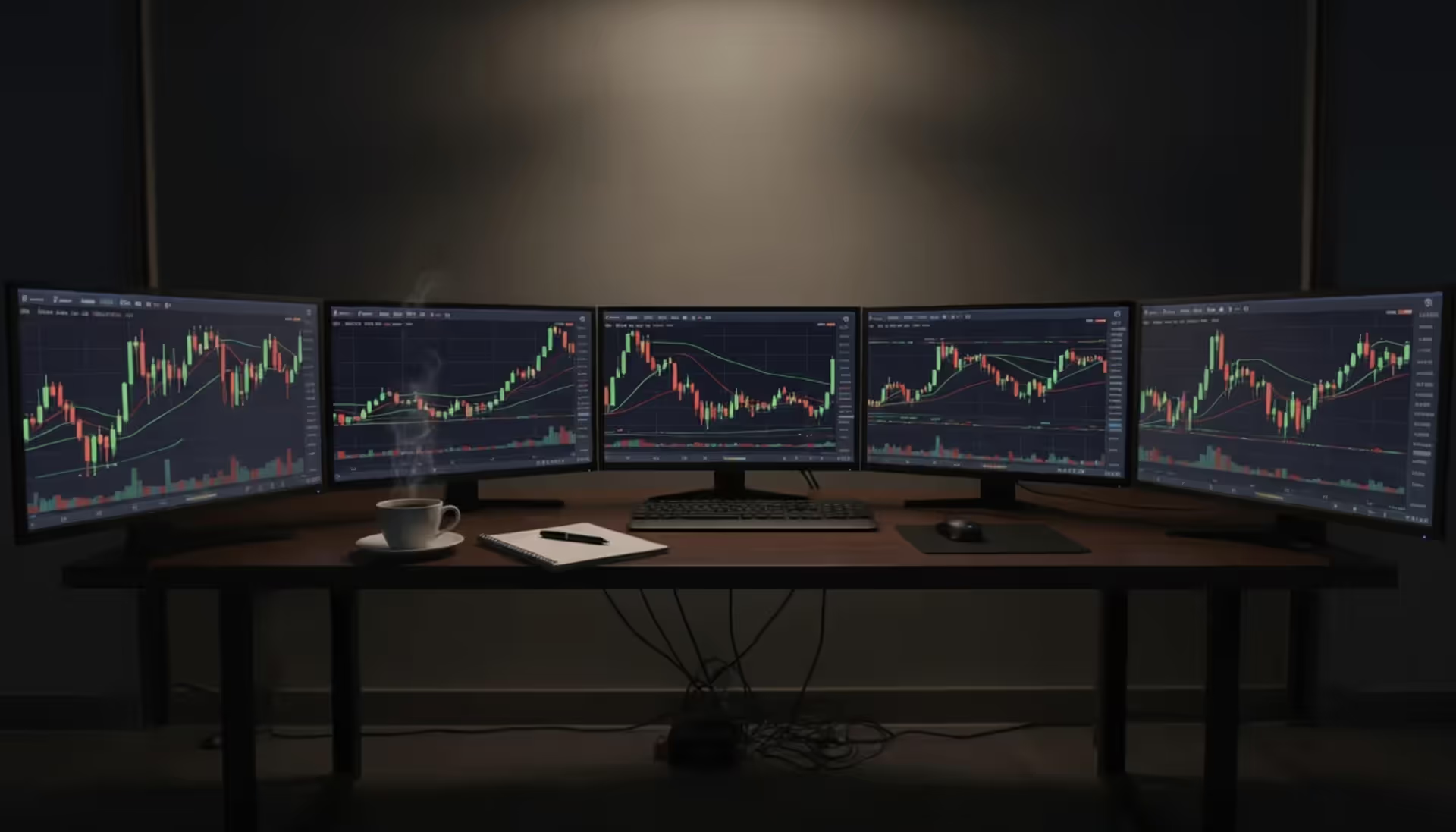
The foreign exchange market processes over $7.5 trillion in daily transactions, making it the world's largest financial market. Banks, multinational corporations, hedge funds, and retail traders all participate. Yet Google searches for "forex scam" have increased by 340% since 2022, and the CFTC reports that forex-related fraud complaints remain among the top three categories of financial misconduct reported by US consumers.
This disconnect creates confusion. How can the world's most liquid market also be associated with widespread fraud? The answer lies in understanding that legitimate forex trading exists alongside a parallel ecosystem of fraudulent schemes designed to exploit aspiring traders.
What Makes Forex a Legitimate Financial Market
The forex market serves a fundamental economic purpose: facilitating international trade and investment. When Toyota ships cars from Japan to the United States, it needs to convert yen into dollars. When pension funds diversify across European bonds, they execute currency exchanges. This commercial necessity creates the foundation of forex as a legitimate market.
Major participants include central banks managing monetary policy, commercial banks providing liquidity, multinational corporations hedging currency risk, institutional investors seeking returns, and retail traders speculating on price movements. The Bank for International Settlements estimates that 88% of all forex transactions involve the US dollar, with the euro appearing in 31% of trades and the Japanese yen in 17%.
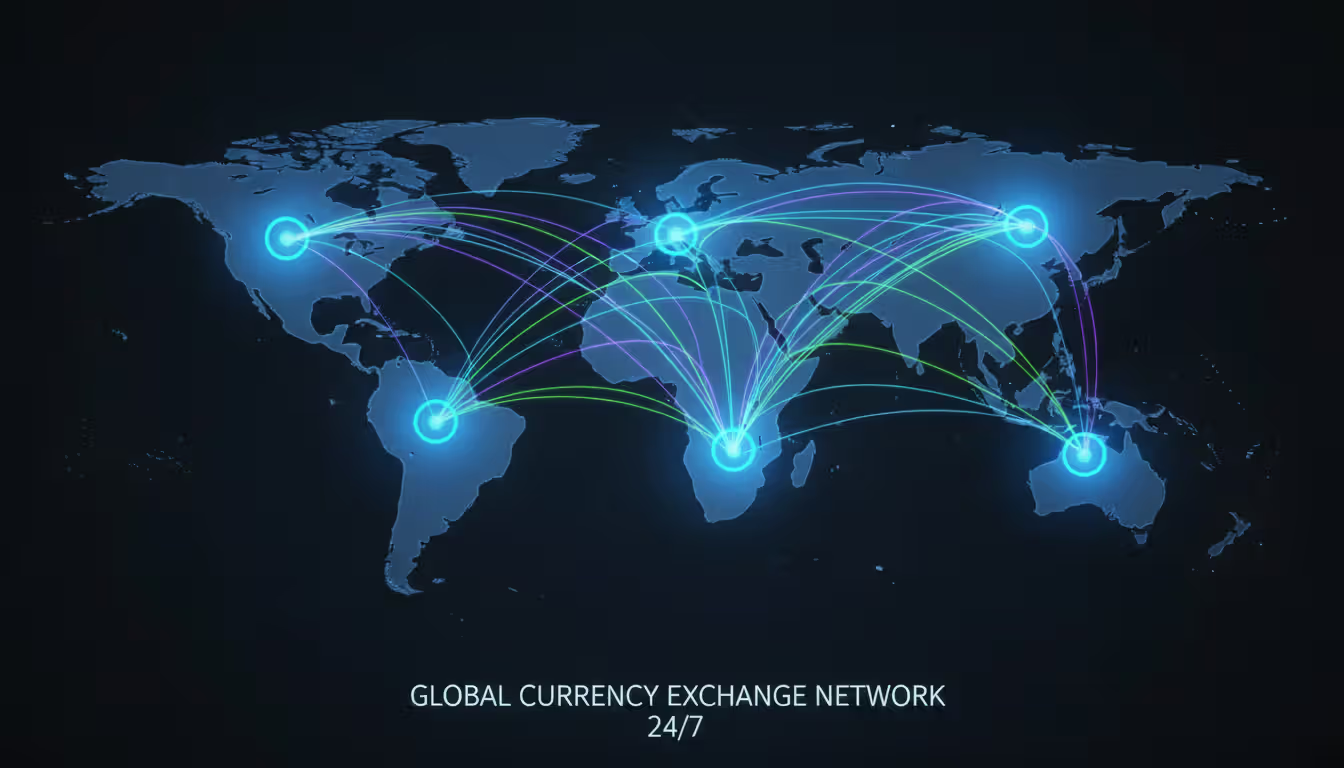
Unlike stock exchanges with physical locations and centralized order books, forex operates as a decentralized over-the-counter market. Trading occurs directly between parties through electronic networks spanning London, New York, Tokyo, Singapore, and Sydney. This 24-hour structure reflects genuine global commerce rather than artificial speculation.
The market's legitimacy stems from its economic function, not its accessibility to retail traders. Currency prices respond to interest rate differentials, trade balances, political stability, and economic growth—real factors that affect international capital flows. A Canadian manufacturer worried about US dollar exposure isn't participating in a scam; they're managing business risk.
Retail forex trading emerged as a legitimate subset when technology reduced transaction costs enough to make small-scale currency speculation viable. Before the late 1990s, forex remained largely institutional. Now platforms allow individuals to trade with modest capital, though this democratization also created opportunities for fraud.
Author: Olivia Kensington;
Source: martinskikulis.com
How Forex Markets Are Regulated in the United States
The regulatory framework separating legitimate forex from fraud centers on two federal entities: the Commodity Futures Trading Commission and the National Futures Association. Their oversight doesn't guarantee profits or eliminate all risk, but it establishes minimum standards that distinguish legal operations from criminal enterprises.
CFTC's Role in Forex Market Oversight
The Commodity Futures Trading Commission received explicit authority over retail forex transactions through the Dodd-Frank Act. The CFTC doesn't regulate the entire $7.5 trillion daily forex market—most institutional currency trading falls outside its jurisdiction—but it does regulate firms offering leveraged forex to retail US customers.
The CFTC's enforcement division investigates forex fraud, files civil actions against violators, and seeks restitution for victims. In fiscal year 2025, the agency filed 37 forex-related enforcement actions and obtained judgments totaling $1.2 billion. These cases typically involve unregistered entities, misappropriation of customer funds, or fraudulent performance claims.
The agency also maintains the RED List (Registration Deficient List), identifying firms soliciting US customers without proper registration. Checking this database takes three minutes and eliminates many fraudulent brokers from consideration. The CFTC updates the list weekly as new violators emerge.
Capital requirements represent another critical oversight function. Registered forex dealers must maintain minimum adjusted net capital of $20 million plus 5% of customer liabilities exceeding $10 million. This financial cushion protects customer funds if the firm fails, though it doesn't eliminate all risk.
NFA Forex Rules and Broker Registration
The National Futures Association operates as the industry's self-regulatory organization under CFTC oversight. Every firm offering retail forex to US customers must register as a Retail Foreign Exchange Dealer (RFED) and maintain NFA membership. Individuals handling customer accounts must register as Associated Persons and pass proficiency exams.
NFA Compliance Rule 2-36 prohibits specific practices: guaranteeing profits, implying that past performance predicts future results, using testimonials without specific disclosures, and failing to disclose that most retail forex traders lose money. Violators face fines, suspensions, or permanent bars from the industry.
The organization conducts annual audits of member firms, examining capital adequacy, segregation of customer funds, record-keeping, and supervision systems. These audits catch problems before they become catastrophic. In 2025, NFA examined 47 forex dealer members and issued 23 deficiency letters requiring corrective action.
Forex broker registration isn't optional or cosmetic. Operating without NFA registration while soliciting US customers constitutes a federal violation. The distinction between registered and unregistered firms often separates legitimate operations from fraudulent schemes.
Author: Olivia Kensington;
Source: martinskikulis.com
Why Forex Has a Reputation Problem
The forex market's reputation suffers because fraud is genuinely prevalent in retail forex, unlike most other US financial markets. The CFTC estimates that unregistered, fraudulent forex schemes outnumber legitimate registered dealers by approximately 20 to 1. Victims lose an estimated $500 million annually to forex-related fraud in the United States alone.
Several factors concentrate fraud in retail forex. First, the market's complexity confuses newcomers. Unlike buying stocks—where you own a piece of a company—forex involves simultaneous buying and selling, leverage mechanics, swap rates, and currency pair correlations. This complexity lets fraudsters hide behind jargon while making absurd promises.
Second, offshore jurisdictions actively court forex brokers with minimal regulation. Countries like Vanuatu, Saint Vincent and the Grenadines, and Seychelles issue forex licenses with little meaningful oversight. These "regulated" brokers technically hold licenses, but the regulatory standards might require only $10,000 in capital and an annual filing fee. They target US customers while operating beyond CFTC reach.
Third, social media amplifies fraudulent marketing. Instagram and TikTok accounts display rented luxury cars, stacks of cash, and fabricated trading results. These "forex lifestyle" promotions prey on financial anxiety and ambition, particularly targeting younger demographics with promises of quick wealth. The accounts disappear after collecting signal service fees or referral commissions from fraudulent brokers.
Fourth, high retail trader failure rates provide cover for fraud. Studies consistently show that 70-80% of retail forex traders lose money even at legitimate brokers. When a scam victim loses their deposit, they might assume they simply failed at trading rather than recognizing they were defrauded. This confusion prevents many victims from reporting fraud.
The legitimate forex industry has struggled to differentiate itself from this fraud ecosystem. When someone mentions forex trading at a dinner party, listeners often associate it with scams rather than with the institutional currency market that facilitates global commerce.
Forex Scam Warning Signs Every Trader Should Know
Recognizing fraud requires understanding specific patterns that distinguish scams from legitimate but risky trading. The following red flags appear consistently across forex fraud cases:
Guaranteed returns or minimal risk claims. Any statement guaranteeing profits or suggesting forex trading carries low risk indicates fraud. Legitimate brokers and money managers cannot guarantee returns in a market where currency prices fluctuate based on unpredictable economic and political factors. Phrases like "guaranteed 10% monthly returns" or "risk-free forex system" always signal scams.
Unregistered broker or money manager. Operating without CFTC registration while serving US customers violates federal law. Scammers often claim registration isn't necessary because they're "educational services" or operate under foreign licenses. Neither excuse legitimizes serving US customers without proper registration.
Pressure tactics and artificial urgency. Legitimate brokers don't pressure prospects to deposit funds immediately. Scammers create false urgency: "This special leverage offer expires tonight" or "Only three spots remain in our managed account program." These tactics prevent potential victims from conducting due diligence.
Difficulty withdrawing funds. The most definitive scam indicator appears when brokers delay, complicate, or refuse withdrawal requests. Excuses include "processing delays," demands for additional deposits before releasing funds, or claims that withdrawals require paying taxes upfront. Legitimate brokers process withdrawals within standard timeframes (typically 1-5 business days) without additional deposits.
Unsolicited contact and cold calls. Receiving unexpected calls or messages about forex opportunities indicates likely fraud. Registered forex dealers generally don't cold-call retail prospects. Scammers obtain contact lists and use aggressive phone tactics to pressure victims into depositing funds.
Promises of secret systems or insider information. Claims about proprietary trading algorithms, insider connections, or secret market knowledge that guarantee profits represent classic fraud. No secret system consistently beats the forex market. If such systems existed, their owners would trade them privately rather than selling access for $297.
No physical address or vague location information. Legitimate brokers maintain physical offices and provide specific addresses. Scammers use virtual offices, list only email contacts, or provide addresses that lead to mail forwarding services. A broker claiming to operate from "London" without a specific verifiable address raises immediate concerns.
Testimonials without verifiable identities. Scam websites feature glowing testimonials from "successful traders" whose identities can't be verified. Photos often come from stock image services. Legitimate firms might display testimonials, but they include full names and often link to verifiable social media profiles.
How to Verify Your Forex Broker Is Legitimate
Verification requires specific steps rather than general impressions. Follow this process before depositing funds with any forex broker:
Step 1: Check NFA registration status. Visit the NFA's BASIC search system (nfa.futures.org/basicnet) and search for the firm name. Verify the firm holds RFED registration and current NFA membership. Check the registration status of any individuals you'll work with. This search takes five minutes and eliminates the majority of fraudulent brokers.
Step 2: Review the firm's disclosure document. Registered forex dealers must provide a risk disclosure document before opening accounts. This document outlines the percentage of customer accounts that lost money during recent quarters. If a firm won't provide this document or if it shows that 85% of customers lost money, understand what you're entering.
Step 3: Verify the firm's physical presence. Confirm the broker maintains a legitimate office at the address listed in their NFA registration. Search the address on Google Maps and verify it's a commercial building rather than a residential address or mail drop. Call the main number and assess whether you reach a professional operation.
Step 4: Research the firm's complaint history. Check the NFA's BASIC system for arbitration cases and regulatory actions. Review CFTC enforcement releases for the firm's name. Search the Better Business Bureau and read complaints. Every firm receives some complaints, but patterns matter. Multiple complaints about withdrawal difficulties or account manipulation indicate serious problems.
Author: Olivia Kensington;
Source: martinskikulis.com
Step 5: Test customer service responsiveness. Contact the broker with detailed questions about their fee structure, execution model, and withdrawal process. Legitimate brokers employ knowledgeable staff who provide clear answers. Evasive responses, pressure to deposit before receiving information, or inability to explain basic operational details suggest problems.
Step 6: Start with the minimum deposit. Even after verification, begin with the smallest allowed deposit. Test the platform, execute several trades, and request a small withdrawal. Confirm the withdrawal processes smoothly before depositing larger amounts. This approach limits exposure if problems emerge.
Step 7: Never send funds to personal accounts. Legitimate brokers maintain segregated customer fund accounts at major banks. You'll send deposits to a business account clearly associated with the broker. Requests to wire funds to personal accounts, third-party payment processors, or cryptocurrency wallets indicate fraud.
Legitimate Forex Trading vs Forex Fraud
Understanding the distinction requires comparing specific characteristics:
Characteristic
Legitimate Forex Broker
Forex Scam
Regulatory Status
CFTC-registered RFED with current NFA membership
Unregistered or claims foreign license suffices for US customers
Profit Promises
Discloses that most retail traders lose money; makes no return guarantees
Guarantees returns, claims minimal risk, promises specific monthly percentages
Withdrawal Policy
Processes withdrawals within 1-5 business days with no additional requirements
Provides demo accounts; no pressure to deposit before testing platform
Requires deposit before platform access or demo accounts unavailable
Execution Quality
Transparent execution with minor slippage during normal conditions
Frequent requotes, extreme slippage, or trades that only execute at unfavorable prices
Legitimate forex trading involves real financial risk. Even registered brokers operating legally can't guarantee you'll profit. The distinction lies in transparency, regulatory compliance, and honest representation of risks rather than in profitability outcomes.
Most retail traders lose money at legitimate brokers because forex trading is genuinely difficult. Currency movements respond to complex macroeconomic factors, leverage amplifies losses, and transaction costs erode small accounts. Acknowledging these realities doesn't make a broker fraudulent—it makes them honest.
The foreign exchange market is a legitimate and vital component of the global financial system. However, the retail forex sector has attracted a disproportionate number of fraudulent operators who exploit the market's complexity and the public's lack of familiarity with currency trading. Consumers must understand that registration and regulation exist to protect them, and working with unregistered entities exposes them to fraud with little legal recourse
— Vincent McGonagle
FAQ: Common Questions About Forex Trading Legitimacy
Is forex trading legal in the United States?
Yes, forex trading is legal in the United States when conducted through CFTC-registered brokers. The forex market itself is a legitimate global financial market. However, many entities offering forex services to US customers operate illegally without proper registration. Trading through unregistered brokers violates federal law and provides no regulatory protections if problems arise.
Can you really make money trading forex?
Some traders profit from forex trading, but they represent a small minority. CFTC regulations require registered brokers to disclose that 70-80% of retail forex accounts lose money. Profitable traders typically have substantial experience, proper risk management, adequate capital, and realistic expectations. Forex isn't a quick wealth strategy—it's a sophisticated financial market where most retail participants lose money even at legitimate brokers.
How do I know if a forex broker is registered with the CFTC?
Visit the NFA's BASIC search system at nfa.futures.org/basicnet and search for the broker's name. Legitimate brokers will appear with "RFED" (Retail Foreign Exchange Dealer) registration status and current NFA membership. The search results display the firm's registration date, status, and any regulatory actions. If a broker isn't listed or claims registration isn't required, don't open an account.
What should I do if I think I've been scammed by a forex broker?
First, document everything: account statements, correspondence, deposit receipts, and withdrawal requests. File a complaint with the CFTC through their online complaint form and report the fraud to the NFA. Contact your bank or payment processor immediately if the scam occurred recently—you might recover funds through chargeback procedures. Consider consulting an attorney specializing in securities fraud, particularly if losses exceed $25,000. Report the scam to the FBI's Internet Crime Complaint Center (IC3) and your state attorney general's office.
Are all offshore forex brokers scams?
Not all offshore brokers are scams, but they operate with less regulatory oversight than US-registered brokers. Some offshore jurisdictions maintain legitimate regulatory standards, while others issue licenses with minimal requirements. The critical issue is that offshore brokers serving US customers without CFTC registration violate US law regardless of their foreign licenses. Even legitimate offshore brokers provide no recourse through US regulatory channels if disputes arise. US residents should use CFTC-registered brokers to ensure regulatory protections.
Do I need a lot of money to start legitimate forex trading?
Registered US forex brokers typically require minimum deposits between $100 and $1,000, though some accept smaller amounts. However, the minimum deposit differs from the amount you should risk. Experienced traders recommend starting with at least $2,000-$5,000 to withstand normal market volatility while learning. Accounts below $1,000 struggle to implement proper risk management because position sizes become too small to be practical. Scammers often promote forex as accessible with tiny amounts ($50-$100) while legitimate educators emphasize that adequate capital improves your probability of success.
Forex trading occupies a unique position as both a legitimate global financial market and a sector plagued by widespread fraud. The $7.5 trillion daily forex market facilitates essential international commerce and provides a venue for institutional currency management. This underlying legitimacy is real and important.
Simultaneously, the retail forex sector contains more fraud than almost any other financial market accessible to US consumers. Unregistered brokers outnumber legitimate ones, social media amplifies fraudulent marketing, and offshore operations serve US customers while evading regulatory oversight.
The path forward requires recognizing both realities. Dismissing all forex trading as fraudulent ignores a legitimate market and prevents informed participation. Assuming forex trading is safe because the market is legitimate exposes you to significant fraud risk.
Verification provides protection. Checking NFA registration takes minutes and eliminates the majority of fraudulent brokers. Understanding warning signs—guaranteed returns, withdrawal difficulties, unregistered operations—helps identify scams before you lose money. Starting with minimum deposits and testing withdrawal processes limits exposure while you evaluate a broker.
Even at legitimate, registered brokers, forex trading carries substantial financial risk. Most retail traders lose money because currency trading is genuinely difficult, not because they chose fraudulent brokers. Proper education, risk management, adequate capital, and realistic expectations matter more than finding the "perfect" broker.
The question "Is forex trading legit?" has a nuanced answer: the market is legitimate, but many entities offering retail forex services are not. Your responsibility is distinguishing between them before risking capital.
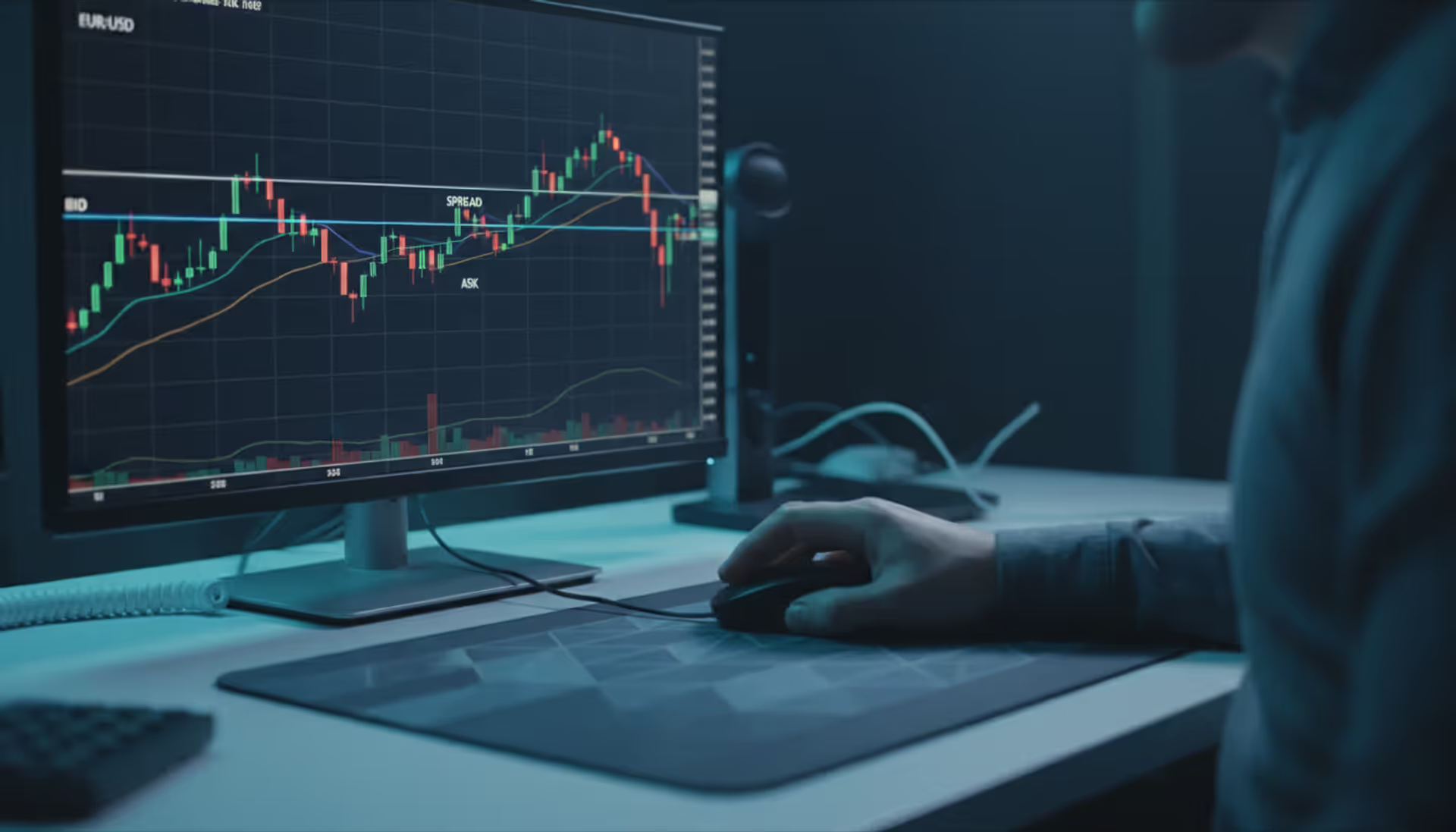
The spread is the difference between bid and ask prices in forex trading—your cost to enter every position. Understanding how spreads work, when they widen, and how to minimize these costs can dramatically improve your trading profitability over time
A pip represents the smallest standardized price movement in forex trading. Understanding pip calculations is essential for position sizing, risk management, and profit calculation. This guide explains pip definitions, calculation methods for different currency pairs, and how to avoid common mistakes
Spread betting allows you to speculate on price movements without owning assets. This leveraged derivative offers access to thousands of markets but carries substantial risks. Learn how spread betting works, profit/loss mechanics, tax implications, and critical mistakes to avoid
The forex market moves $7.5 trillion daily, yet most retail traders lose money. Regulatory data shows only 15-25% maintain profitable accounts. This guide examines real statistics, common failure causes, and what actually makes traders profitable based on 2026 data
The content on this website is provided for general informational and educational purposes only. It is intended to explain concepts related to Forex (FX) trading, currency markets, leverage, hedging, and risk management.
All information on this website, including articles, guides, and examples, is presented for general educational purposes. Forex trading carries significant risk, and outcomes may vary depending on market conditions, leverage, and individual decisions.
This website does not provide financial, investment, or trading advice, and the information presented should not be used as a substitute for consultation with qualified financial professionals.
The website and its authors are not responsible for any errors or omissions, or for any outcomes resulting from decisions made based on the information provided on this website.