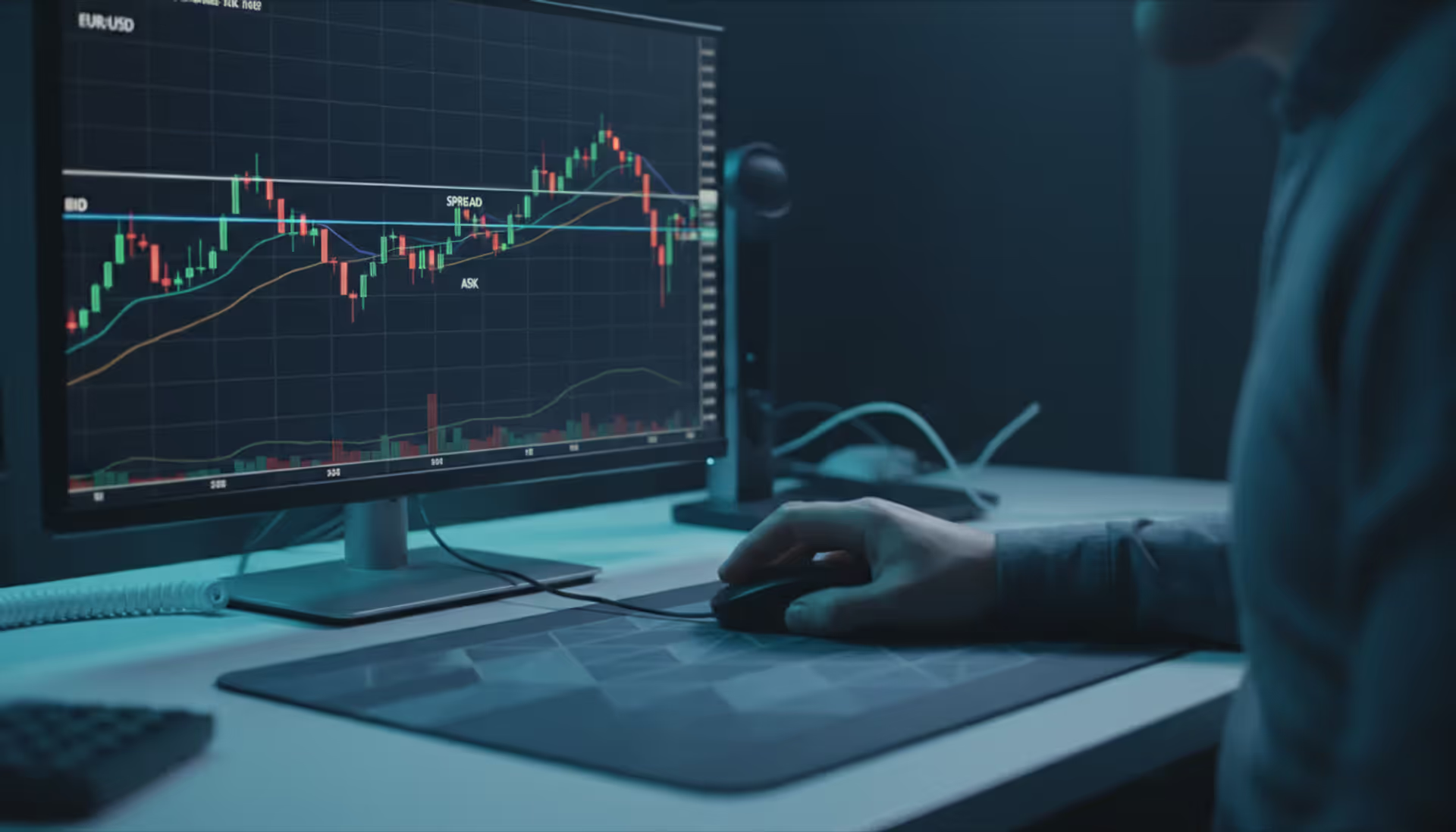
The forex market churns through more than $7.5 trillion every single day. Yet here's the uncomfortable truth: most people trading from their home offices never make consistent money. What creates this massive gap between the market's potential and what actually happens to individual traders? We need to look at real performance numbers, how traders actually behave, and the structural barriers facing everyday participants.
How Profitable Is Forex Trading in Reality
Profitability in forex swings wildly depending on who's trading. Big institutions and hedge funds? They're often pulling 10-30% yearly. Regular retail traders? They're facing much tougher odds. Major regulatory bodies have tracked this, and their data shows 70-80% of retail accounts bleeding money within twelve months.
Why such a huge difference? Professional operations run with serious capital cushions, teams of analysts, and battle-tested risk systems. Meanwhile, retail traders typically go it alone, working with limited funds, learning expensive lessons the hard way. When a $5,000 account drops 20%, that hurts. When an institutional desk takes the same percentage hit, they call it Tuesday.
Your trading style matters enormously for profitability. Scalpers might win 55-60% of their trades but face burnout plus transaction costs that eat their gains. Swing traders could win just 40-45% of trades yet still profit because they're targeting bigger risk-reward setups. Position traders holding for weeks or months? They're dealing with completely different challenges—overnight financing charges, surprise news events, the whole nine yards.
Here's where the math gets brutal: win half your trades with equal risk-reward, and you'll still lose money once spreads and commissions take their bite. You need either better win rates or better risk-reward ratios to overcome those costs. Plenty of beginners learn this lesson after their account's already damaged.
Author: Marcus Ellington;
Source: martinskikulis.com
Retail Forex Trader Statistics and Success Rates
When brokers publish their numbers (because regulators make them), the picture isn't pretty. European Securities and Markets Authority data from 2025 revealed that 74-89% of retail accounts were losing money across major forex brokers. The US Commodity Futures Trading Commission? Their quarterly reports tell the same story—most retail speculators lose.
The dropout rate tells you everything. Researchers following retail accounts for a year found that 40% of new traders quit within three months. Within six months, 75% are gone. By the one-year mark, nearly 90% have thrown in the towel. But here's something interesting: traders who survive that first year show notably better results. Persistence combined with actual learning separates the survivors from everyone else.
Average Forex Trader Returns by Experience Level
Your results tend to improve dramatically as you gain experience and sharpen your methods:
Experience Level
Win Rate Range
Monthly Return Range
Starting Capital
Profitability Timeline
Beginner (0-1 year)
35-45%
Negative 5% to negative 15%
$1,000-$5,000
Still learning fundamentals
Intermediate (1-3 years)
45-55%
Negative 2% to positive 3%
$5,000-$25,000
12-24 months typically
Advanced (3-5 years)
50-60%
Positive 3% to positive 8%
$25,000-$100,000
24-36 months typically
Professional (5+ years)
55-65%
Positive 5% to positive 15%
$100,000+
36+ months minimum
These numbers show what happens to traders in the middle of the pack. Your personal results? They'll depend on your specific strategy, current market behavior, and how well you handle pressure. Notice even advanced traders rarely crack 60% win rates. Making money comes from smart position sizing and solid risk management, not winning most of your trades.
Forex Trading Success Rate Across Brokers
Looking at what brokers published in 2025-2026, you see remarkable consistency. Major retail platforms report profitable accounts ranging from 11% to 26%. Most cluster around 15-20%. These figures count every active account—meaning traders executing at least one trade per quarter.
When you break it down by account size, interesting patterns emerge. Accounts holding less than $1,000 show profitability rates around 5-8%. Accounts with more than $25,000? Their success rates jump to 25-35%. This connection suggests that proper capitalization helps you survive normal drawdown periods without getting forced out of positions.
Geography plays a role too. Traders in countries with robust financial education and strong regulatory oversight perform marginally better than those in less protected markets. Still, no region shows retail success rates topping 30%. Forex trading presents genuine difficulty no matter where you're located.
Why Most Forex Traders Lose Money
Excessive leverage destroys more retail accounts than anything else. When brokers offer 50:1 or 100:1 leverage, traders can control $50,000 or $100,000 with just $1,000 in their account. The market moves 2% against them? Account gone. Beginners frequently mistake leverage for opportunity, taking positions far too massive for their capital.
Poor risk management makes the leverage problem worse. Plenty of traders risk 10-20% of their account on individual trades. That virtually guarantees eventual disaster. Three or four losses in a row—completely normal in any trading approach—and their account's destroyed before they can bounce back. Professional traders? They typically risk 0.5-2% per trade, letting them survive long losing streaks.
Author: Marcus Ellington;
Source: martinskikulis.com
Emotions wreck trading accounts in predictable ways. Revenge trading after losses. Moving stop-losses to dodge taking losses. Abandoning proven strategies after a few bad trades. These all stem from psychological weak spots, and the market ruthlessly exploits them. Follow your trading plan 90% of the time but break your rules during high-emotion moments? You'll still lose money.
Most losing traders never develop a real strategy. They're entering trades based on hunches, tips from Reddit, or surface-level technical analysis without grasping probability or edge. Trading without a tested, rule-based approach isn't trading at all—it's gambling. The difference shows up clearly in long-term results.
Unrealistic expectations create a vicious cycle. Someone expecting to double their account monthly will take absurd risks and inevitably blow up. The gap between fantasy and reality breeds frustration, which leads to increasingly desperate trades.
The cardinal sin in trading is not the occasional loss—it's the failure to protect capital through disciplined risk management. I've watched traders with winning strategies destroy themselves by risking too much on individual trades. Your survival depends on limiting losses, not maximizing wins
— Dr. Brett Steenbarger
What Makes Forex Traders Profitable
Disciplined risk management separates winners from losers more than any other single factor. Traders who make money define their risk before every single trade. They set stop-losses based on actual market structure, not on how much they want to lose. They never move stops to avoid losses. They accept losses as business expenses, not personal failures.
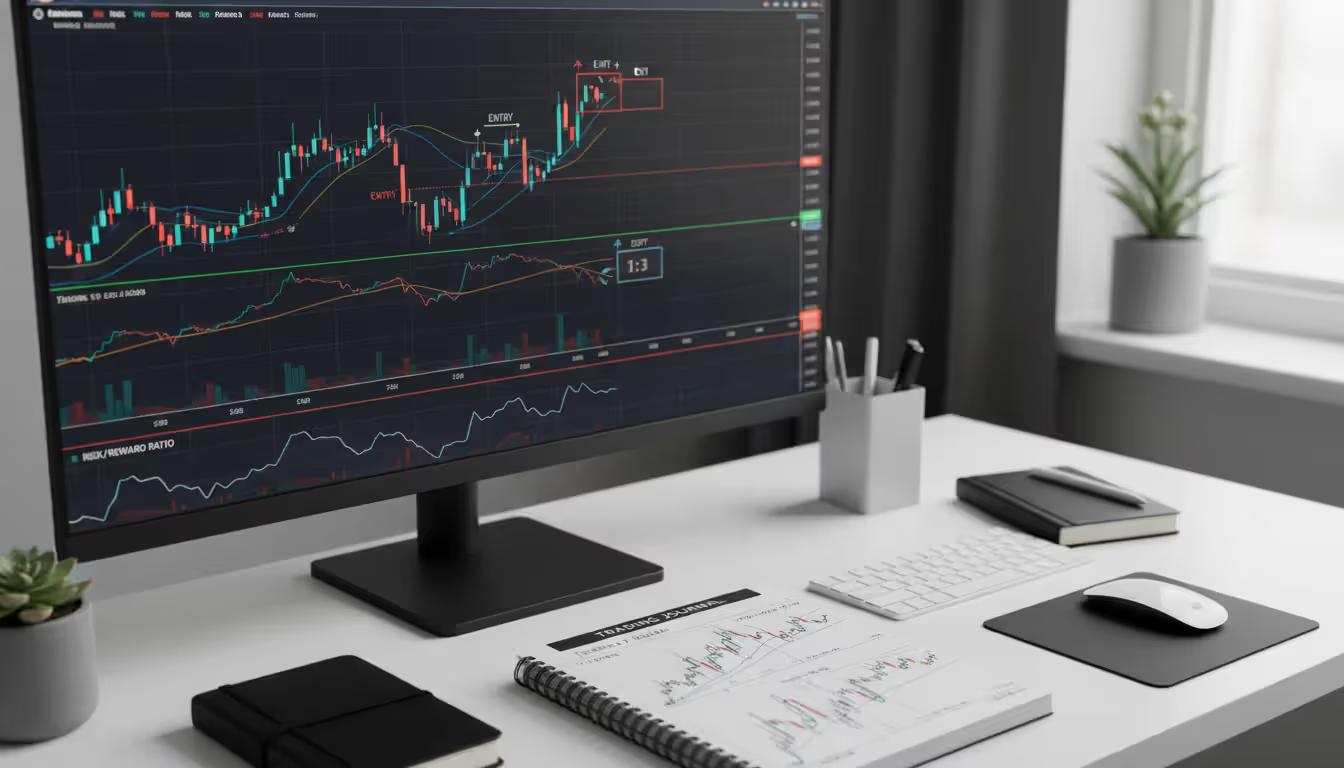
Strong risk-reward ratios let you profit even with modest win rates. Maintain a 1:3 risk-reward setup, and you only need 30-35% winning trades to profit after costs. This mathematical edge forms the foundation for lasting success. Winners often let profitable trades run while cutting losers fast, creating lopsided outcomes where wins dwarf losses.
Smart position sizing ensures no single trade or series of trades can seriously damage your account. Tools like the Kelly Criterion and fixed-fractional methods help optimize bet sizing based on your edge and account balance. Most profitable traders risk somewhere between 0.5-2% of capital per trade, with many settling around 1%.
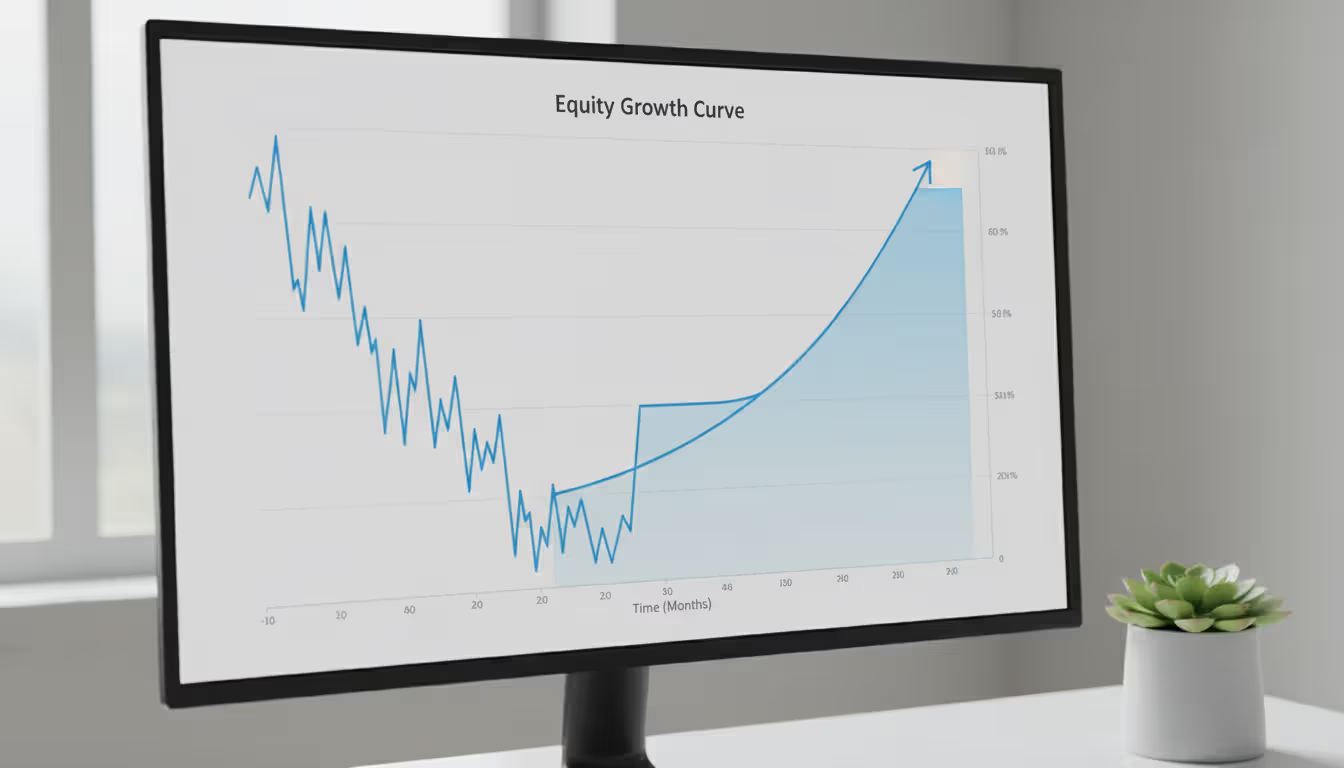
Grounded expectations keep profitable traders level-headed. They've accepted that 2-5% monthly returns represent excellent long-term performance. Compound those returns, and substantial wealth builds—but only if you avoid the boom-bust cycle destroying most accounts. Patience becomes your competitive edge.
Successful traders never stop learning and adapting. Market conditions shift. Strategies that worked stop working. New opportunities appear. Profitable traders keep trading journals, review their performance constantly, and adjust based on data rather than feelings. They treat trading as a skill requiring constant development, not a magic formula you learn once.
Author: Marcus Ellington;
Source: martinskikulis.com
Realistic Forex Income Expectations for Beginners
Expect to lose money for at least six to twelve months while you're learning. This learning period costs real money—think of it as tuition for your market education. Starting with modest amounts ($500-$2,000) limits your tuition costs while giving you genuine trading experience that demo accounts can't replicate.
After that initial learning phase, breaking even represents serious progress. Consistently breaking even means you've developed risk management skills and emotional control—two critical components you'll need eventually. This phase usually lasts another six to twelve months.
Once you achieve consistent profitability, realistic monthly gains fall between 2-5% for competent retail traders. On a $10,000 account, that's $200-$500 monthly. Not exactly full-time income, but it represents real accomplishment and provides capital for compounding.
Scaling to meaningful income requires either substantial capital or exceptional skill. Earning 3% monthly on $100,000 generates $3,000—getting closer to livable income in many places. Reaching $100,000 in trading capital takes years for most people through combined deposits and compounded returns.
Part-time trading fits most retail participants better than going full-time. When you need trading to pay bills, you'll overtrade and make poor decisions. Maintaining separate income removes that pressure, letting you wait for genuinely high-probability setups instead of forcing trades to generate income.
Author: Marcus Ellington;
Source: martinskikulis.com
Can You Make Money Trading Forex Consistently
Long-term consistency demands treating trading like a business, not a hobby or lottery ticket. That means keeping detailed records, analyzing performance metrics, understanding your actual edge, and maintaining professional discipline even with small accounts.
Professional traders operate differently than retail participants in several crucial ways. They usually specialize in specific pairs or strategies. They develop deep expertise in their niche. They maintain strict risk controls. They view daily or weekly swings as noise rather than meaningful signals. Many pros work for firms providing capital, training, and risk oversight—advantages unavailable to solo retail traders.
The part-time versus full-time distinction matters significantly. Part-timers can be selective, trading only when conditions favor their approach. Full-timers often feel pressure to trade regularly, leading to lower-quality setups and worse outcomes. Paradoxically, trading less often produces better results.
Consistency also hinges on market conditions. Trending markets favor certain strategies. Range-bound markets favor others. Traders who recognize what type of market environment they're in and adjust accordingly maintain steadier results than those rigidly applying identical strategies regardless of conditions.
Building multiple income streams from trading—combining swing trades with options strategies, or mixing technical trading with carry trades—can smooth out your equity curve and reduce pressure on any single method. The diversification principle applies to trading strategies just like investment portfolios.
Frequently Asked Questions About Forex Profitability
What percentage of forex traders are profitable?
Based on regulatory data from major brokers, roughly 15-25% of retail forex traders keep profitable accounts over twelve months. But that figure includes traders barely scraping by. Only about 5-10% of retail traders generate returns meaningfully exceeding what they'd earn from passive index investing, after factoring in time spent trading.
How much can you realistically make trading forex?
Skilled retail traders usually achieve 2-5% monthly, which translates to 24-60% annually before taxes. These returns demand significant skill, discipline, and often years of experience. Beginners should expect losses during their first year while learning. Claims of 10%+ monthly returns might happen during exceptional periods but aren't sustainable long-term and often signal excessive risk-taking that eventually produces massive losses.
Why do 90% of forex traders fail?
The brutal failure rate comes from overleveraging, sloppy risk management, emotional decisions, absence of genuine strategy, and fantasy expectations. Most beginners risk way too much per trade, butcher their stop-losses, and abandon their plans during rough patches. High leverage combined with low barriers to entry attracts tons of undercapitalized, unprepared people treating trading like gambling instead of skill-based work.
What is a good win rate in forex trading?
Anything above 50% is solid, but your profitability depends more on risk-reward ratios than win percentage. Someone with 40% winners but 1:3 risk-reward will crush someone with 60% winners at 1:1 risk-reward. Most professionals maintain 45-60% win rates, with their edge coming from position sizing and letting winners run while cutting losers fast. Chasing high win rates often means holding losers too long and cutting winners too early.
How long does it take to become a profitable forex trader?
Traders who eventually achieve steady profitability typically need 2-4 years of dedicated practice, study, and real-money experience. The first 6-12 months usually involve losses while absorbing basics. The next 12-24 months involve refining strategy and developing emotional control, often with breakeven or slightly negative results. Reaching profitability in under two years is exceptional. Still unprofitable after five years of serious effort? Honestly assess whether trading suits your skills and temperament.
Is forex trading worth it for beginners?
Forex offers potential for skilled, disciplined people willing to invest years developing expertise. However, most beginners would achieve better financial results investing in diversified index funds while building career income. Trading makes sense if you're genuinely interested in markets, willing to treat it as long-term skill development, and able to risk capital you can afford losing during the learning process. It's not a wealth shortcut and demands more effort than most anticipate.
Making money in forex? Possible, but uncommon among retail participants. The statistics are clear: 75-85% of traders lose money, with most failing within their first year. Success demands adequate capital, disciplined risk management, grounded expectations, and years of dedicated learning.
Those achieving consistent profitability typically earn 2-5% monthly—solid performance that compounds meaningfully over time, though far from the exaggerated claims littering marketing materials. The path involves treating trading as serious business, accepting losses as normal costs, and developing both technical skills and psychological toughness.
Start with small amounts, expect an extended learning period, and maintain separate income to avoid performance pressure. Understanding that most traders fail provides valuable perspective. Success requires doing what most traders won't: rigorous risk management, emotional discipline, and patient capital growth rather than gambling for quick gains.
The spread is the difference between bid and ask prices in forex trading—your cost to enter every position. Understanding how spreads work, when they widen, and how to minimize these costs can dramatically improve your trading profitability over time
A pip represents the smallest standardized price movement in forex trading. Understanding pip calculations is essential for position sizing, risk management, and profit calculation. This guide explains pip definitions, calculation methods for different currency pairs, and how to avoid common mistakes
Spread betting allows you to speculate on price movements without owning assets. This leveraged derivative offers access to thousands of markets but carries substantial risks. Learn how spread betting works, profit/loss mechanics, tax implications, and critical mistakes to avoid
The forex market processes over $7.5 trillion daily, yet fraud complaints have surged 340% since 2022. This guide explains how legitimate currency trading coexists with widespread scams, details CFTC and NFA oversight, identifies red flags, and provides a step-by-step broker verification process
The content on this website is provided for general informational and educational purposes only. It is intended to explain concepts related to Forex (FX) trading, currency markets, leverage, hedging, and risk management.
All information on this website, including articles, guides, and examples, is presented for general educational purposes. Forex trading carries significant risk, and outcomes may vary depending on market conditions, leverage, and individual decisions.
This website does not provide financial, investment, or trading advice, and the information presented should not be used as a substitute for consultation with qualified financial professionals.
The website and its authors are not responsible for any errors or omissions, or for any outcomes resulting from decisions made based on the information provided on this website.