Here's something that catches nearly every new forex trader off guard: you place your first trade, and immediately you're down money. Before the market even moves, you're in the hole.
Bad luck? Wrong. That's the spread doing exactly what it's designed to do.
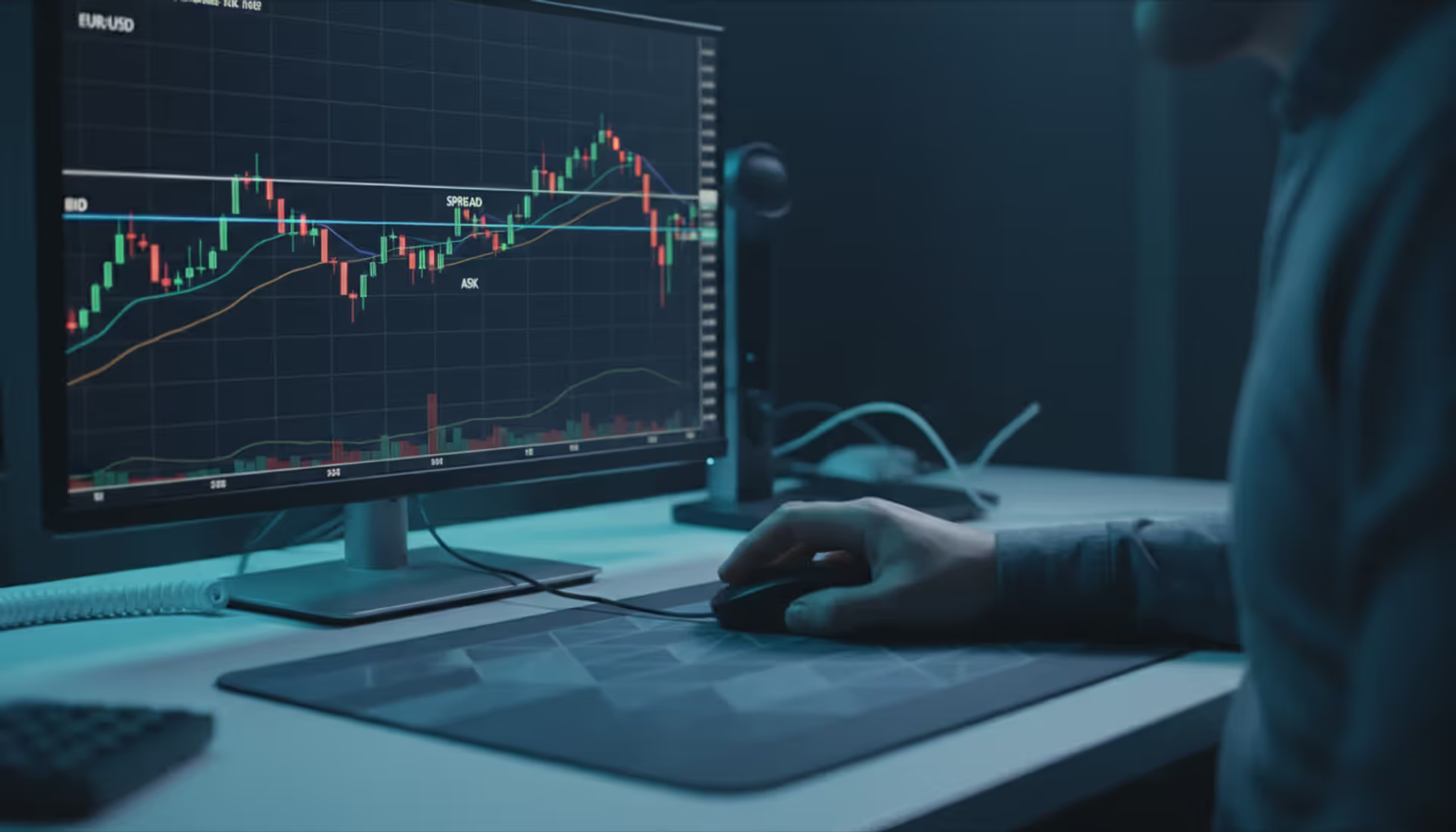
The spread—this gap between buying and selling prices—is how most brokers make their money. Instead of charging you an upfront commission like stock brokers do, they build their fee right into the price you see on your screen. When you look at EUR/USD showing 1.0850 on one side and 1.0852 on the other, that 2-pip difference? Gone the second you click "buy."
Your trade has to move in your favor just to get back to zero. That's the hurdle every winning trade must clear before you see a penny of profit.
Let's put real numbers on this. Say you're actively trading, putting on 20 positions each week. If you're paying 2-pip spreads instead of 0.5-pip spreads, you're bleeding money month after month. Over a year of consistent trading, that difference could mean thousands of dollars that disappeared before your strategy even had a chance to work.
Understanding spreads isn't optional knowledge—it's the difference between knowing your actual costs and flying blind.
How Forex Spread Works
Every currency pair shows you two prices simultaneously. On one side sits the bid (what buyers will pay you), on the other sits the ask or offer (what you'll pay sellers). That difference between them? That's your broker pocketing their cut.
When you buy, you pay the higher number. When you sell, you receive the lower number. Simple as that.
Take EUR/USD at 1.0850/1.0852. Buy a standard lot, and you're instantly underwater by 2 pips compared to where you could sell right now. Your broker just earned that gap.
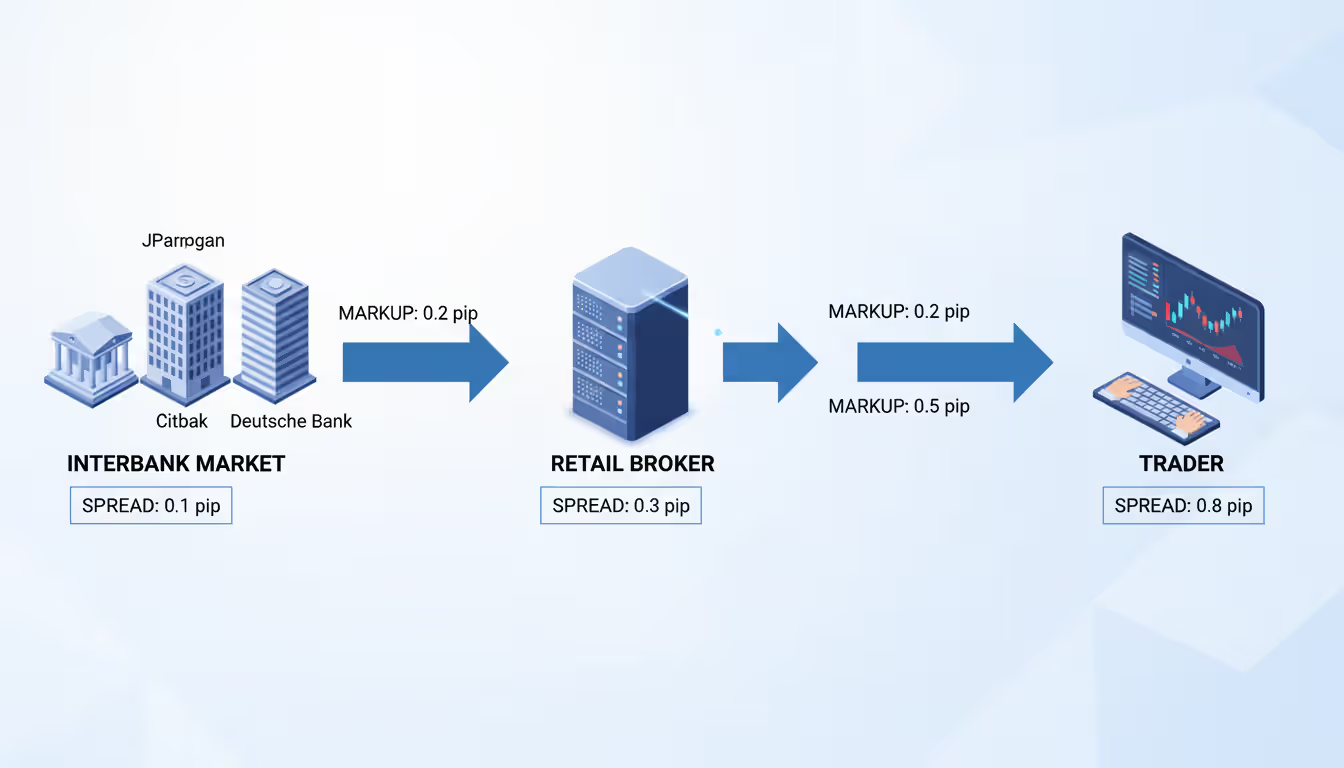
Now, where do these prices actually come from? The massive banking institutions—think JPMorgan, Citibank, Deutsche Bank—trade currencies among themselves in what's called the interbank market. Your retail broker connects to these huge liquidity pools, but they don't just pass along those raw prices. They add their own markup first.
Maybe they're seeing 0.1-pip spreads at the institutional level. They display 0.8 pips to you. The difference? That's theirs to keep.
Different broker types handle this differently. Market makers become your direct counterparty—when you buy, they're selling to you. Then they manage their own risk through their liquidity connections. ECN platforms pull prices from multiple sources and typically charge you a separate commission instead. STP brokers route your order straight through to their liquidity network without taking the other side themselves.
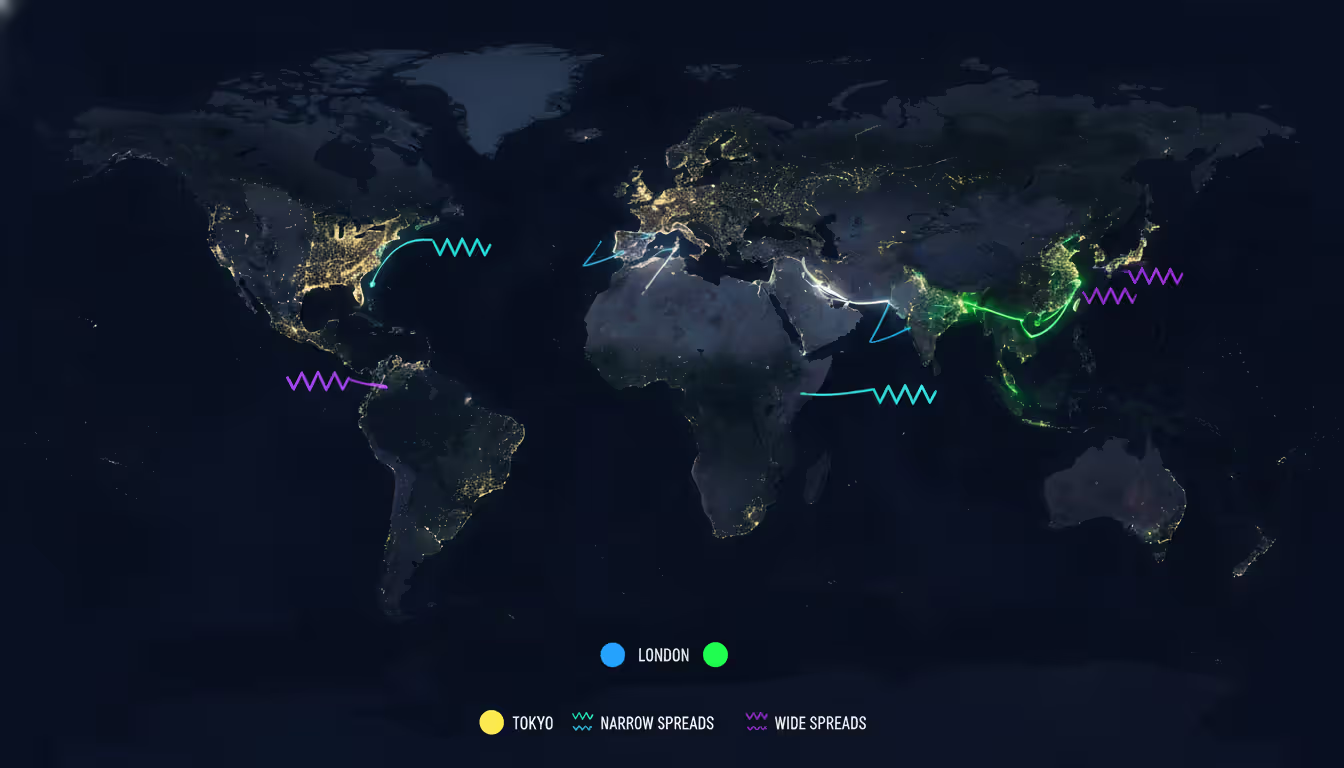
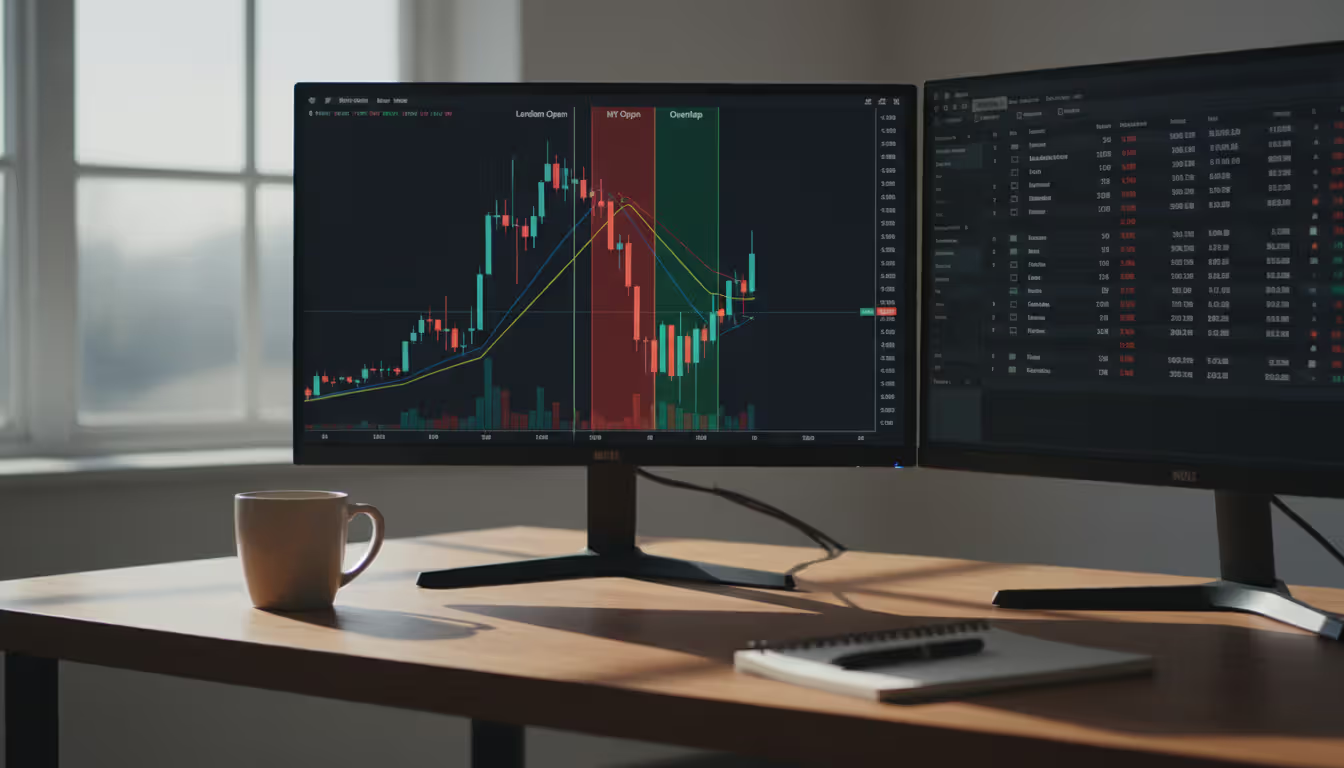
These spreads aren't static, either. EUR/USD might show 0.6 pips during peak hours when London and New York markets overlap—that's 8 AM to noon Eastern when volume is crushing. But check back at 3 AM Eastern when only Australian traders are awake? That same pair could easily hit 2 pips or more because hardly anyone's trading.
Author: Olivia Kensington;
Source: martinskikulis.com
How Forex Spread Is Calculated
The math here is refreshingly simple: subtract the bid from the ask. That's it.
Most pairs measure this in pips—the fourth decimal place for major currencies, or the second decimal when you're trading anything against the Japanese yen.
GBP/USD showing 1.2650/1.2653? Here's your breakdown: - Ask price: 1.2653 - Bid price: 1.2650 - The difference: 0.0003, which equals 3 pips
USD/JPY at 149.20/149.23 gives you 149.23 minus 149.20, which is 0.03—still 3 pips, just measured with two decimals instead of four.
Your actual dollar cost depends entirely on how much you're trading. One standard lot (100,000 units) of EUR/USD with a 1-pip spread costs you $10. Drop to a mini lot (10,000 units), and that same spread runs you just $1. Go smaller with a micro lot (1,000 units), and you're looking at $0.10 per pip.
Real-world example: you're buying 2 standard lots of EUR/USD at 1.0850/1.0852. Your execution happens at 1.0852—the ask price. With a 2-pip spread, that's $10 per pip per lot. Two lots means $20 per pip. So 2 pips times $20 equals $40 that vanished instantly. The bid needs to climb all the way to 1.0854 before you're even back to breakeven—a full 2-pip move just covering what you paid to enter.
Some brokers get fancy with fractional pips—also called pipettes. A 1.5-pip spread might display as 1.00850/1.00865, where that fifth decimal represents a tenth of a pip. High-frequency traders and scalpers care about this precision because they're working razor-thin margins.
Fixed vs Variable Spread: Key Differences
Brokers offer two fundamental spread models, and picking the wrong one for your trading style gets expensive fast.
Feature
Fixed Spread
Variable Spread
How It Works
Stays the same whether markets are calm or chaotic
Changes constantly based on what's happening with liquidity and volatility
EUR/USD Range
Commonly 2-3 pips around the clock
Might be 0.1 pips during busy times, 2+ pips when things are quiet
Predictability
You know exactly what you're paying, 24/7
Moves up and down throughout the day; can spike during thin markets
Who Should Use It
News traders, beginners who value knowing costs upfront
Scalpers, day traders active when volume is high
The Upside
Zero surprises; won't blow out during volatile moments
Cheaper during normal conditions; extremely competitive pricing available
The Downside
You're overpaying during calm periods; higher average cost
Unpredictable during announcements; can widen dramatically
Fixed spreads attract traders who execute around volatile events—think payroll reports or Federal Reserve announcements. You'll pay the same spread whether markets are going nuts or sitting still. The trade-off? You're paying that premium even at 2 AM on a Tuesday when nothing's happening and variable spreads are sitting at a fraction of the cost.
Variable pricing rewards people trading during high-volume windows. A scalper working EUR/USD when London's open might see 0.3-pip spreads with variable pricing compared to paying 2 pips fixed. Run 50 trades weekly, and that difference gets serious fast.
Market makers usually offer fixed spreads since they're taking the other side of your trades and need protection against sudden moves. ECN platforms typically run variable spreads because they're just showing you actual market prices from multiple sources.
One thing to watch: some brokers advertise "fixed" spreads but still widen them during extreme news. Always read the fine print about when their guarantees actually apply.
What Causes Forex Spreads to Widen
Spreads aren't random—they follow predictable patterns once you know what to watch for.
Volatility is the big one. When the Federal Reserve drops unexpected news and EUR/USD starts whipsawing, spreads can explode from 0.8 pips to 10+ pips in seconds. Liquidity providers widen their quotes because sudden price uncertainty means taking the other side of trades becomes genuinely risky. They're protecting themselves from getting run over by a fast-moving market.
Liquidity availability determines how smoothly big orders get filled. During the overlap between London and New York sessions, enormous volume keeps spreads tight because there's no shortage of buyers and sellers. Fast forward to 2 AM Eastern when only Wellington and Sydney are active? Those same pairs might show spreads three or four times wider simply because fewer people are trading.
Economic announcements create entirely predictable spread expansion. The ten minutes before and after releases like CPI data, employment numbers, or central bank decisions typically see spreads doubling or tripling at minimum. Traders step aside to avoid risk, which drains liquidity. Some traders specifically hunt these moments despite wider spreads; others close everything beforehand.
Session transitions—especially that dead zone after Tokyo winds down but before London gets going—create liquidity gaps. EUR/USD might cruise along at 0.6 pips during active hours, then balloon to 2-3 pips during these handoff periods. Exotic pairs like Turkish lira or South African rand can see spreads expand by 10-20 pips during these windows.
Geopolitical shocks trigger the most dramatic spread blowouts. Surprise election results, military conflicts, banking crises—anything that sends markets scrambling causes spreads to explode as market makers protect themselves from rapid price dislocations. During the Brexit referendum in 2016, GBP/USD spreads hit 50+ pips on some platforms as liquidity completely dried up.
Your specific broker's technical setup matters too. If their main liquidity provider goes down, spreads may widen until backup sources compensate. Brokers with deeper liquidity relationships and multiple redundant providers generally maintain tighter spreads when things get messy.
Author: Olivia Kensington;
Source: martinskikulis.com
How Spread Costs Impact Your Forex Profits
Every spread creates an immediate obstacle your analysis must overcome. Stock traders might pay a flat $5 commission regardless of how many shares they buy. Forex? Your spread cost scales directly with how much you're trading and how often you trade.
Consider a day trader doing 10 roundtrip trades daily on EUR/USD with 1-pip spreads, trading 1 standard lot each time. Daily spread cost: 10 trades × 1 pip × $10 per pip = $100. Over 20 trading days in a month, that's $2,000 just in spreads. To break even before considering anything else, this trader needs to generate $2,000 in gross profits. On a $10,000 account, that's a 20% monthly return just to stay flat.
The breakeven calculation is straightforward: price must move favorably by the full spread width before you're at zero profit or loss. With a 2-pip spread, buying EUR/USD at 1.0852 means the bid must reach 1.0854 before you're even. A 3-pip profit target actually requires a 5-pip price movement (the 3 pips you want plus the 2-pip spread you paid).
Tighter spreads provide a measurable edge for frequent traders. Scalpers targeting 5-pip gains with 0.5-pip spreads need 5.5 total pips of movement (the 0.5 spread plus 5-pip target). That's a 10% overhead on the target. Switch to 2-pip spreads, and that same 5-pip target now requires 7 total pips—a 40% overhead.
Stack up costs across multiple trades and the real impact becomes obvious. Two traders with identical strategies and $10,000 accounts:
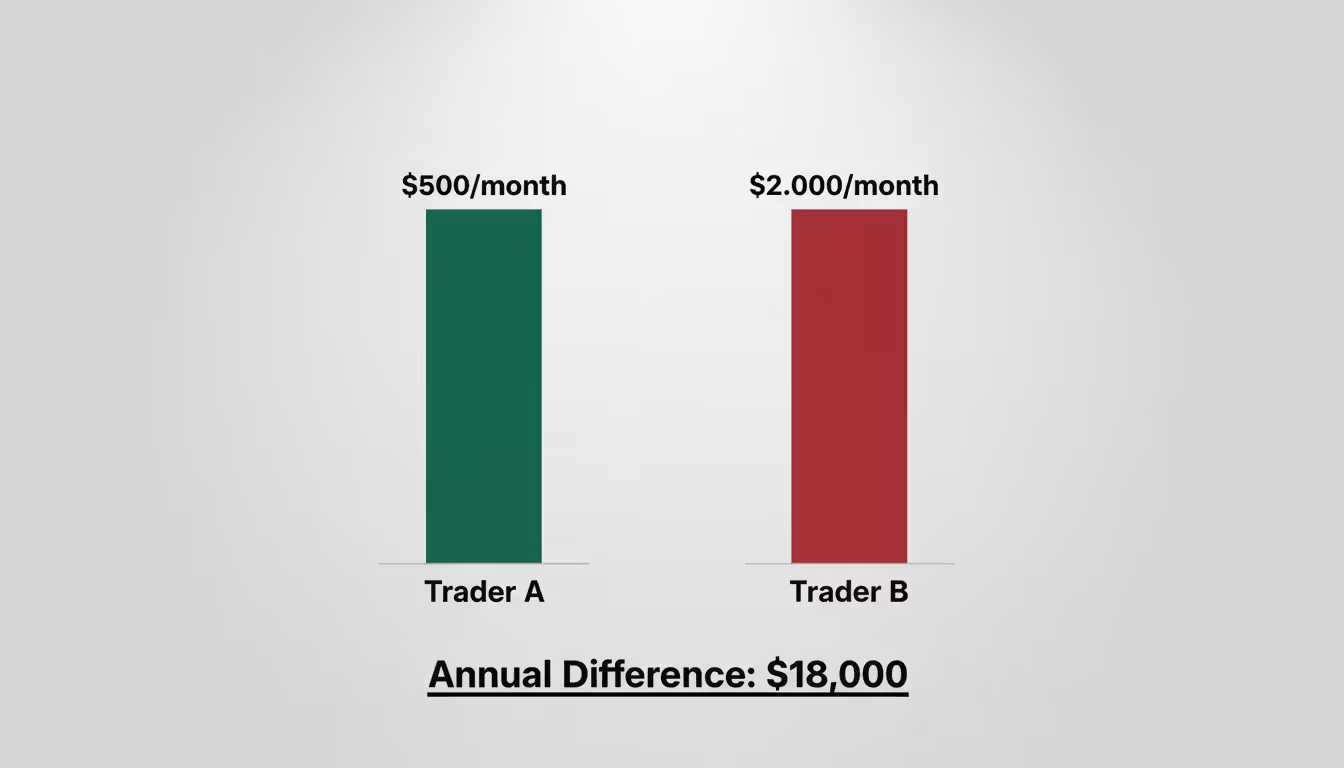
Trader A pays 0.5-pip spreads: 100 trades monthly, 1 standard lot each = 100 trades × 0.5 pips × $10 = $500 in monthly spread costs
Trader B pays 2-pip spreads: 100 trades monthly, 1 standard lot each = 100 trades × 2 pips × $10 = $2,000 in monthly spread costs
Author: Olivia Kensington;
Source: martinskikulis.com
Trader B is losing an extra $1,500 every month—$18,000 per year—for the exact same trading activity. That's 180% of the starting capital just disappearing into spreads over twelve months.
Position traders holding for weeks or months barely notice spread costs. A 2-pip spread means nothing on a 200-pip move. Swing traders holding several days find spreads moderately important. Scalpers and day traders exiting within hours? Spreads can make or break the entire strategy.
Your required win rate to stay profitable increases with spread costs. If your average winner captures 10 pips and your average loser costs 10 pips, but you're paying 2-pip spreads on every trade, you need victories on more than 60% of trades just to stay even (factoring in that 2-pip cost hitting both winners and losers).
How to Minimize Spread Costs When Trading
Reducing spread costs boosts your bottom line without requiring better analysis or improved timing.
Compare brokers ruthlessly. Check spreads across multiple platforms for the pairs you actually trade. A broker offering 0.6-pip EUR/USD spreads versus 1.5 pips saves you $9 per standard lot roundtrip. Trade 50 lots monthly? That's $450 staying in your account. But verify spreads at different times—some brokers advertise great spreads during peak hours but expand them dramatically when things quiet down.
Author: Olivia Kensington;
Source: martinskikulis.com
ECN brokers with commission structures often deliver better total costs for active traders. Paying a $7 roundtrip commission on 0.2-pip spreads beats 1.5-pip spreads with no commission. Always calculate total cost (spread + commission) rather than looking at spreads alone.
Trade when markets are busy. The London-New York overlap (8 AM to noon Eastern) gives you the tightest spreads on EUR/USD, GBP/USD, and other majors. Asian session spreads on these same instruments can run two to three times higher. If your strategy allows flexibility in timing, concentrate transactions during peak liquidity.
Stay away from major news releases. Spreads typically inflate 10-15 minutes before high-impact data and stay elevated 15-30 minutes after. Unless you specifically trade news volatility, either close positions beforehand or wait until spreads normalize. Check an economic calendar every day to know when these zones hit.
Pick your pairs carefully. Major pairs (EUR/USD, USD/JPY, GBP/USD) deliver the tightest spreads—often 0.5-1.5 pips. Minor crosses (EUR/GBP, AUD/NZD) typically run 2-4 pips. Exotic pairs (USD/TRY, EUR/ZAR) can exceed 20-50 pips. Unless exotics offer dramatically better opportunities, stick with majors to keep costs down.
Use limit orders when you can. If exact timing isn't critical, limit orders let you specify your entry price and might get filled at better levels during spread fluctuations. Market orders guarantee immediate execution but always fill at the worse price—the ask when buying or the bid when selling.
Trade less often if your strategy allows. Every transaction costs you the spread, so consolidating multiple small positions into fewer large trades reduces cumulative expenses. A trader making 200 monthly trades at 1 pip each pays double the spreads of someone making 100 trades at 1 pip, even if total volume matches.
Look into volume rebate programs. Some brokers offer rebates based on trading volume, returning portions of spreads or commissions. High-frequency traders moving 100+ lots monthly might recover 10-20% of spread costs through these programs.
The spread is the most transparent cost in forex, yet it's the one traders most often underestimate when calculating whether their strategy is viable. I've seen countless scalping systems that looked profitable in backtests completely fail in live trading because the developer didn't account for realistic spread costs. A strategy that wins 55% of the time with 10-pip targets might seem promising until you realize a 2-pip spread means you need 12 pips of movement per win—suddenly that 55% win rate isn't enough to be profitable
— Kathy Lien
Frequently Asked Questions About Forex Spreads
What qualifies as a competitive spread for forex pairs?
On EUR/USD, you should see spreads between 0.5 and 1.2 pips depending on broker type. ECN platforms might show 0.1-0.3 pips but charge separate commissions, while market makers generally quote 0.8-1.5 pips with no additional fees. For GBP/USD, competitive spreads fall between 1-2 pips. USD/JPY should stay under 1.5 pips. Anything significantly higher suggests you're overpaying. Exotic pairs naturally carry wider spreads—10-30 pips is normal—but shop around because broker differences are substantial.
Does every forex broker charge these spreads?
Yes, every single one charges spreads, though the structure varies. Market makers build their profit into the spread itself and market this as "commission-free" trading. ECN brokers show raw interbank spreads (sometimes as tight as 0.0 pips) but charge separate per-lot commissions—usually $3-7 per side. What really matters is your total cost (spread + commission combined). Most brokers also charge overnight financing fees for positions held past 5 PM Eastern, which is separate from spreads but still affects profitability.
Should I always choose the tightest spread available?
Not necessarily. A broker advertising 0.1-pip spreads with poor execution, constant slippage, or an unstable platform ultimately costs more than one offering 0.8-pip spreads with excellent order fills. Some ultra-tight spread brokers impose restrictions like minimum volume requirements, higher margin demands, or terrible customer service. Scalpers benefit enormously from minimal spreads, but position traders holding weeks might find the difference between 0.5 and 1.5 pips negligible compared to factors like swap rates or platform reliability.
What's the dollar cost per trade based on spreads?
Costs scale with position size and spread width. One standard lot (100,000 units) of EUR/USD with a 1-pip spread costs $10. A mini lot (10,000 units) runs $1, while a micro lot (1,000 units) costs $0.10 for the same spread. Trading 5 standard lots with 1.5-pip spreads costs 5 × 1.5 × $10 = $75. This is your cost to enter and exit—you pay it once per complete roundtrip. Calculate based on your typical position size multiplied by average spreads to determine per-trade costs.
During which times do spreads expand the most?
Three windows are especially problematic: late Friday afternoons when liquidity disappears before the weekend, the gap between Tokyo close and London open (roughly 2-4 AM Eastern), and the minutes surrounding major economic releases. Holiday weeks like Christmas or New Year's also see significantly wider spreads as institutional participation drops. Unexpected geopolitical events can trigger sudden expansion anytime. The narrowest spreads appear during the London-New York overlap on regular business days.
Are spread costs tax deductible for traders?
In the US, forex traders can potentially deduct spread costs as business expenses if they qualify as traders (not investors) under tax rules. The IRS separates traders—who execute frequently as a business—from investors making occasional transactions. Traders can deduct spread costs, software, education, and other expenses on Schedule C. Investors face more limited deduction rules. Section 1256 contracts (forex futures) and Section 988 (spot forex) have different tax treatments. Consult a tax professional experienced with trader taxation since rules are complex and situations vary significantly.
Spreads represent your cost of entry into every forex position—a structural disadvantage you must overcome before earning any profit. Unlike hidden fees or complex commission structures, spreads remain visible and calculable, making them one of the most controllable expenses in trading.
Successful currency traders treat spread costs with the same attention they give risk management or technical analysis. They compare brokerages meticulously, execute during high-volume periods when spreads contract, and select pairs where the spread-to-profit-target ratio makes sense for their approach. Scalpers paying 2-pip spreads while their competitors pay 0.5 pips face a profitability handicap that no amount of market insight can overcome.
The choice between fixed and variable spreads matters less than understanding when each serves your specific needs. News traders might prefer fixed spreads despite higher average costs, while intraday traders benefit from variable spreads during normal market hours. What counts is total expense—spread plus commission—measured against your typical holding period and profit objectives.
Spread awareness separates profitable traders from those constantly wondering why winning positions barely break even. Calculate your monthly spread expenditures, compare them against gross profits, and you'll quickly see whether you're trading with structural advantages or fighting an uphill battle. Small spread differences compound dramatically across hundreds of trades, making broker selection one of the highest-leverage decisions you'll make as a currency trader.
A pip represents the smallest standardized price movement in forex trading. Understanding pip calculations is essential for position sizing, risk management, and profit calculation. This guide explains pip definitions, calculation methods for different currency pairs, and how to avoid common mistakes
Spread betting allows you to speculate on price movements without owning assets. This leveraged derivative offers access to thousands of markets but carries substantial risks. Learn how spread betting works, profit/loss mechanics, tax implications, and critical mistakes to avoid
The forex market moves $7.5 trillion daily, yet most retail traders lose money. Regulatory data shows only 15-25% maintain profitable accounts. This guide examines real statistics, common failure causes, and what actually makes traders profitable based on 2026 data
The forex market processes over $7.5 trillion daily, yet fraud complaints have surged 340% since 2022. This guide explains how legitimate currency trading coexists with widespread scams, details CFTC and NFA oversight, identifies red flags, and provides a step-by-step broker verification process
The content on this website is provided for general informational and educational purposes only. It is intended to explain concepts related to Forex (FX) trading, currency markets, leverage, hedging, and risk management.
All information on this website, including articles, guides, and examples, is presented for general educational purposes. Forex trading carries significant risk, and outcomes may vary depending on market conditions, leverage, and individual decisions.
This website does not provide financial, investment, or trading advice, and the information presented should not be used as a substitute for consultation with qualified financial professionals.
The website and its authors are not responsible for any errors or omissions, or for any outcomes resulting from decisions made based on the information provided on this website.