Ever watched EUR/USD bounce 150 pips in three hours while you're stuck in a trade? That's volatility doing its thing. In forex, volatility measures how aggressively price moves over time. A currency pair jumping around wildly shows high volatility. One that barely budges? Low volatility.
Here's why this matters to your wallet: volatility determines everything from where you place stops to how many lots you should risk. I've seen traders use the same position size whether the market's dead calm or going berserk during a Fed announcement. That's asking for trouble. Your 30-pip stop might work fine when GBP/USD averages 60 pips daily. But when that same pair starts ripping 200 pips each session? You're getting stopped out on normal market breathing.
Position sizing needs to flex with market conditions. So do your stop distances and timeframe choices. Scalpers live for movement—they make nothing in dead markets. Swing traders, on the other hand, often prefer steadier price action where trends develop without constant whipsaws.
Currency pairs go through phases. You'll see weeks of tight ranges where nothing happens. Then boom—a central bank shifts policy or a geopolitical crisis erupts, and everything goes haywire. Spotting these shifts before they fully develop? That's where money gets made.
How to Measure Currency Volatility
You can't manage what you don't measure. Here's how traders actually quantify market movement instead of just guessing.
Historical Volatility in Forex
Historical volatility looks backward. It calculates how much a pair's price bounced around during a specific period, usually shown as standard deviation of returns. Most platforms annualize this number into a percentage.
Say EUR/USD shows 8% historical volatility. That means based on recent data, the pair fluctuated roughly 8% annually. Now compare that to a 15% reading during the 2020 pandemic panic. Night and day difference in market character.
This measurement tells you whether current conditions are quiet or crazy relative to the recent past. When GBP/JPY's 20-day historical volatility sits at 12% for weeks, then suddenly spikes to 19%, something fundamental changed. Maybe the Bank of Japan intervened. Maybe UK inflation data shocked markets.
The catch? Historical volatility only shows what already happened. It won't warn you about tomorrow's surprise rate cut. But it gives you context for realistic profit targets and stop placement. You can't set 40-pip targets when recent data shows the pair barely moves 35 pips per day.
Author: Marcus Ellington;
Source: martinskikulis.com
Implied Volatility and Currency Options
Here's where things get interesting. Implied volatility looks forward instead of backward. It comes from currency options pricing—specifically, what traders are paying for those options right now.
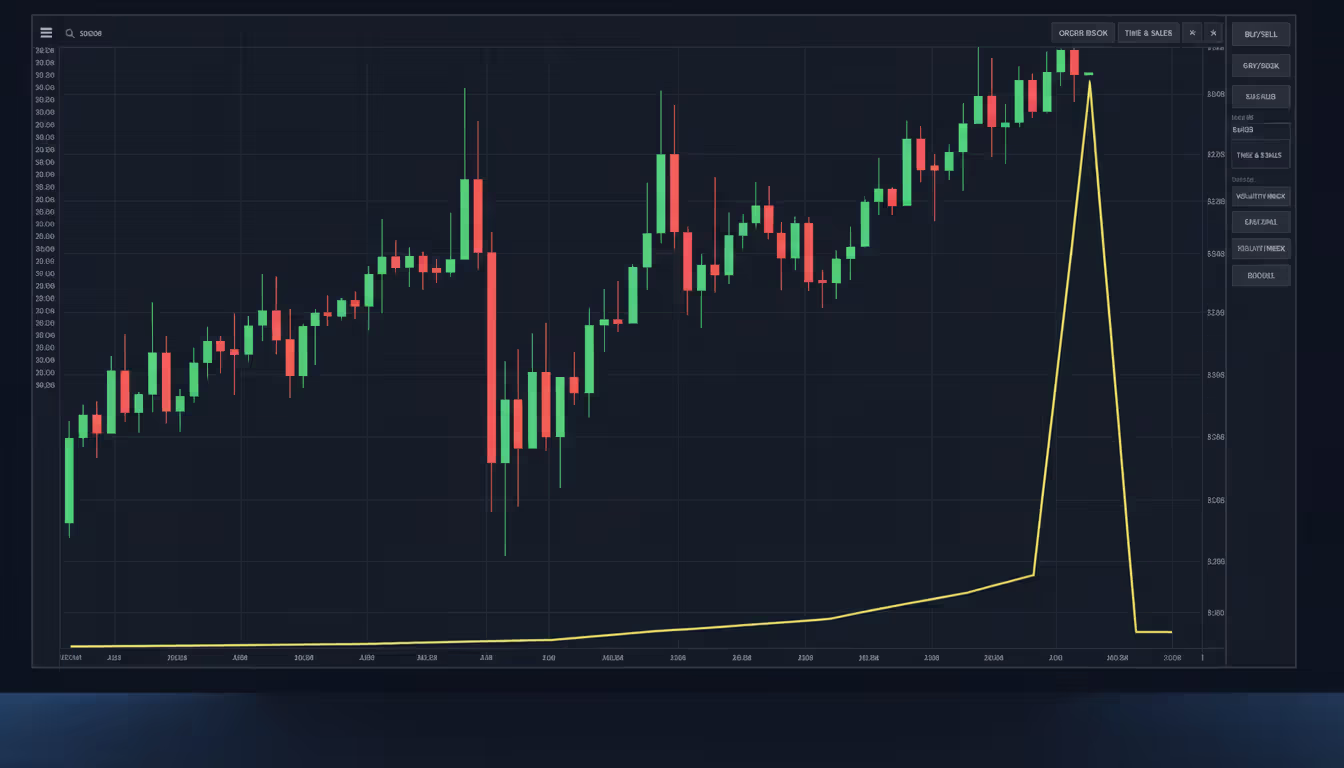
Think of it as the market's fear gauge. When big players expect wild swings ahead, they bid up option premiums. That pushes implied volatility higher. Before Non-Farm Payrolls or an ECB meeting, you'll often see implied volatility jump 50-100%. Options traders are saying "something big might happen, so I want more premium to take that risk."
After the event passes and uncertainty disappears? Implied volatility collapses. The known becomes priced in.
You don't need to trade options to use this. Watch for gaps between implied and historical volatility. When implied volatility on USD/CAD suddenly doubles while historical volatility stays flat, the smart money expects fireworks. Maybe OPEC's meeting next week. Maybe Canadian employment data's coming.
That forward-looking quality makes implied volatility invaluable for catching regime changes early.
Average True Range (ATR) Indicator
ATR gives you something immediately practical—the actual pip movement you're dealing with. It calculates average range between highs and lows over X periods, accounting for overnight gaps.
Check your EUR/USD chart. If the 14-period ATR shows 80 pips, that pair typically swings 80 pips from high to low over those 14 bars. Now you know: setting a 30-pip stop in that environment means normal noise will probably hit it. Widen to 95-100 pips and you've given the trade breathing room.
ATR adjusts automatically as conditions change. Summer doldrums might drop it to 50 pips. A Brexit-type event could blast it past 150 pips. This self-adjusting feature helps you scale positions correctly—trade smaller when ATR expands to maintain consistent dollar risk.
Breakout traders love ATR multiples. Common setup: stops at 1.5× ATR from entry, targets at 2-3× ATR. This creates solid risk-reward ratios that adapt to current market behavior instead of using arbitrary pip values.
Factors That Drive Forex Volatility
Volatility doesn't just appear randomly. Specific catalysts and market mechanics create the conditions for explosive moves or boring ranges.
Economic News Events and Announcements
Central bank decisions inject instant chaos into currency markets. So do employment reports, inflation releases, and GDP prints. A surprise rate hike can swing a major pair 200+ pips in minutes as algos and institutions scramble to reprice their positions.
First Friday of each month, Non-Farm Payrolls drops at 8:30 AM ET. USD pairs routinely move 80-120 pips in the first 90 seconds. Then you get choppy consolidation as everyone digests the implications.
Author: Marcus Ellington;
Source: martinskikulis.com
News event volatility looks nothing like normal trading. Spreads blow out—EUR/USD's usual 0.8 pips might hit 6-8 pips during the initial release. Slippage becomes standard. Liquidity providers yank quotes to protect themselves.
The smart play? Either close positions before high-impact events or widen stops substantially. Trying to scalp during that first-minute chaos typically results in terrible fills and unpredictable execution. I've seen market orders filled 30 pips away from where the trader clicked.
VIX and Forex Market Correlation
The VIX tracks expected volatility in US stocks. But it influences currencies through risk sentiment. When the VIX rockets above 30 (stock market fear mode), traders pile into safe-haven currencies—Japanese yen, Swiss franc, US dollar.
This connection runs through investor psychology, not mechanical correlation. Rising VIX readings signal uncertainty. Portfolio managers respond by cutting risk across all asset classes. Carry trades get unwound. Emerging market currencies tank. Liquidity dries up in minor pairs.
Early 2023 banking stress pushed the VIX from 15 to 38 in days. USD/JPY dropped 600 pips as yen demand exploded. AUD/USD and NZD/USD got crushed as risk-sensitive positions got liquidated.
Tracking the VIX gives forex traders an early warning system for volatility regime shifts, even if they never touch an equity.
Market Sessions and Liquidity Changes
Forex volatility follows daily rhythms tied to major trading centers. Asian session (Tokyo hours) shows the smallest moves—ranges often run 40-50% below European or US sessions.
London open changes everything. Liquidity floods in, volatility increases. The overlap between London and New York (8:00 AM to noon ET) produces the day's biggest average movements. EUR/USD, GBP/USD, and USD/CHF see their largest swings during this four-hour window.
After New York closes, especially Friday afternoons, volatility drops hard. Institutional traders square up for the weekend. Low-liquidity periods increase false breakout risk and erratic behavior.
Understanding these patterns helps you choose trading times. Breakout strategies perform better during high-liquidity overlaps. Range approaches work better during quiet Asian hours when pairs respect support and resistance more consistently.
Trading High Volatility vs Low Volatility Periods
Market conditions shift constantly. One strategy doesn't work everywhere—forcing it leads to inconsistent results and frustration.
Feature
High Volatility Environment
Low Volatility Environment
Daily pip range
100-200+ pips common
30-60 pips typical
Strategy focus
Breakouts, momentum trades
Range plays, mean reversion
Risk exposure
Higher (requires wider stops)
Moderate (tighter stops work)
Position sizing
Reduce to 50-75% normal
Standard or slightly larger
Timeframe preference
15-minute to 4-hour
1-hour to daily
Pair examples
GBP/JPY, GBP/USD on news days
EUR/CHF, USD/CAD in August
When volatility spikes, profit potential per trade increases. But you need tighter risk management. That 50-pip stop you normally use might need expansion to 100-120 pips just to avoid getting knocked out by normal noise. Cut position size proportionally to keep dollar risk consistent.
Breakouts gain reliability during high volatility because strong moves can sustain momentum. But false breakouts also multiply as whipsaws shake out weak positions before the real move develops.
Low volatility frustrates breakout traders but creates paradise for range traders. When EUR/USD grinds in a 40-pip box for three days straight, selling resistance and buying support generates steady small wins. The hard part? Recognizing when compression ends and a new trend emerges.
Professional traders rotate strategies based on volatility readings. They shift from breakout setups to range trading as ATR contracts, then back to momentum plays when volatility expands. Flexibility beats stubbornness.
Volatility Breakout Trading Strategies
Breakout strategies aim to capture explosive moves when price escapes consolidation zones. These setups shine when volatility transitions from compressed to expanded states.
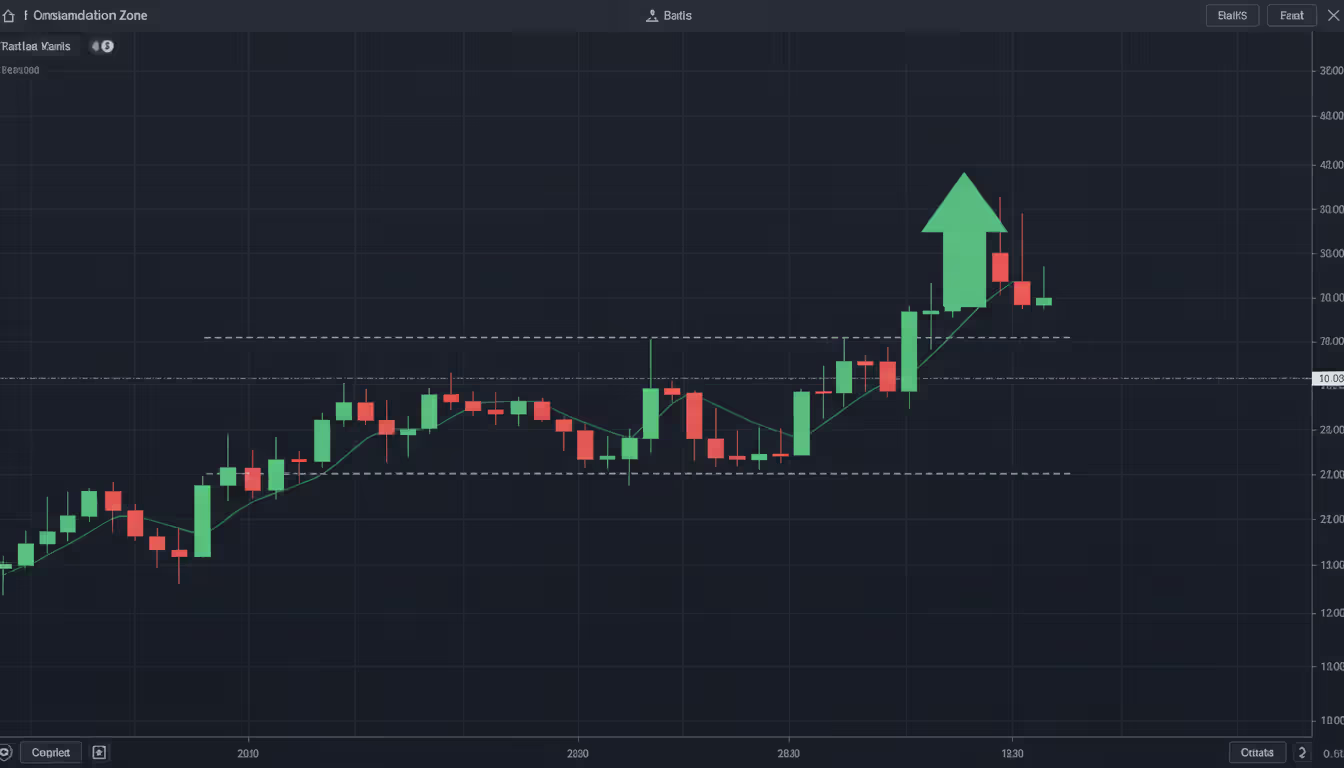
The standard approach: identify consolidation where price trades in a tight range for at least 10-15 bars on your timeframe. Calculate range width. If it's well below average ATR, compression has occurred. Place buy stops above range high, sell stops below range low. The eventual break should produce a directional move.
Real example: EUR/USD consolidates in a 35-pip range over 12 hours. Your 14-period ATR reads 75 pips. That compression suggests coiled energy. When price breaks above range high with strong volume, go long. Stop below range low. Target 1.5-2× the range width initially.
Bollinger Band squeeze setups work similarly. Bands contract to their narrowest width in 20+ periods? Volatility expansion is coming. Wait for a close outside the bands, then enter toward the breakout with stops on the opposite side of the squeeze zone.
Time-based breakouts exploit predictable volatility patterns. The London open breakout marks the high and low of the first 30-60 minutes after London opens. Then trade breaks of those levels during the London-New York overlap, capitalizing on the session's typical volatility spike.
Risk management remains essential. Not every compression resolves cleanly—some produce choppy, directionless mess. Use tight initial stops and trail them aggressively to bank profits if the breakout develops as expected.
Author: Marcus Ellington;
Source: martinskikulis.com
Common Mistakes When Trading Volatile Forex Markets
Even experienced traders trip over predictable errors when volatility spikes. Spotting these traps beforehand saves you expensive lessons.
Fixed position sizing regardless of volatility will wreck you eventually. Always trading 1 standard lot on EUR/USD means a 50-pip stop during calm periods equals the same dollar risk as a 150-pip stop during chaos. But that 150-pip stop represents triple the position risk. Adjust lot sizes inversely to volatility—if ATR doubles, cut position size in half to maintain consistent risk.
Chasing price during initial news spikes rarely ends well. Those first 60-90 seconds after major announcements show extreme spread widening and wild fills. Traders who slap market orders into this mess often get filled 20-30 pips from their expected price. Let the initial spike settle, wait for spreads to normalize, then evaluate if a tradable setup remains.
Ignoring correlation during high volatility compounds your risk dangerously. When the VIX surges and risk-off dominates, going long AUD/USD and NZD/USD simultaneously provides zero diversification—both pairs will likely tank together. You've doubled risk despite splitting it across two trades.
Over-leveraging during volatile periods destroys accounts fast. A trader using 50:1 leverage might survive normal conditions. But a surprise 200-pip move against them during a central bank shock can trigger instant margin calls. Reduce leverage during known volatility events or uncertain conditions.
Setting stops too tight for current volatility guarantees frustration and losses. If ATR shows 90-pip average movement but you insist on a 40-pip stop, normal oscillation will stop you out before your thesis gets a chance. Match stop distances to current volatility readings, not your desired risk amount.
The market is a device for transferring money from the impatient to the patient
— Warren Buffett
Frequently Asked Questions About Forex Volatility
What is considered high volatility in forex?
High volatility is relative to each pair's normal behavior. For EUR/USD, daily ranges exceeding 120-150 pips signal elevated volatility. GBP/JPY might need 200+ pip ranges to qualify as high volatility. Compare current ATR to the 30-day average—when current ATR runs 50%+ above that average, you're dealing with high volatility for that specific pair and timeframe.
Which currency pairs are most volatile?
Exotic and cross pairs consistently show higher volatility than majors. GBP/JPY, GBP/NZD, and GBP/AUD regularly move 150-250 pips daily. Emerging market pairs like USD/TRY or USD/ZAR can swing even more dramatically during local crises. EUR/USD and USD/CHF usually sit at the low end of the volatility spectrum among commonly traded pairs.
How does the VIX relate to forex volatility?
The VIX measures expected US stock volatility, but spikes in the VIX correlate with increased forex volatility through risk sentiment channels. When the VIX jumps above 25-30, traders reduce risk exposure across all markets. This triggers carry trade unwinding and safe-haven flows into JPY, CHF, and USD. The correlation isn't mechanical, but VIX surges reliably predict increased currency turbulence within 24-48 hours.
Should beginners trade during high volatility periods?
New traders should avoid high volatility periods until they've developed solid risk management habits. Wide stops required during volatile conditions mean larger potential losses per trade. Spread widening and slippage during news events can turn winning setups into losers through execution alone. Build experience during normal conditions first, then gradually incorporate volatility-based strategies as skills improve and capital grows.
What time of day is forex most volatile?
The London-New York overlap (8:00 AM to 12:00 PM Eastern) produces the highest average volatility each day. This four-hour window combines maximum liquidity and participation from both European and American traders. The Asian session (7:00 PM to 4:00 AM ET) typically shows the lowest volatility, with ranges often 40-60% smaller than peak trading hours.
How can I protect my account during volatile news events?
Three approaches work consistently: close all positions 10-15 minutes before high-impact releases and re-enter after volatility settles; widen stops to 2-3× normal distance to survive the initial spike; or reduce position sizes by 50-75% if holding through the event. Never increase leverage or position size ahead of major announcements—catastrophic slippage risk outweighs potential rewards every time.
Volatility in forex markets creates both opportunity and danger. Traders who measure it accurately, understand what drives it, and adapt strategies to current conditions gain significant edges over those who ignore these dynamics.
The measurement tools—historical volatility, implied volatility, and ATR—provide objective data for position sizing and stop placement decisions. Understanding that volatility cycles between compression and expansion helps you anticipate regime changes instead of reacting after the fact.
Volatile markets demand flexibility. The breakout strategy that crushed it during last week's central bank meeting might fail miserably during this week's range-bound grind. Match your approach to current volatility readings. Adjust position sizes inversely to ATR. Respect the unique risks that news events introduce.
Most crucially, treat volatility as a variable to manage rather than an obstacle to overcome. Cut leverage during uncertain periods. Widen stops when ATR expands. Scale back position sizes when the VIX spikes. These defensive measures won't eliminate losses, but they keep you in the game long enough to capitalize when favorable setups appear.
Currency markets will keep cycling through calm and chaotic periods. Your ability to recognize these transitions and adjust accordingly determines whether volatility becomes your biggest asset or your worst enemy. Master volatility measurement and adaptation, and you'll survive the chaos that wipes out rigid traders.
The pound to dollar exchange rate reflects economic health, central bank policy, and political stability. This guide explains what drives Cable, historical context, purchasing power parity, seasonal patterns, and expert forecasts for 2026 to help Americans make informed currency decisions
Non-Farm Payroll releases create dramatic currency market swings on the first Friday of most months. Learn what NFP means for forex traders, how employment data drives USD volatility, and proven strategies for trading this high-impact economic event safely and profitably
The British pound has traded within 1.2450-1.2850 against the dollar through early 2026, reflecting balanced fundamentals. Interest rate differentials, inflation dynamics, and Brexit's lasting impact shape the pair's outlook, with major banks forecasting modest weakness toward 1.2400 over 12 months
Market sentiment acts as the invisible hand guiding currency prices, often before fundamentals catch up. This comprehensive guide shows traders how to read, measure, and trade forex sentiment using real data sources including COT reports, retail positioning tools, and institutional indicators
The content on this website is provided for general informational and educational purposes only. It is intended to explain concepts related to Forex (FX) trading, currency markets, leverage, hedging, and risk management.
All information on this website, including articles, guides, and examples, is presented for general educational purposes. Forex trading carries significant risk, and outcomes may vary depending on market conditions, leverage, and individual decisions.
This website does not provide financial, investment, or trading advice, and the information presented should not be used as a substitute for consultation with qualified financial professionals.
The website and its authors are not responsible for any errors or omissions, or for any outcomes resulting from decisions made based on the information provided on this website.