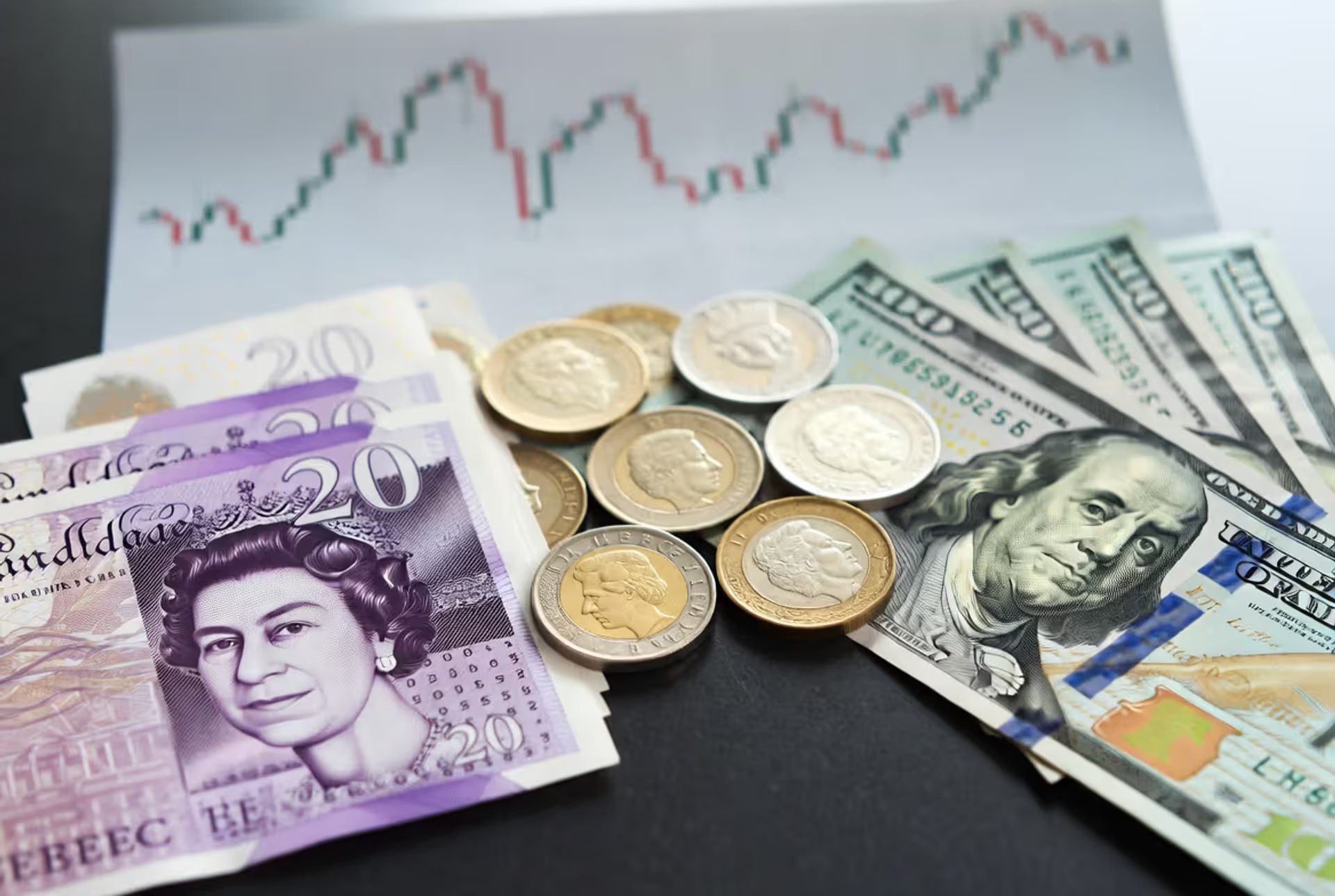
The pound to dollar exchange rate remains one of the most closely watched currency pairs in global markets. For Americans traveling to the UK, businesses importing British goods, or investors holding sterling assets, understanding where GBP/USD is headed can mean thousands of dollars in savings or gains.
The British pound against the US dollar—known in forex circles as "Cable"—reflects the economic health of two major economies. This nickname dates back to the mid-1800s when exchange rates were transmitted across the Atlantic via a telegraph cable laid on the ocean floor. Today, Cable trades electronically around the clock, moving on central bank decisions, economic data, and geopolitical shifts.
For US audiences, the pound dollar rate matters beyond tourism. American pension funds hold UK equities, tech companies invoice British clients, and real estate investors eye London property. When sterling strengthens against the dollar, UK assets become more expensive for Americans; when it weakens, British goods and investments go on sale.
Understanding the Pound to Dollar Exchange Rate
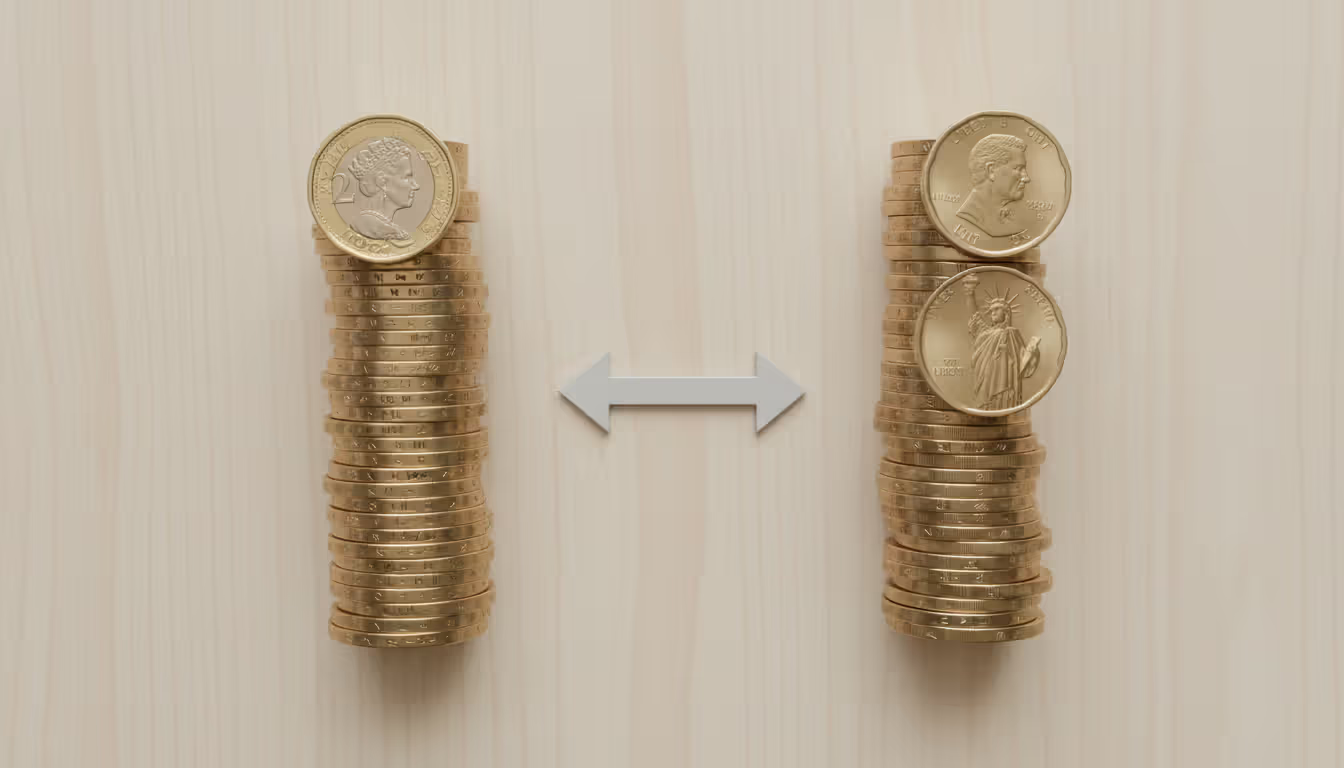
GBP/USD represents how many US dollars you need to buy one British pound. A rate of 1.2500 means one pound costs $1.25. If the rate rises to 1.3000, the pound has strengthened—you now need $1.30 for that same pound. Conversely, a drop to 1.2000 signals sterling weakness.
The pair typically trades between 1.15 and 1.45 in normal conditions, though major events can push it outside this range. In 2008, Cable briefly touched 2.00 before the financial crisis sent it plummeting. After the Brexit referendum in 2016, it crashed from 1.50 to 1.20 within months.
Understanding Cable's movements requires tracking both currencies. Sometimes the pound rises because UK data impresses; other times, it climbs simply because the dollar weakens. A trader might see sterling rally not because Britain is booming, but because the Federal Reserve signals rate cuts while the Bank of England holds firm.
How to Read Cable Charts
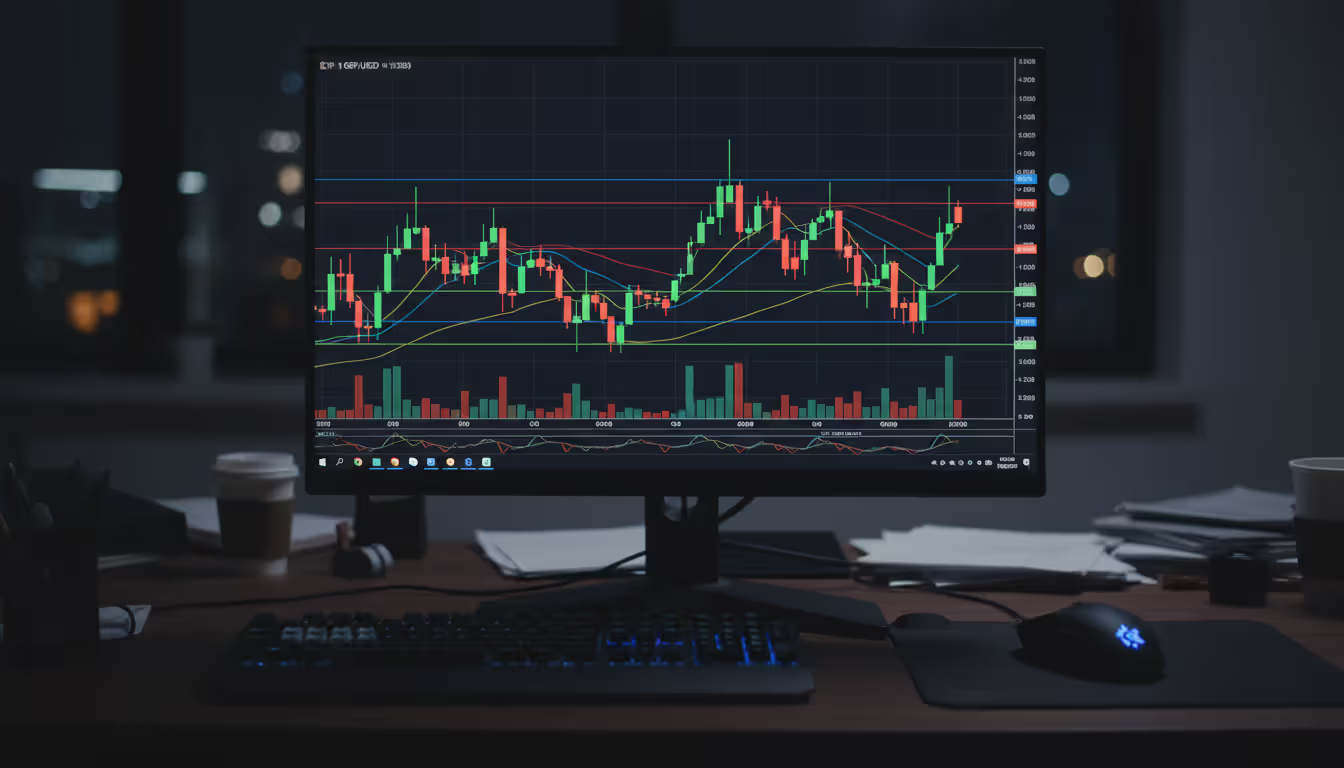
Currency charts display GBP/USD price action over time. The vertical axis shows the exchange rate, while the horizontal axis marks time intervals—minutes, hours, days, or years depending on your view.
Candlestick charts reveal more than simple line graphs. Each candlestick shows four prices: the opening rate, closing rate, highest point, and lowest point for that period. A green or white candle means the pair closed higher than it opened; red or black signals a decline. Long wicks extending from the candle body indicate price rejection—traders pushed the rate higher or lower, but it snapped back.
Support and resistance levels matter. Support is a price floor where buying interest historically emerges; resistance is a ceiling where sellers step in. If Cable repeatedly bounces off 1.2500, that's support. Break below it, and the rate often accelerates downward as stop-loss orders trigger. The same logic applies to resistance—once broken, former resistance often becomes new support.
Moving averages smooth out daily noise. The 50-day and 200-day moving averages are widely watched. When the 50-day crosses above the 200-day, it's called a "golden cross" and suggests upward momentum. The opposite, a "death cross," hints at further declines. These patterns aren't guarantees, but they reflect shifting trader sentiment.
Author: Olivia Kensington;
Source: martinskikulis.com
What Drives the Pound Dollar Rate
Exchange rates respond to dozens of inputs, but a handful of factors dominate. Interest rate differentials, economic growth gaps, trade balances, and capital flows create the fundamental backdrop against which Cable trades.
Inflation Differential Between the UK and US
When inflation runs hotter in Britain than America, the pound typically weakens. Higher UK inflation erodes sterling's purchasing power relative to the dollar. If British prices rise 4% annually while US prices climb 2%, goods priced in pounds become relatively more expensive. This imbalance pressures the exchange rate lower.
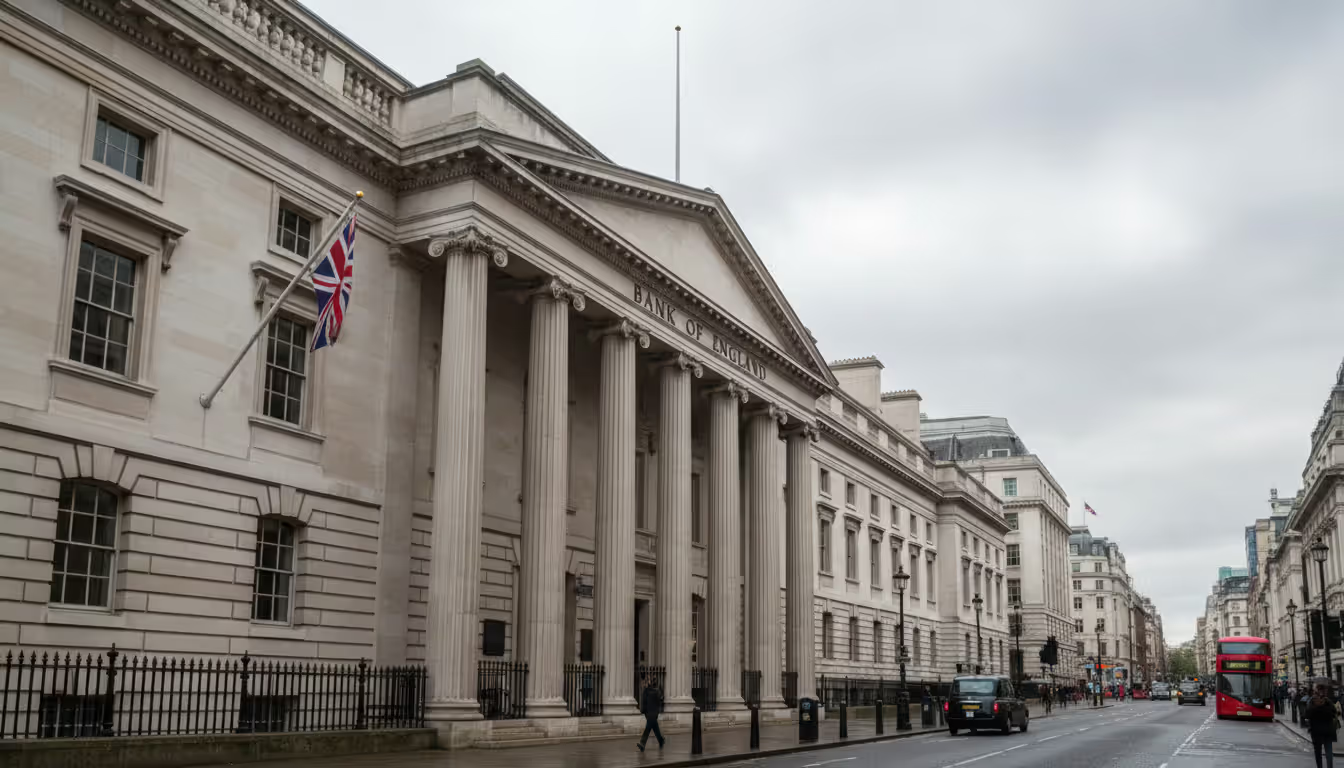
Central banks respond to inflation by adjusting interest rates. The Bank of England and Federal Reserve each target roughly 2% inflation. When UK inflation overshoots more severely than US inflation, the BoE may hike rates more aggressively. Higher rates attract foreign capital seeking better returns, supporting the pound—but only if investors believe the central bank will successfully tame inflation without triggering recession.
The relationship isn't always straightforward. In 2022 and 2023, both countries battled multi-decade high inflation. The Fed raised rates faster and higher than the BoE, lifting the dollar against most currencies including sterling. By 2025, as inflation normalized, the differential narrowed, and Cable stabilized.
In 2026, inflation differentials have moderated. UK inflation hovers near 2.3% while US inflation sits at 2.1%. This tight spread limits inflation-driven moves, shifting focus to growth and policy expectations.
Author: Olivia Kensington;
Source: martinskikulis.com
GDP Growth and Sterling Performance
Faster economic growth typically strengthens a currency. When Britain's economy expands more rapidly than America's, sterling tends to outperform. Growth attracts investment, boosts corporate profits, and increases demand for pounds to conduct business.
The relationship works through expectations as much as reality. If markets anticipate robust UK growth, investors buy sterling ahead of the data. Disappointment triggers sharp reversals. In 2025, Britain posted 1.8% GDP growth while the US expanded 2.4%, contributing to dollar strength. Forecasts for 2026 show the gap narrowing—UK growth is projected at 2.1% versus 2.3% for the US.
Growth differentials also influence central bank policy. Stronger growth gives central banks room to keep rates higher for longer without stalling the economy. Weaker growth forces rate cuts to prevent recession. If the Fed cuts rates while the BoE holds steady, the yield advantage shifts toward sterling, potentially lifting Cable.
Current Account Balance and GBP Strength
The current account measures a country's trade in goods, services, and investment income. A deficit means more money flows out than in; a surplus indicates net inflows. Britain has run a persistent current account deficit for years, while the US deficit has widened.
Large deficits can weigh on currencies because they require financing from abroad. If foreign investors lose confidence, they may demand higher returns to fund the deficit, or they may simply sell the currency. The UK's deficit averaged 3-4% of GDP in recent years. The US deficit is larger in absolute terms but smaller relative to GDP.
Current account impacts fade when capital flows dominate. If investors pile into UK assets despite the trade deficit, sterling can rally. The 2021-2023 period illustrated this—Britain's deficit persisted, but foreign direct investment and portfolio flows supported the pound during certain quarters.
Capital Flows and Pound Movements
Capital flows—investment money crossing borders—often overwhelm trade flows in determining exchange rates. When international investors buy UK stocks, bonds, or real estate, they must first buy pounds, boosting demand. When they sell and repatriate funds, sterling supply increases, pushing the rate down.
Interest rate differentials drive capital flows. If UK government bonds yield 4.5% while US Treasuries yield 4.0%, investors may shift funds to Britain for the extra return, assuming currency risk is manageable. A 50-basis-point yield advantage can attract billions in "hot money"—short-term capital chasing returns.
Safe-haven flows also matter. During global turmoil, investors flock to the dollar regardless of yields. The US dollar benefits from its reserve currency status and the depth of American financial markets. The pound lacks this safe-haven appeal, so Cable often drops during crises even if UK fundamentals are sound.
In 2026, capital flows reflect cautious optimism. Post-Brexit uncertainty has faded, UK financial regulations remain competitive, and London retains its role as a global financial hub. However, the dollar's safe-haven premium persists, capping sterling rallies during risk-off episodes.
Author: Olivia Kensington;
Source: martinskikulis.com
Pound to Dollar Historical Context
Cable's history spans centuries, but the past three decades illustrate key dynamics. In the late 1990s, the pound traded near 1.60-1.70 as Britain enjoyed steady growth and the US tech boom lifted both economies. The pair peaked above 2.00 in 2007, just before the financial crisis.
The 2008-2009 crisis hammered sterling. UK banks faced severe stress, the economy contracted sharply, and the Bank of England slashed rates to 0.5% while launching quantitative easing. Cable plunged from 2.00 to 1.35 by early 2009. Recovery was slow; the pair spent years range-bound between 1.50 and 1.70.
Brexit reshaped the landscape. The June 2016 referendum result shocked markets, sending Cable from 1.50 to 1.32 overnight—the steepest one-day drop in decades. Uncertainty over trade terms, regulatory divergence, and Scotland's future weighed on sterling for years. By late 2016, the pound touched 1.20, levels not seen since the mid-1980s.
The 2020 COVID-19 pandemic added fresh volatility. Cable dropped to 1.15 in March 2020 as lockdowns began, then recovered to 1.35 by year-end as vaccines emerged. The 2021-2023 inflation surge and aggressive Fed tightening pushed the dollar higher across the board. Sterling fell to 1.03 in September 2022—briefly reaching parity—before rebounding as UK fiscal policy stabilized.
By 2024 and 2025, Cable normalized. Brexit trade arrangements settled, inflation cooled, and both central banks entered easing cycles. The pair traded mostly between 1.22 and 1.32, reflecting balanced fundamentals and reduced political risk.
Purchasing Power Parity and Long-Term Valuation
Purchasing power parity is an economic theory suggesting exchange rates should equalize the price of identical goods across countries. If a basket of goods costs £100 in London and $125 in New York, PPP implies an exchange rate of 1.2500. If Cable trades at 1.3000, the pound is overvalued by PPP measures; at 1.2000, it's undervalued.
PPP offers a long-term anchor but poor short-term predictions. In practice, exchange rates deviate from PPP for years due to capital flows, interest rate gaps, and risk premiums. The Big Mac Index, a lighthearted PPP measure, often shows significant misalignments that persist.
Economists use PPP to assess whether a currency is fundamentally cheap or expensive. If sterling trades well below PPP, it may eventually revert higher—but "eventually" can mean years. In 2026, various PPP models suggest Cable's fair value lies between 1.25 and 1.35, depending on the basket and methodology. With the pair trading near 1.28, sterling appears roughly in line with long-term fundamentals.
PPP's limitations include non-tradable goods, quality differences, and taxes. Haircuts and rent vary widely in price and can't be arbitraged across borders. Trade barriers and transport costs also prevent perfect price equalization. For traders, PPP provides context, not trading signals.
Political Uncertainty and the Pound
Political stability supports currencies; uncertainty undermines them. Britain's political landscape has been turbulent. Brexit negotiations, leadership changes, and fiscal missteps all rattled sterling.
The September 2022 mini-budget crisis exemplifies political risk. The government announced unfunded tax cuts, spooking bond markets and sending Cable toward parity. The Bank of England intervened to stabilize gilt markets, and the government reversed course within weeks. Sterling recovered, but the episode highlighted how quickly policy mistakes can crater a currency.
Elections introduce uncertainty. The 2024 UK general election brought a change in government, but markets had largely priced in the outcome. The new administration's focus on fiscal discipline and trade partnerships reassured investors. By 2026, political risk has diminished, though debates over Scotland's constitutional status and UK-EU relations simmer in the background.
Geopolitical events also matter. Russia's invasion of Ukraine in 2022 boosted the dollar as investors sought safety. The pound suffered despite Britain's distance from the conflict, simply because it's not a safe haven. Middle East tensions, US-China trade friction, and global supply chain disruptions all tend to favor the dollar over sterling.
Author: Olivia Kensington;
Source: martinskikulis.com
Seasonal Patterns in GBP USD
Seasonality in forex is subtle and inconsistent, but some patterns emerge over decades. Cable historically shows slight weakness in the summer months—June through August—and relative strength in the fourth quarter. These tendencies are neither strong nor reliable enough to base trades on, but they reflect recurring flows.
Summer weakness may stem from lower trading volumes during vacation season and quarter-end rebalancing by funds. Fourth-quarter strength sometimes coincides with year-end portfolio adjustments and dividend repatriation flows. In 2026, analyzing 30 years of data shows Cable gains an average of 0.4% in October and November, while July averages a 0.2% decline. These figures are small and often overwhelmed by fundamental drivers.
Month-end and quarter-end effects are more pronounced. Large institutions rebalance portfolios at these intervals, creating temporary demand or supply imbalances. A US pension fund with UK equity exposure might sell pounds at month-end to match target allocations, pressuring Cable. These moves typically reverse within days.
Traders should view seasonality as background noise, not a primary strategy. In 2026, if Cable rises in October, it's more likely due to BoE policy or US data than the calendar. Seasonality might add a few pips to a move driven by fundamentals, but it won't reverse a strong trend.
Expert Pound to Dollar Forecast Outlook
Current analyst forecasts for Cable vary but cluster around modest appreciation through 2026. The median forecast from major banks places GBP/USD at 1.30-1.33 by year-end, implying 2-4% gains from mid-2026 levels.
We expect the pound to edge higher against the dollar over the next six to twelve months.The Bank of England's cautious approach to rate cuts, combined with stabilizing UK growth and reduced political risk, provides a supportive backdrop. However, the dollar's safe-haven status limits upside. We see Cable range-bound between 1.26 and 1.34 unless there's a significant shift in Fed policy
— Dr. Elena Richter
The forecast hinges on central bank divergence. The Federal Reserve has signaled two quarter-point rate cuts in 2026, bringing the fed funds rate to 3.75-4.00%. The Bank of England, facing stickier services inflation, is expected to cut just once, leaving its policy rate at 4.50%. This narrowing rate differential favors sterling.
Growth projections also support modest pound strength. UK GDP growth is forecast to match or slightly trail US growth, a neutral factor. The current account deficit remains manageable, and foreign investment into Britain has stabilized post-Brexit.
Risks to the forecast include a sharper-than-expected US slowdown, which could prompt aggressive Fed easing and dollar weakness beyond current expectations. Alternatively, a UK recession or renewed political turmoil would undermine sterling. Geopolitical shocks—escalation in Eastern Europe, a US-China crisis—would likely boost the dollar at the pound's expense.
Technical analysts note that Cable faces resistance near 1.32-1.33, a level that capped rallies in 2025. A sustained break above this zone could open a path to 1.38, last seen in early 2022. Support sits at 1.25, with a break below potentially triggering a test of 1.22.
Key Economic Indicators Impacting Pound to Dollar Rate
Indicator
UK Current Data
US Current Data
Impact on GBP/USD
Policy Interest Rate
4.50%
4.25%
Bullish
Inflation Rate (CPI)
2.3%
2.1%
Neutral
GDP Growth (annual)
2.1%
2.3%
Slightly Bearish
Current Account Balance (% of GDP)
-3.2%
-3.5%
Neutral
Unemployment Rate
4.1%
3.9%
Neutral
10-Year Bond Yield
4.20%
4.10%
Bullish
The table reflects mid-2026 data. The UK's higher policy rate and bond yield provide a modest yield advantage, attracting capital flows and supporting sterling. Similar inflation rates and current account deficits neutralize those factors. The slight US growth edge is a marginal negative for Cable but insufficient to drive major moves alone.
Traders watch these indicators for changes, not static levels. If UK inflation spikes, the BoE might hike rather than cut, boosting the pound. If US unemployment jumps, the Fed could cut aggressively, weakening the dollar. The interplay of these variables determines Cable's path.
Frequently Asked Questions About Pound to Dollar Forecasting
What is the current pound to dollar forecast for 2026?
Most analysts expect GBP/USD to trade between 1.26 and 1.34 through 2026, with a median year-end forecast around 1.31. The outlook reflects a slight pound advantage due to higher UK interest rates and reduced political uncertainty, balanced against the dollar's safe-haven appeal and comparable economic fundamentals.
How does inflation affect the pound to dollar exchange rate?
Higher inflation in one country typically weakens its currency by eroding purchasing power. However, central banks respond to inflation by raising interest rates, which can attract foreign capital and support the currency. The net effect depends on whether rate hikes successfully control inflation without triggering recession. In 2026, similar inflation rates in the UK and US have neutralized this factor.
What is purchasing power parity and why does it matter for GBP/USD?
Purchasing power parity is a theory that exchange rates should equalize the cost of goods across countries. If a basket of goods costs £100 in the UK and $130 in the US, PPP suggests Cable should trade at 1.30. PPP provides a long-term valuation benchmark but doesn't predict short-term moves. Currencies can trade above or below PPP for years due to capital flows and risk premiums.
Does the pound to dollar rate follow seasonal patterns?
Weak seasonal patterns exist but are unreliable. Cable has historically shown slight weakness in summer months and relative strength in the fourth quarter, but these tendencies are small and often overwhelmed by fundamental drivers. Month-end and quarter-end rebalancing flows create short-term volatility that typically reverses within days.
How do interest rate changes impact the pound dollar forecast?
Higher interest rates in one country attract foreign capital seeking better returns, boosting demand for that currency. If the Bank of England holds rates steady while the Federal Reserve cuts, the yield advantage shifts to sterling, typically lifting Cable. Conversely, Fed hikes relative to BoE policy would support the dollar. Rate expectations drive currency moves as much as actual changes.
What historical events have most affected the pound to dollar rate?
The Brexit referendum in 2016 caused Cable's sharpest modern drop, from 1.50 to 1.20 within months. The 2008 financial crisis sent the pair from 2.00 to 1.35. The September 2022 UK mini-budget crisis briefly pushed Cable toward parity. COVID-19 lockdowns in March 2020 triggered a flash crash to 1.15. These events show how political and economic shocks can rapidly reshape exchange rates.
Forecasting the pound to dollar exchange rate requires balancing multiple forces: central bank policy, economic growth, inflation trends, political stability, and global risk appetite. No single factor dominates; instead, the interplay determines Cable's direction.
For Americans, understanding these drivers helps in planning UK travel, managing currency exposure, and evaluating British investments. A stronger pound makes London vacations more expensive but boosts returns on UK assets. A weaker pound offers bargains for dollar holders but erodes the value of sterling holdings.
In 2026, the outlook favors modest pound strength, with Cable likely trading in the upper half of its recent range. The Bank of England's policy stance, reduced Brexit uncertainty, and stabilizing growth support sterling. However, the dollar's reserve status and safe-haven appeal cap upside. Expect volatility around central bank meetings, key economic data, and geopolitical surprises.
Whether you're converting dollars for a trip, hedging business exposure, or speculating on forex markets, staying informed on the factors affecting pound dollar rate gives you an edge. Exchange rates reflect the collective judgment of millions of market participants weighing complex information. By understanding what drives Cable, you can make better-informed decisions and avoid costly surprises.
Non-Farm Payroll releases create dramatic currency market swings on the first Friday of most months. Learn what NFP means for forex traders, how employment data drives USD volatility, and proven strategies for trading this high-impact economic event safely and profitably
The British pound has traded within 1.2450-1.2850 against the dollar through early 2026, reflecting balanced fundamentals. Interest rate differentials, inflation dynamics, and Brexit's lasting impact shape the pair's outlook, with major banks forecasting modest weakness toward 1.2400 over 12 months
Forex volatility describes the rate and magnitude of price changes in currency pairs. This guide covers measurement methods like ATR and historical volatility, explores factors driving volatility including news events and VIX correlation, and provides practical strategies for trading both high and low volatility conditions
Market sentiment acts as the invisible hand guiding currency prices, often before fundamentals catch up. This comprehensive guide shows traders how to read, measure, and trade forex sentiment using real data sources including COT reports, retail positioning tools, and institutional indicators
The content on this website is provided for general informational and educational purposes only. It is intended to explain concepts related to Forex (FX) trading, currency markets, leverage, hedging, and risk management.
All information on this website, including articles, guides, and examples, is presented for general educational purposes. Forex trading carries significant risk, and outcomes may vary depending on market conditions, leverage, and individual decisions.
This website does not provide financial, investment, or trading advice, and the information presented should not be used as a substitute for consultation with qualified financial professionals.
The website and its authors are not responsible for any errors or omissions, or for any outcomes resulting from decisions made based on the information provided on this website.