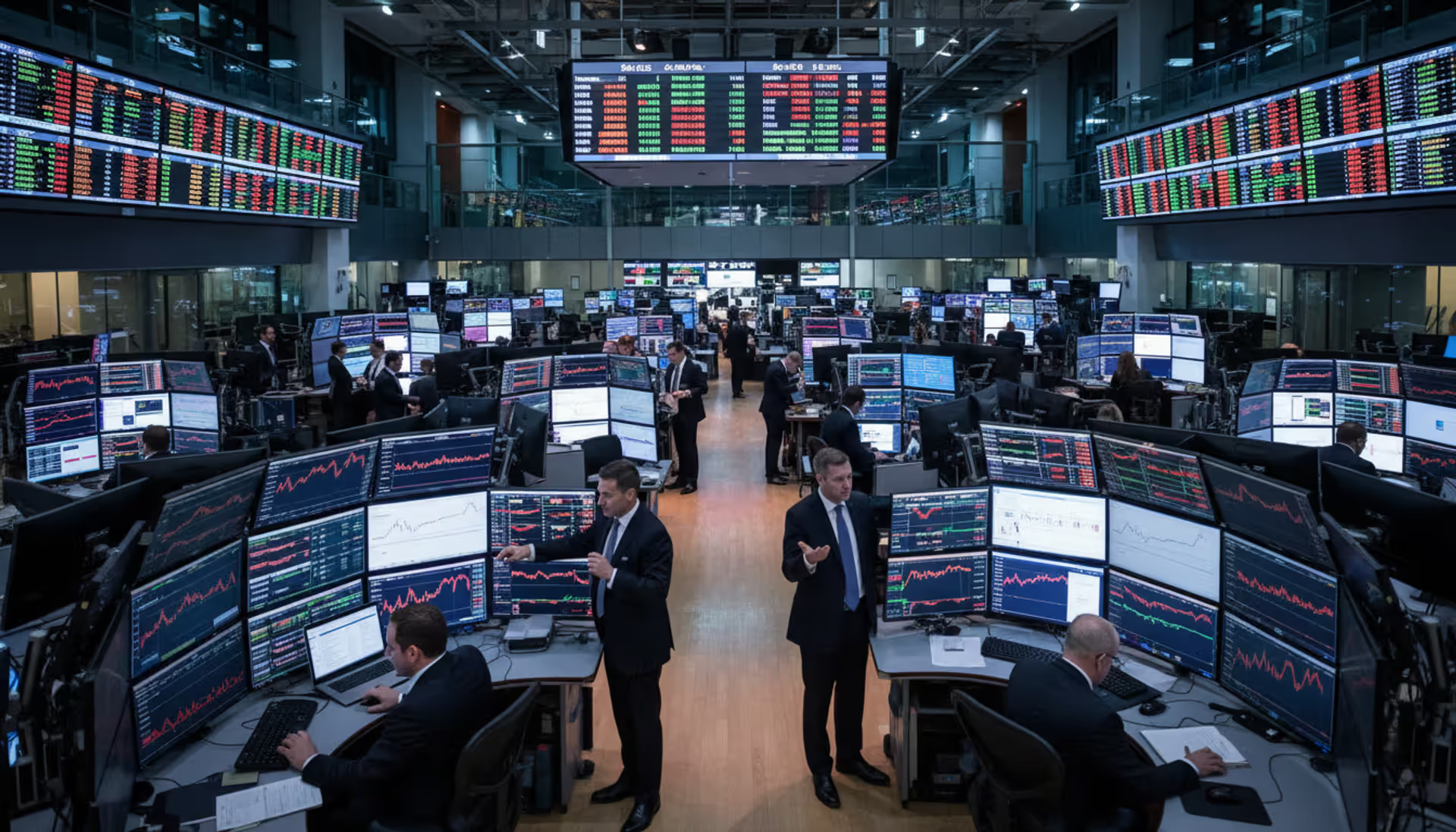
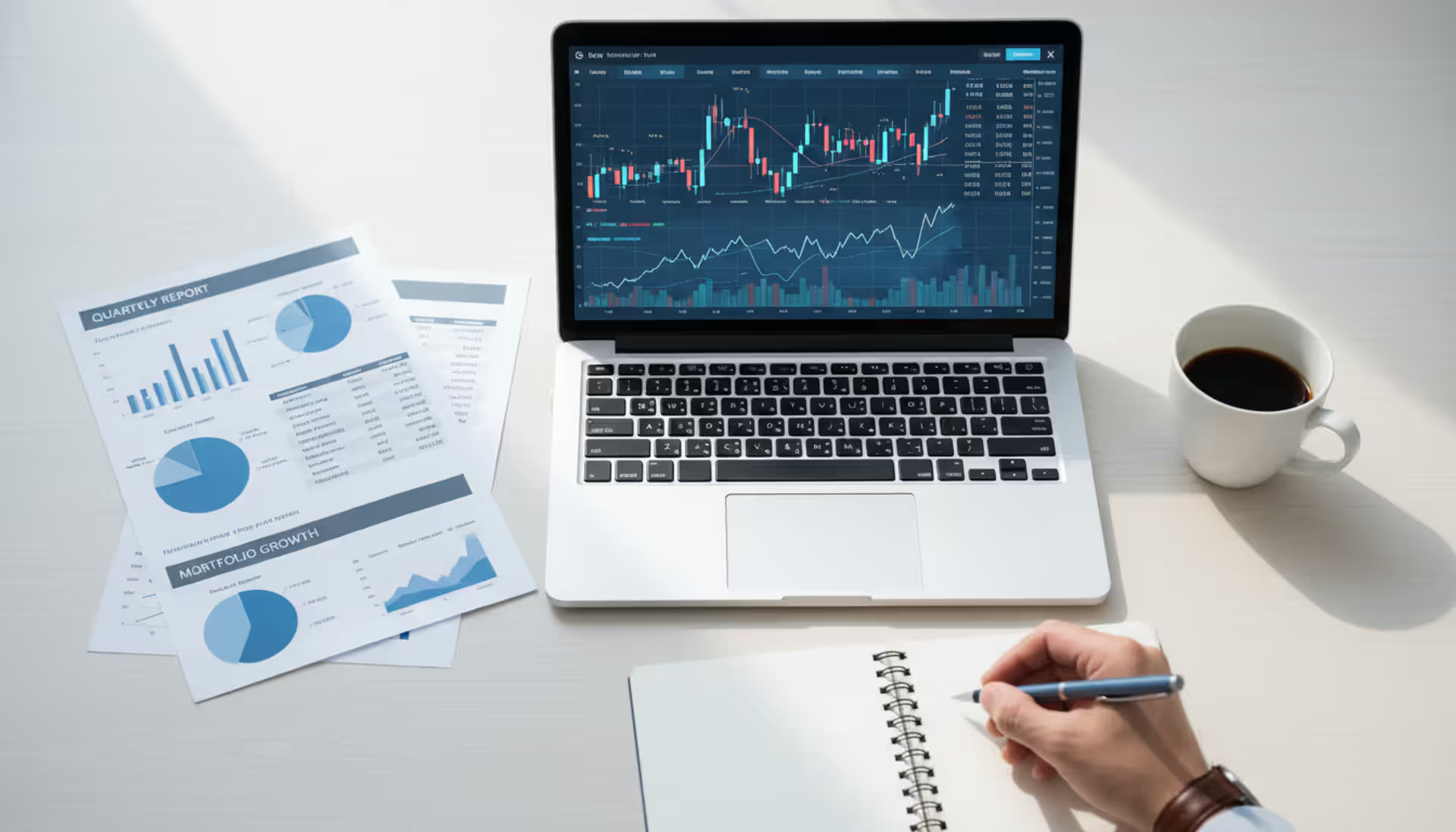
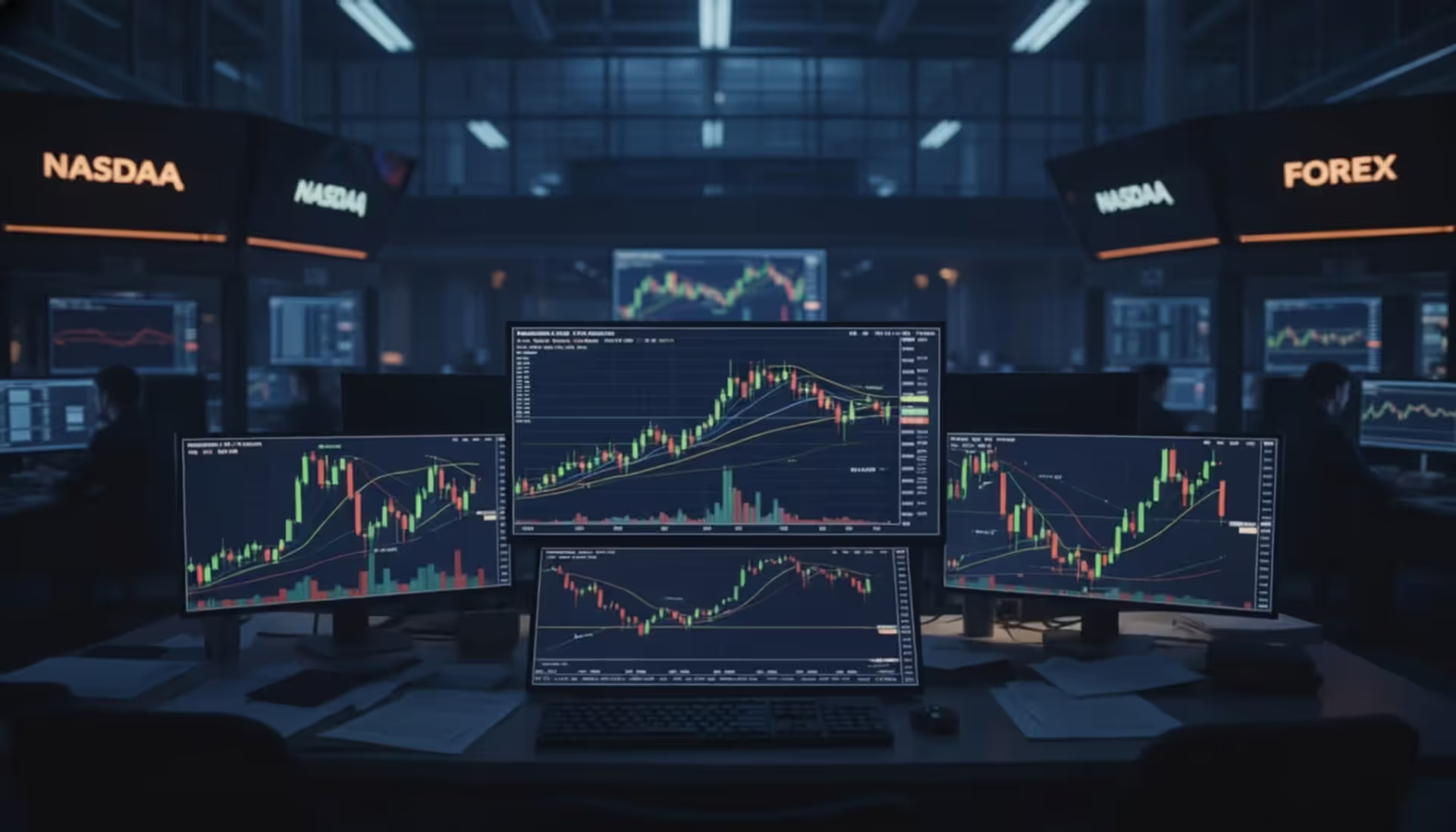
Walk into any commodity trading floor during a major supply disruption, and you'll feel the tension. Screens flash red. Phones ring constantly. Traders shout hedge orders while risk managers recalculate exposure in real time.
Why the chaos? Because in commodities, a single event—say, a pipeline explosion in Texas or a typhoon hitting Indonesian nickel mines—can flip a profitable quarter into a disaster. One energy trader told me his firm lost $4.2 million in 48 hours during the 2024 European gas crisis because they'd sized positions assuming normal volatility. Their VaR models didn't account for geopolitical shocks.
The firms that survive these moments? They're the ones who've already mapped every exposure, tested their hedges against nightmare scenarios, and set hard limits that no trader can override—even when they're "sure" the market will turn.
What Is Risk Management in Commodity Trading
Think of commodity risk management as your firm's immune system. It doesn't stop you from taking positions (that's how you make money), but it prevents any single position from killing the business.
At its core, you're running three parallel processes: spotting where you're exposed, putting a dollar figure on potential losses, and deciding which risks to hedge versus which to accept. The tricky part? Commodities aren't like stocks. You're dealing with physical stuff that spoils, corrodes, or gets stuck in warehouses. Storage costs money. Quality varies. Delivery locations matter enormously.
A Kansas wheat trader and a London copper desk both run "commodity operations," but their risk profiles look nothing alike. The wheat guy worries about harvest weather and rail car availability. The copper desk tracks Chinese manufacturing data and warehouse stock levels at LME-approved facilities.
Here's what keeps commodity risk managers up at night:
Market risk — prices move against your position
Basis risk — your hedge doesn't track your actual exposure perfectly
Credit risk — your counterparty defaults before settling
Operational risk — someone fat-fingers a trade or the warehouse burns down
Liquidity risk — you can't exit without tanking the price
Regulatory risk — position limits change or margin requirements jump
Managing commodity exposure means watching all these angles simultaneously. Take a natural gas producer locking in winter prices. Sure, they'll sell NYMEX futures. But they also need to think about pipeline constraints (what if the gas can't physically reach market?), weather patterns (a warm winter kills demand), and whether their utility customers can actually pay.
Common Risk Exposures in Commodity Markets
Price Volatility and Market Risk
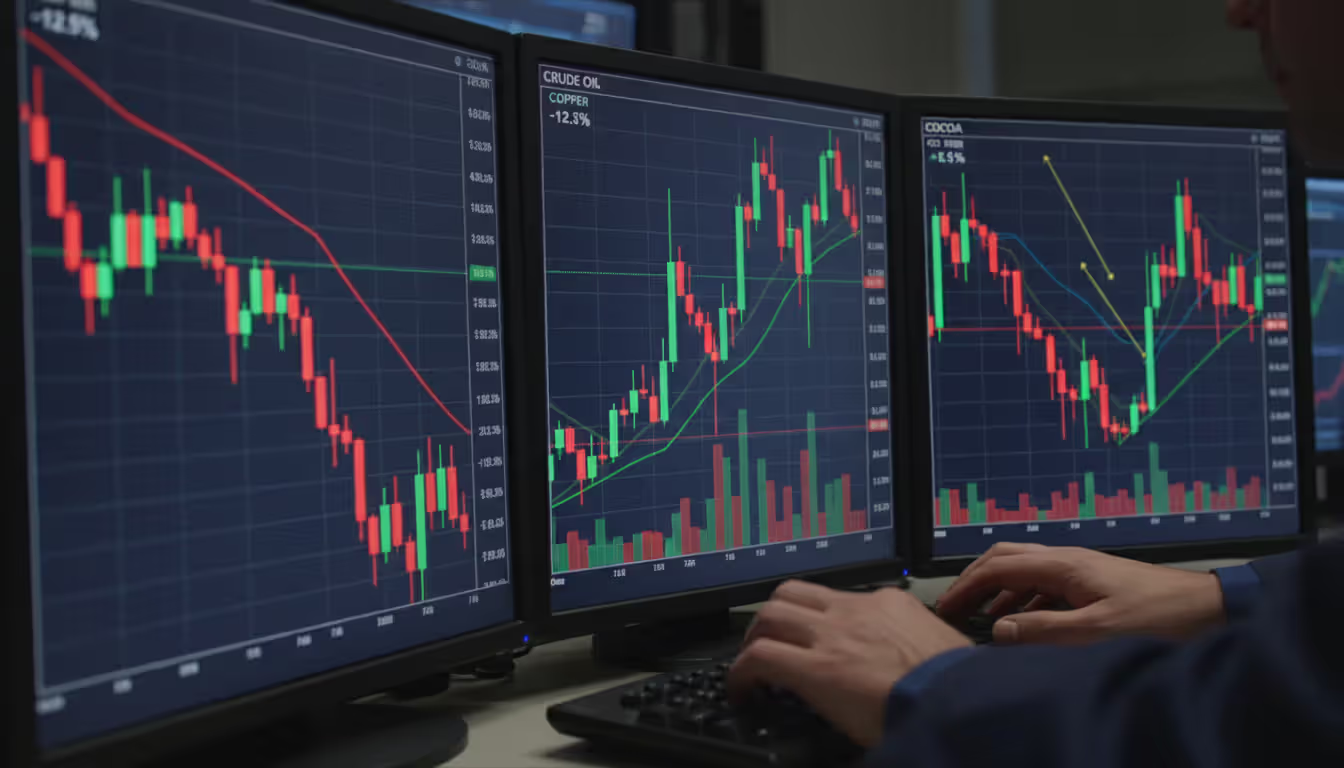
Commodities move fast. Really fast. I've watched crude oil drop 8% before lunch on nothing more than a surprise inventory report. Copper jumped 12% in three days when China announced infrastructure stimulus in early 2026. Cocoa more than doubled in six months after West African crop failures.
Compare that to the S&P 500, where a 2% daily move makes headlines.
This volatility cuts both ways. A soybean processor buying 10,000 metric tons at $450/ton is suddenly down $100,000 if prices fall to $440 before they crush the beans. No hedge? That loss comes straight out of operating margin.
Author: Marcus Ellington;
Source: martinskikulis.com
Supply shocks make this worse. When sanctions hit Russian aluminum in 2024, prices spiked 30% in three weeks. Traders who'd modeled only demand scenarios got caught flat. Strikes at Chilean copper mines, droughts in Brazilian coffee regions, political instability in Congo cobalt operations—these aren't edge cases. They're regular occurrences you need in your stress tests.
Basis Risk Between Spot and Futures
Here's where commodity hedging gets messy. Basis is the gap between what you're actually buying or selling (the cash market) and the futures contract you're using to hedge.
Let's say you're a Gulf Coast refiner processing Mars crude. You hedge with WTI futures because they're liquid. But Mars crude isn't WTI. Different grade, different delivery point, different quality specs. That difference? That's basis. And it fluctuates independently of the futures price.
During the 2025 harvest, Midwest corn basis blew out by $0.40/bushel in two weeks. Local elevators were full, so farmers had to sell at steep discounts to the Chicago futures price. Farmers who'd hedged with futures alone still lost money because the basis moved against them.
Location matters hugely. Natural gas at Waha Hub in West Texas has traded $2.50 below Henry Hub prices when pipeline capacity constrained exports. Minneapolis wheat carries a protein premium over Kansas City. Refiners pay different prices for Brent versus Dubai crude.
In metals, basis shows up in quality spreads. LME copper cathodes versus scrap. High-grade nickel versus ferronickel. The futures contract specifies one grade; your actual business deals in another.
Currency Risk in International Commodity Trading
Most commodities price in dollars, but the world operates in local currencies. This creates hidden FX exposure that blindsides firms who think they're only trading commodities.
A Brazilian iron ore miner sells in dollars but pays workers in reais. When the dollar strengthens, their revenue in reais falls even if dollar prices stay flat. Japanese utilities buy LNG in dollars but generate yen revenue. A strong dollar means higher costs in yen terms.
Worse, commodities and currencies often move together. Dollar strength typically pushes commodity prices down (to maintain buying power for foreign purchasers). So a US exporter might see both lower commodity prices and unfavorable FX translation.
In early 2026, the Fed cut rates while the ECB tightened. The euro rallied 12% in three months. European aluminum smelters saw costs spike in euro terms despite stable LME dollar prices. Those without FX hedges got squeezed hard.
Hedging Strategies for Commodity Price Risk
Commodity hedging isn't about eliminating risk—it's about choosing which risks you want and which you don't. You'll use three main tools:
Futures contracts are your workhorse. Exchange-traded, standardized, liquid. A wheat farmer sells December futures in June to lock in harvest revenue. Airlines buy jet fuel futures to stabilize operating budgets. You eliminate price risk but introduce basis risk (as discussed) and have to manage margin calls.
The margin part catches people. Futures require daily mark-to-market. If prices move against you, the exchange demands cash. Even if your hedge is working (your physical position gains what your futures lose), you need liquidity to meet margin calls.
Options give you asymmetric protection—capped downside, unlimited upside. A gold miner buys puts at $2,000/oz. If gold falls to $1,800, the puts pay out. If gold hits $2,400, the miner sells at the higher price. Cost? The premium paid upfront. Benefit? No margin calls, and you know your maximum cost.
Options work great when your exposure is uncertain. A construction company bidding on projects buys copper calls. Win the bid? The calls hedge material costs. Lose the bid? You're only out the premium.
Swaps let you exchange floating prices for fixed via bilateral contracts. An oil refiner swaps floating Brent costs for a fixed price with a bank. Budgeting becomes simple—you know exactly what you'll pay. Downside? Swaps carry credit risk (the bank might default) and lack exchange transparency.
Energy versus metals hedging looks different in practice. Energy markets—crude, nat gas, gasoline, heating oil—have deep futures liquidity. You can hedge precisely. Metals markets are thinner outside copper, gold, and silver. Traders often cross-hedge (using copper futures to hedge brass scrap) and accept basis risk for liquidity.
A Midwest ethanol plant shows multi-leg hedging. They buy corn (input) and sell ethanol and distillers grains (outputs). The "crush spread" hedge involves buying corn futures and selling ethanol futures, locking in processing margin. If corn spikes but ethanol follows, the hedge protects profit. If ethanol lags? Basis risk hits margins.
Author: Marcus Ellington;
Source: martinskikulis.com
How to Set and Monitor Risk Limits in Commodity Trading
Risk limits translate your firm's risk appetite (set by the board) into rules that traders follow every day. Without limits, you're one rogue trader away from insolvency.
Position limits cap how much a trader can hold. Maybe 500 lots of copper futures maximum. This prevents excessive concentration in any single market. Limits should reflect commodity liquidity (tighter limits for thinly traded contracts), trader experience (junior traders get lower limits), and firm capital.
Value-at-risk (VaR) estimates potential losses at a confidence level over a time horizon. A 95% one-day VaR of $500,000 means you expect to lose more than $500K only 5% of the time. VaR aggregates exposures across commodities, capturing correlations—crude and gasoline move together; gold and oil don't.
But VaR has blind spots. It assumes normal distributions, which miss tail risk. The 2025 nickel squeeze blew past VaR predictions because the model didn't account for exchange rule changes. That's why you also run stress tests modeling extreme scenarios: war, embargoes, financial crisis.
Stop-loss rules force traders to exit when losses hit predefined levels. Lose $100K on a natural gas position? The stop-loss triggers automatic liquidation. This prevents the human tendency to hold losing positions "hoping for a reversal." Discipline here is crucial—overriding stop-losses should require executive approval.
Exposure caps limit total capital in commodities. A hedge fund might cap commodity exposure at 20% of AUM to maintain diversification. This prevents the fund from accidentally becoming a commodity-only shop.
Monitoring happens continuously, not quarterly. Daily P&L reports. Real-time position tracking. Automated alerts when limits are breached. A risk committee meets weekly to review reports, adjust limits based on market conditions, and investigate anomalies.
Modern CTRM platforms (Allegro, Openlink, Aspect) automate most of this—data aggregation, VaR calculation, compliance checks, regulatory reporting. But technology doesn't replace judgment. During the 2024 gas crisis, one firm's automated system flagged a limit breach, but the risk manager recognized it as a system error, not a real exposure.
Managing Basis Risk and Currency Exposure
Hedging currency risk alongside commodity exposure requires coordination between desks. A Canadian oil sands producer sells crude in US dollars but pays costs in Canadian dollars. A simple WTI futures hedge locks dollar prices but leaves them exposed to USD/CAD swings.
Here's a better approach:
Lock commodity prices with WTI futures to secure dollar revenue
Hedge FX exposure with USD/CAD forwards to lock the conversion rate
Watch basis between WTI and physical Western Canadian Select, adjusting hedge ratios as basis shifts
Basis risk is the hardest to hedge because liquid instruments don't exist for every location, grade, and timing combination. Cross-hedging is standard practice. A jet fuel buyer hedges with heating oil futures (jet fuel futures are illiquid), accepting basis risk for liquidity access.
Author: Marcus Ellington;
Source: martinskikulis.com
Timing mismatches create calendar basis risk. A grain elevator buys corn from farmers in October but sells to processors in March. They hedge with March futures, but local basis can shift between purchase and sale. Weather, rail car availability, competing demand—all affect basis independently of Chicago prices.
Dynamic hedging adjusts ratios as correlations change. During the 2025 energy transition, natural gas and electricity price correlation broke down as renewables displaced gas generation. Utilities assuming stable correlations found their hedges didn't work.
Risk Controls and Compliance for Commodity Traders
Proper controls separate front, middle, and back offices. Traders execute deals. Risk managers measure and report exposure. Operations handle settlement and confirmation. This segregation prevents conflicts of interest and catches errors.
Pre-trade compliance checks verify limits before execution. A trader trying to buy 1,000 gold contracts when their limit is 800 gets an automatic rejection. Post-trade reconciliation compares executed trades against confirmed trades, catching discrepancies.
Regulatory requirements vary by jurisdiction. The CFTC mandates position reporting, swap data reporting, and margin rules for uncleared swaps in the US. FERC adds oversight for energy markets. European firms comply with MiFID II transaction reporting and position limits.
Audit trails document decisions. Why place this hedge? Who approved the limit override? What was the market context? Regulators scrutinize these records during investigations. Poor documentation turns legitimate hedging into suspected manipulation.
Modern CTRM systems centralize data and enforce workflows. Cloud platforms enable real-time global access, though cybersecurity becomes critical—one breach could expose proprietary trading strategies.
Effective commodity risk management is not about eliminating volatility—it's about ensuring you can survive the volatility long enough to profit from your market insights. Firms that treat risk as a constraint rather than a strategic advantage will always lag
— Dr. Elena Hartmann
Mistakes to Avoid in Commodity Risk Management
Over-hedging kills profit potential along with risk. A gold miner hedging 100% of production at $2,200/oz misses the move to $2,500. Shareholders ask, "Why own a mining stock with zero commodity exposure?" Most producers hedge 60-70% of output, balancing protection with upside participation.
Ignoring correlation shifts creates false diversification. You're long crude and short natural gas, thinking you're balanced. Then both energy prices collapse together. Or consider currency—dollar strength can sink all dollar-denominated commodities simultaneously, despite different fundamentals.
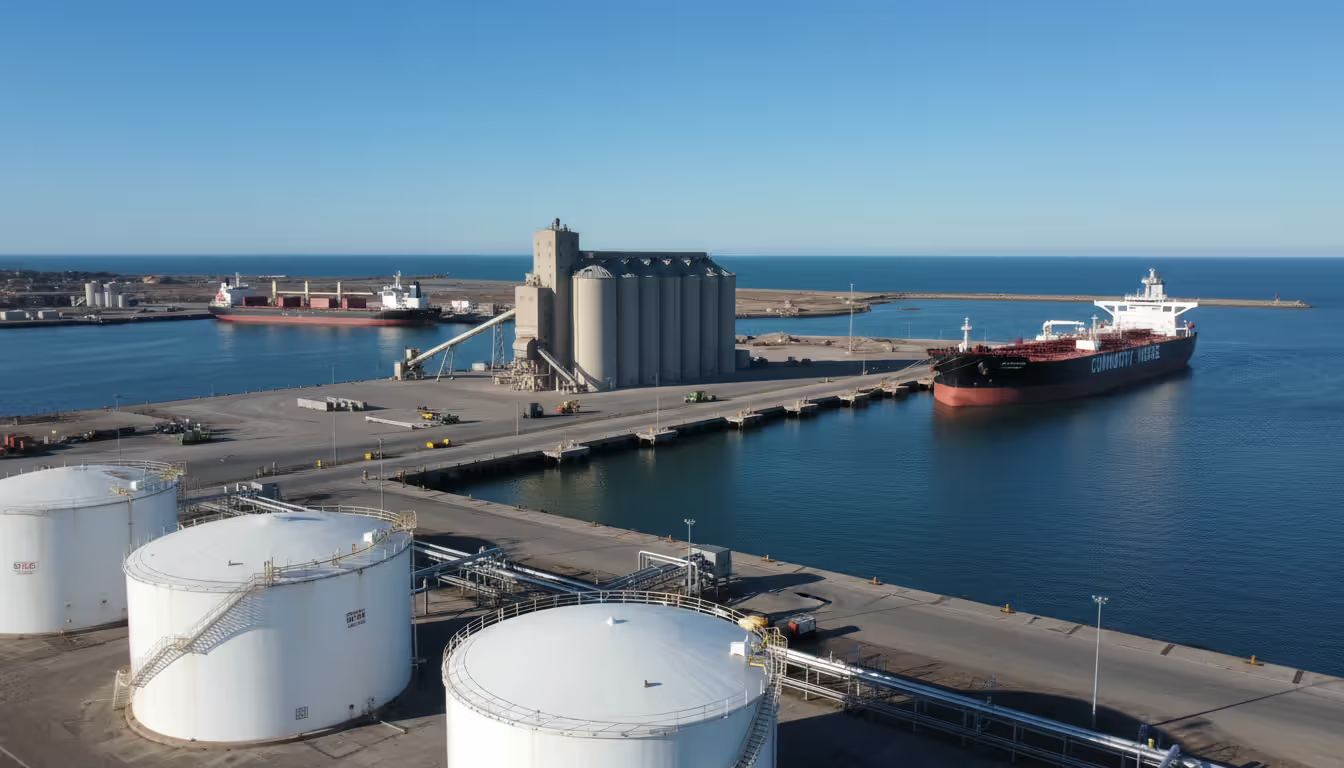
Inadequate supply shock planning assumes markets function normally. The 2025 Red Sea shipping disruption idled tankers for weeks, exploding location basis and stranding cargoes. Firms with contingency plans—alternative routes, flexible contracts, inventory buffers—survived. Those relying on just-in-time delivery faced force majeure and lost customers.
Author: Marcus Ellington;
Source: martinskikulis.com
Poor documentation becomes legal liability. A trader executes a hedge verbally. The counterparty disputes terms. No written confirmation exists. Disputes escalate to litigation. The firm pays settlements plus legal fees. Confirm every trade in writing within 24 hours—no exceptions.
Neglecting liquidity during exit costs money. You build a large position in a thinly traded contract, then need to exit fast. Bid-ask spreads widen. Liquidation happens at terrible prices. Never size positions above 10% of average daily volume.
Static hedging in dynamic markets fails when conditions shift. A refiner hedges crack spreads using historical correlations, but renewable diesel changes the gasoline-diesel balance. The hedge ratio becomes obsolete, leaving exposures unhedged. Quarterly reviews and scenario testing keep hedges current.
Comparison of Hedging Instruments
Instrument
Cost
Flexibility
Basis Risk Exposure
Liquidity
Best Use Case (Energy)
Best Use Case (Metals)
Futures
Low (commissions + margin funding)
Low (standardized terms)
Moderate to high
Very high
Locking crude prices for refinery operations
Hedging copper purchases for wire manufacturers
Options
Medium to high (upfront premium)
High (choose strikes/expiries)
Moderate to high
High for near-term, low for long-dated
Protecting producers against price drops
Establishing price floors for mining companies
Swaps
Medium (bid-ask spread cost)
Very high (fully customizable)
Low to moderate
Moderate (OTC market, less transparent)
Fixed-price gas supply to utilities
Multi-year aluminum supply agreements
Forwards
Low to medium (credit risk premium)
Very high (bespoke terms)
Low (tailored to exact exposure)
Low (bilateral agreements)
Physical delivery for specific crude grades
Negotiated scrap metal purchase contracts
FAQ
What is the difference between hedging and speculation in commodity trading?
Hedging protects an existing exposure you already have from your business operations. A wheat farmer selling futures against their expected harvest is hedging—they own the wheat (or will soon), and futures offset price risk. Speculation means taking positions without any underlying exposure, purely to profit from price movements. A hedge fund buying crude futures based on supply forecasts is speculating—they have no oil production or refining business. The distinction matters for accounting treatment, tax rules, and regulatory classification. Hedges may qualify for special accounting (hedge accounting under GAAP/IFRS), while speculative positions always mark-to-market through P&L.
How does basis risk affect commodity hedging effectiveness?
Basis risk reduces how well your hedge actually protects you when the hedging instrument and your physical exposure diverge. Say you're a Gulf Coast refiner processing Mars crude, but you hedge with WTI futures (because WTI is more liquid). WTI rallies $5 per barrel while Mars crude only rises $3 due to pipeline constraints. Your futures gain $5, your physical exposure loses $3, netting $2 positive—better than no hedge, but not perfect protection. Minimizing basis risk means matching your hedge instrument to your physical exposure as closely as liquidity permits. Sometimes you accept basis risk because the alternative (no hedge or illiquid instruments) is worse.
What are the most common risk metrics used in commodity trading?
Value-at-risk (VaR) estimates potential losses at a given confidence level (typically 95% or 99%) over a specific time horizon (usually one day). Delta measures how much your position value changes per unit change in the underlying price. Gamma shows how delta itself changes as prices move—important for options. Vega captures sensitivity to volatility changes. Beyond these Greeks, simpler metrics like position limits (maximum contracts allowed), notional exposure (total dollar value at risk), and margin-to-equity ratios help with daily monitoring. No single metric tells the whole story; firms use a suite of measures capturing different risk dimensions.
How do supply shocks impact commodity risk management strategies?
Supply shocks—whether from strikes, embargoes, weather disasters, or geopolitical events—cause abrupt price spikes and basis dislocations that standard statistical models badly underestimate. The 2022 nickel short squeeze, 2021 Texas freeze, and 2025 Red Sea shipping disruption all triggered moves far beyond modeled ranges. Risk managers respond by stress-testing portfolios against historical shocks (not just normal volatility), building physical inventory buffers, diversifying supplier relationships geographically, and maintaining unused credit lines for potential margin calls. Real-time monitoring of geopolitical developments, weather patterns, and labor negotiations enables faster responses than quarterly risk reviews.
When should a commodity trader use options instead of futures?
Options make sense when downside protection is critical but you want to preserve upside potential. A gold mining company facing debt covenant requirements buys put options to guarantee minimum revenue, but still benefits if gold prices rally above the strike. Options also work when your future exposure is uncertain—a construction firm bidding on multiple projects buys copper call options; if they win the bid, the calls hedge material costs; if they lose, they're only out the premium paid. Futures demand more certainty about quantity and timing because you're locked into the contract. Options give you the right but not the obligation to transact.
How does currency risk affect international commodity transactions?
Currency risk creates embedded FX exposure whenever commodity prices are denominated in one currency (typically USD) while costs, revenues, or financing occur in another. A European airline buying jet fuel priced in dollars but earning ticket revenue in euros faces dual exposure: rising fuel prices and a weakening euro both increase costs in euro terms. Effective hedging requires coordinating commodity and FX desks—lock in fuel prices via dollar-denominated futures, then hedge the EUR/USD conversion with FX forwards, ensuring predictable costs in euro terms. Failing to hedge both dimensions leaves you exposed to amplified losses when commodity prices and FX rates move against you simultaneously.
Commodity risk management separates firms that survive volatile markets from those that don't. It demands identifying every exposure (price, basis, currency, credit), quantifying potential losses through VaR and stress scenarios, and deploying hedges that balance cost against protection.
The best frameworks stay dynamic—adjusting hedge ratios as correlations shift, updating limits when volatility regimes change, stress-testing against scenarios standard models miss. Technology platforms handle data aggregation and compliance automation, but human judgment remains essential for interpreting market signals and overriding models during market dislocations.
Firms integrating risk management into strategy (not treating it as a compliance checkbox) gain competitive advantages. They commit capital more confidently, maintain credit access during volatility, and avoid the forced liquidations that destroy competitors. In commodity markets, surviving volatility long enough to profit from your insights is the game. Disciplined risk management is how you stay in the game.
Unsystematic risk represents investment uncertainty tied to specific companies or assets rather than broad market forces. Unlike systematic risks affecting all securities, firm-specific risks can be substantially reduced through proper diversification across 20-30 uncorrelated positions
Markets don't just move—they accelerate, decelerate, and shift gears. Volatility risk is the danger that unexpected changes in price swing intensity will damage your positions. Unlike directional risk, it strikes when market pace changes, hurting options traders, currency speculators, and leveraged investors alike
Volatility clustering describes how large price changes tend to follow large changes, and calm periods extend—one of the most consistent patterns in financial markets. Understanding this phenomenon transforms risk management and trading strategy across forex, equities, and other assets
Systematic risk affects entire markets simultaneously—no diversification can eliminate it. Through concrete examples from interest rate changes to geopolitical events, understand how market-wide forces impact portfolios and learn practical measurement and management strategies using beta and asset allocation
The content on this website is provided for general informational and educational purposes only. It is intended to explain concepts related to Forex (FX) trading, currency markets, leverage, hedging, and risk management.
All information on this website, including articles, guides, and examples, is presented for general educational purposes. Forex trading carries significant risk, and outcomes may vary depending on market conditions, leverage, and individual decisions.
This website does not provide financial, investment, or trading advice, and the information presented should not be used as a substitute for consultation with qualified financial professionals.
The website and its authors are not responsible for any errors or omissions, or for any outcomes resulting from decisions made based on the information provided on this website.